
Last updated September 30, 2026
Succulents have a reputation as “plants you can’t kill.” Then they turn mushy and collapse a few weeks after you bring them home. Here’s the secret: succulents almost never die from neglect. They die from wet soil. Plant them the right way from day one, and they really are easy.

In short: use a gritty, fast-draining mix in a pot with a drainage hole, give them bright light, and water deeply only when the soil is completely dry.
What you need before you start
The right soil
Bagged cactus and succulent mix is a good start. For even better drainage, mix it half and half with perlite or pumice. Regular potting soil alone holds too much water.
The right pot
It must have a drainage hole. Terracotta is best because it dries fast. Pick a pot only an inch or two wider than the roots.
Bright light
Most succulents want at least 6 hours of bright light a day. A south- or west-facing window is ideal indoors.
A little patience
After planting, wait a few days before watering. This lets any broken roots heal, which helps prevent rot.
How to plant succulents in a pot
Fill the pot partway
Add your gritty mix until the pot is about two-thirds full.
Remove the old soil
Gently squeeze the nursery pot and slide the succulent out. Shake off loose soil and tease apart circling roots. Trim off any roots that are black or mushy.
Set it in place
Place the plant so the base of the leaves sits just above the soil line. Don’t bury the leaves; they rot if they touch damp soil.
Fill and firm
Add more mix around the roots and press gently so the plant stands up. Leave about half an inch of space below the rim.
Top dress (optional)
A thin layer of small gravel or sand on top looks neat and keeps the leaves off damp soil.
Wait, then water
Wait 3 to 7 days, then water deeply until it runs out the bottom.
Planting several succulents together? Choose ones with the same light and water needs, and leave a little space between them so air can move.
Planting succulents in the garden
Outdoors, pick the sunniest, best-drained spot you have. Rock gardens, slopes and raised beds are perfect. If you have clay soil, build a mound with a mix of native soil, coarse sand and gravel. Plant in spring, after the last frost, so roots settle in before summer heat.
Check hardiness before you plant. Hardy succulents like hens and chicks (Sempervivum) and many sedums survive cold winters. Tender ones like echeveria, aloe and jade need to come indoors when nights drop below about 40–50°F.
The soak-and-dry watering method
This is the most important part. Water succulents deeply but rarely. Soak the soil until water runs out of the drainage hole. Then let it dry out completely before you water again. Push a finger or a wooden skewer to the bottom of the pot; if it comes out clean and dry, it’s time.
| Season | Typical indoor watering | Why |
|---|---|---|
| Spring and summer | About every 1–2 weeks | Active growth, more light and heat |
| Fall | About every 2–3 weeks | Growth slows down |
| Winter | About every 3–4 weeks, or less | Most succulents rest |
These are only starting points. Small pots, terracotta and hot, sunny spots dry faster. Big plastic pots in cool rooms dry slower. Always check the soil first. And skip the spray bottle: misting wets the leaves but never reaches the roots.
Light: the other half of the secret
When succulents don’t get enough light, they stretch. You’ll see pale leaves spaced far apart on a long stem, all leaning toward the window. This is called etiolation, and it can’t be undone, though you can cut off the stretched top and replant it.
Too much sudden sun can scorch them, too. If you move a plant from a dim room to full sun, do it slowly over a week or two. A few succulents, like haworthia and gasteria, actually prefer bright indirect light rather than direct sun.
Easy succulents for beginners
| Succulent | Why it’s easy | Safe for pets? |
|---|---|---|
| Echeveria | Pretty rosettes, tolerates dry spells | Yes (ASPCA non-toxic) |
| Haworthia (zebra plant) | Happy in less light than most | Yes (ASPCA non-toxic) |
| Burro’s tail (Sedum morganianum) | Great for hanging pots | Yes (ASPCA non-toxic) |
| Hens and chicks (Sempervivum) | Cold hardy, spreads by itself | Generally considered non-toxic |
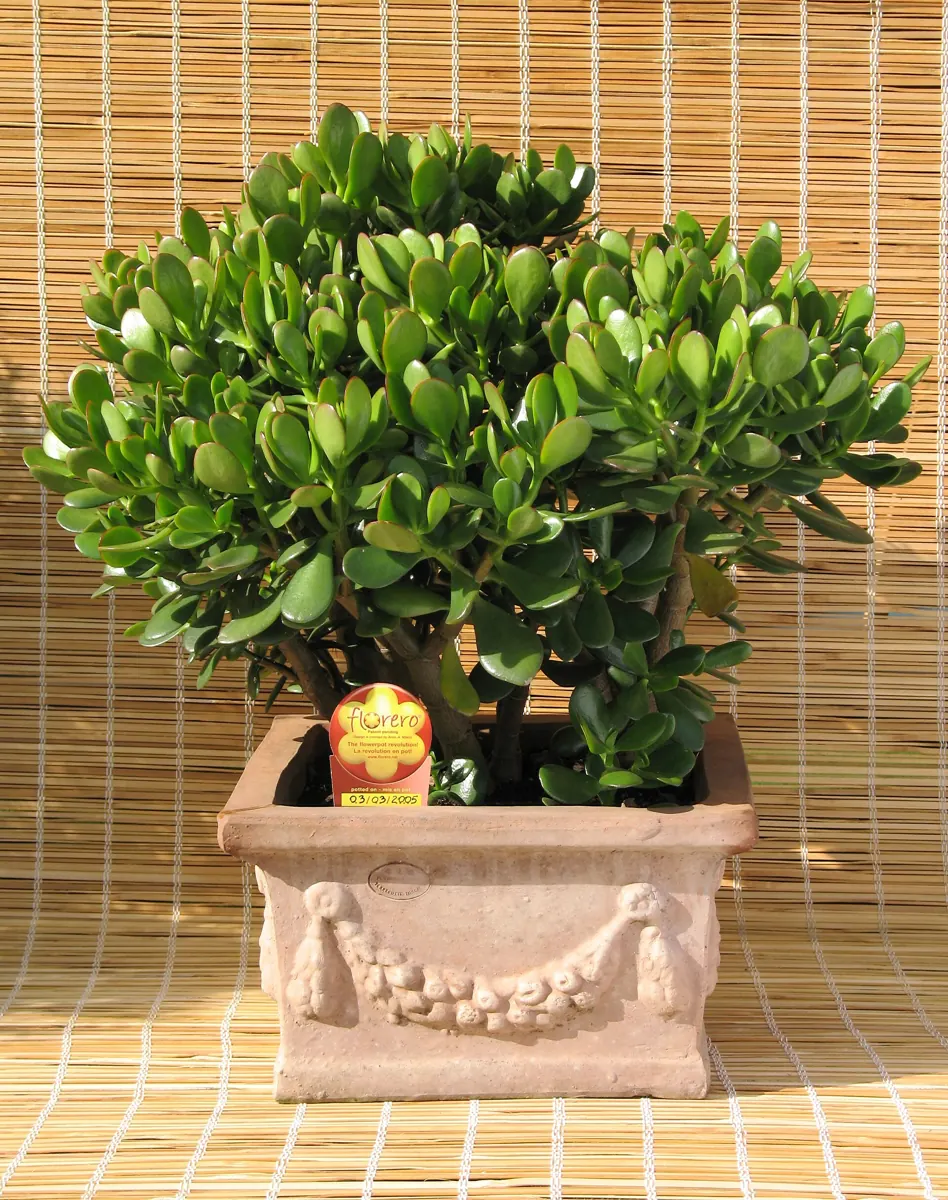
| Jade plant (Crassula ovata) | Long-lived, tree-like | No (toxic) |
| Aloe vera | Fast-growing, useful | No (toxic) |
| Kalanchoe | Bright flowers indoors | No (toxic) |
Want flowers? Our kalanchoe care guide covers how to get this succulent to bloom again. If you like tough, dry-tolerant plants, the snake plant and ZZ plant use the same soak-and-dry watering.
Common succulent problems
| What you see | Likely cause | What to do |
|---|---|---|
| Soft, mushy, see-through leaves | Overwatering, root rot | Let it dry; unpot and cut off rotten parts; replant in dry mix |
| Black stem at the base | Rot | Cut above the rot and replant the healthy top |
| Wrinkled, deflated leaves | Thirst (if soil is dry) | Water deeply |
| Stretched, pale, leaning growth | Too little light | Move to brighter light; replant cut tops |
| Brown or white crispy patches | Sunburn | Shade for a while; increase sun slowly |
| White cottony bits in leaf joints | Mealybugs | Dab with rubbing alcohol on a cotton swab |
Succulent planting FAQs
What soil do succulents need?
A gritty, fast-draining mix. Cactus and succulent mix works, especially with extra perlite or pumice added. Regular potting soil holds too much water.
Do succulents need drainage holes?
Yes. Without a drainage hole, water collects at the bottom and rots the roots. Gravel in the bottom doesn’t fix this.
How often should I water succulents?
Only when the soil is completely dry. Indoors, that’s often every 1 to 2 weeks in summer and every 3 to 4 weeks in winter.
Should I water succulents right after planting?
Wait 3 to 7 days. This gives damaged roots time to heal and lowers the risk of rot.
Can succulents live indoors?
Yes, if they get plenty of light. Put them in your sunniest window or under a grow light.
Sources and further reading
- ASPCA Animal Poison Control, Toxic and Non-Toxic Plants list
- North Carolina State Extension, Echeveria plant profile
- Wikipedia, Succulent plant
Keep learning
Kalanchoe
A bright, flowering succulent, and the long-night trick that makes it bloom again.
Snake plant
Upright, drought-tolerant and almost indestructible, as long as the soil dries out.
ZZ plant
The low-light, low-water plant for beginners, and the one mistake that kills it.
More from Gardening How-To
-
How to Propagate a Snake Plant: 4 Easy Methods
How to propagate a snake plant in water, in soil, by division or from rhizomes, with timelines, the variegation catch and fixes for rotting cuttings. -
Plant Identification: How to Identify Any Plant
How to identify a plant: the best free plant ID apps, the clues to check (leaves, flowers, stems), free expert help, and safety tips for unknown plants. -
How to Grow Basil for a Big, Bushy Harvest
How to grow basil from seed or a store-bought plant: warmth and sun, watering, the pinching trick for bushy plants, harvesting and fixing problems. -
How to Plant Lavender So It Actually Survives
How to plant lavender: choosing English, French or lavandin types, when to plant, soil and drainage, spacing, growing in pots, watering and pruning. -
How to Plant Garlic in Fall for a Big Summer Harvest
How to plant garlic: when to plant in your zone, hardneck vs softneck, how deep to set the cloves, mulching, watering, scapes and when to harvest. -
How to Plant Tulip Bulbs: When and How Deep
How to plant tulip bulbs in fall: the best time for your USDA zone, how deep and far apart to plant, pots vs beds, and how to get tulips to come back.