
Last updated September 30, 2026
The monstera (Monstera deliciosa) is famous for its huge leaves full of splits and holes. But many people bring one home and wonder why the new leaves come out small and solid. The answer is almost always the same: the plant needs more light, more maturity, and something to climb. Here’s how to give it all three.
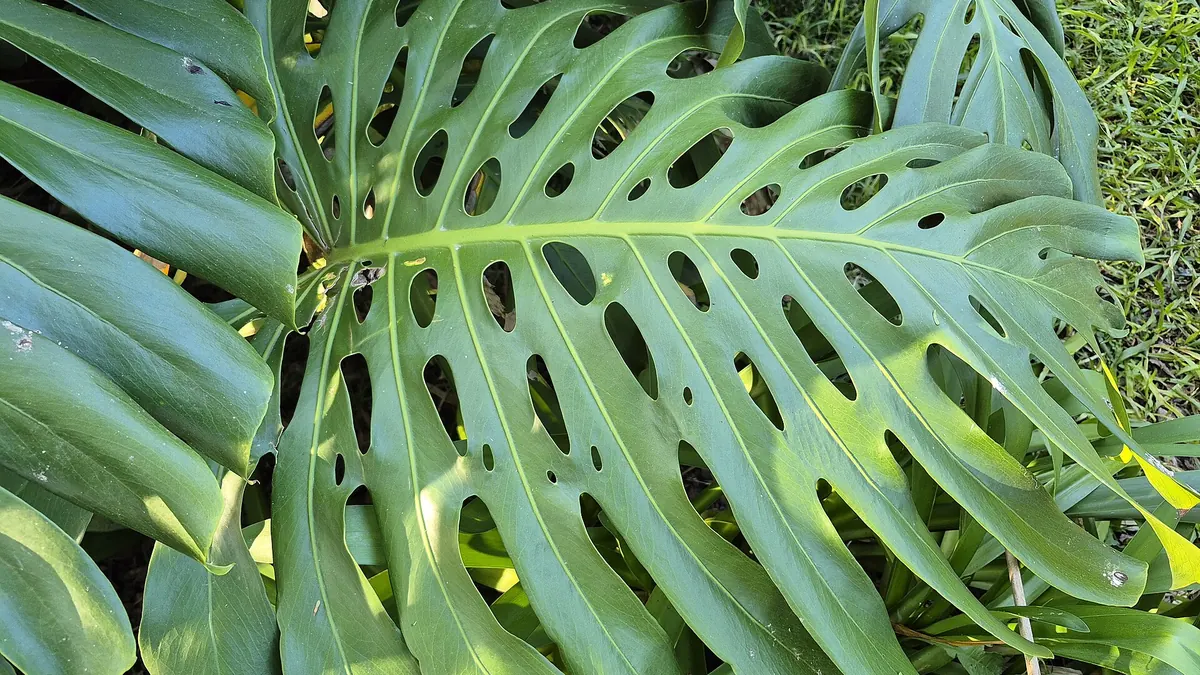
Monstera care in brief
- Light: bright, indirect light. This is the key to split leaves.
- Water: when the top 2 inches of soil are dry.
- Soil: chunky and airy: potting mix with bark and perlite.
- Support: a moss pole or stake once it starts to sprawl.
- Safety: toxic to cats and dogs if chewed.
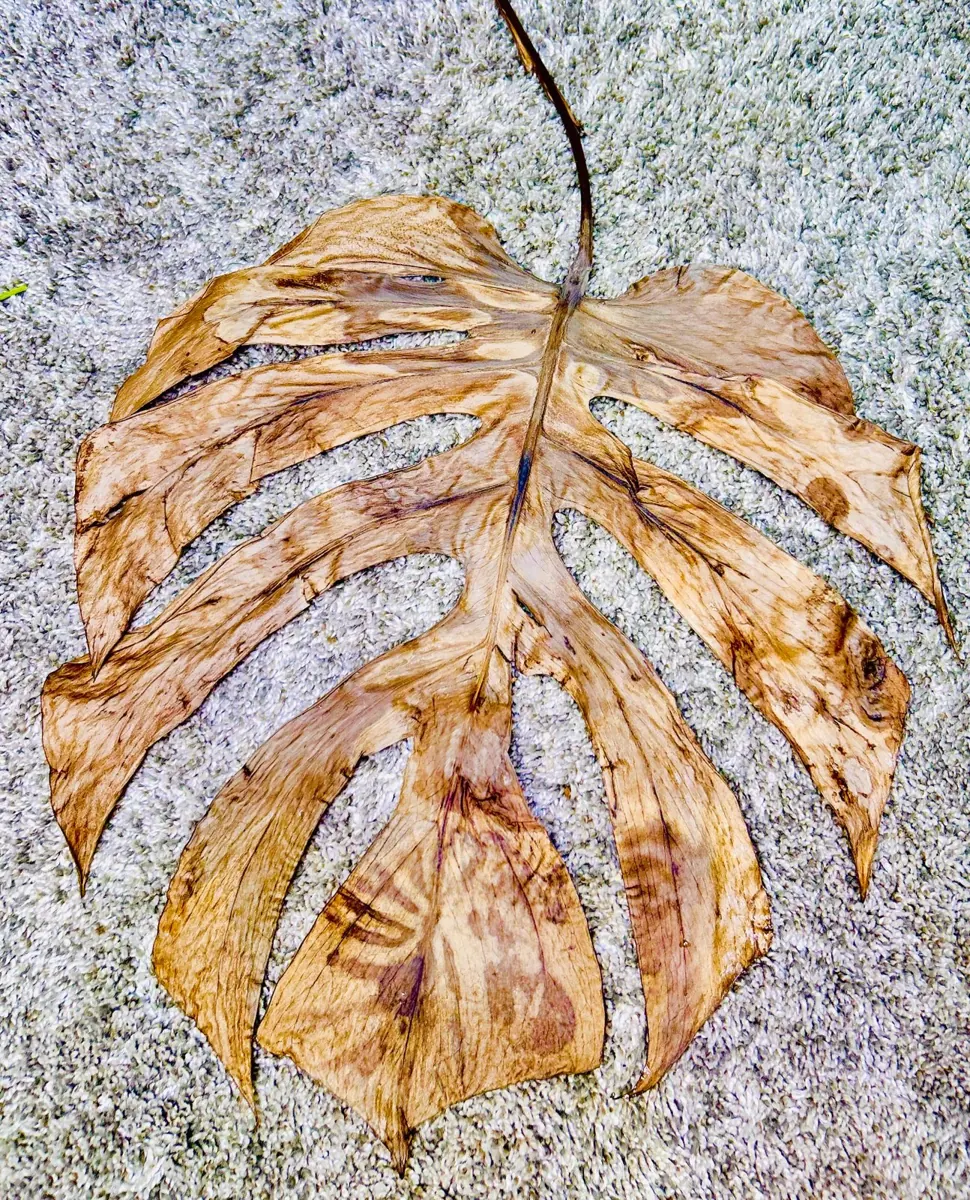
Why doesn’t my monstera have holes?
The splits and holes are called fenestrations. In the wild, monsteras climb up rainforest trees toward the light, and their leaves only split once the plant is mature and getting plenty of light. Young leaves are naturally solid and heart-shaped. So if your plant has no holes, check these three things:
Light
Most indoor monsteras don’t get enough. Move it close to a bright window, where it gets lots of indirect light and maybe a little gentle morning sun.
Age
Very young plants rarely split. Splits usually start once a plant has several leaves and is a couple of years old.
Something to climb
Monsteras make bigger leaves when they can climb. A plant sprawling across the floor tends to stay smaller.
Be patient: existing leaves won’t grow new holes. Better conditions show up in the next leaves, each one usually bigger than the last.
Light
Give your monstera bright, indirect light for most of the day. A spot a few feet from a south or west window, or right by an east window, works well. A couple of hours of soft morning sun is a bonus. Hot afternoon sun through glass can scorch the leaves, leaving pale or brown patches. In low light, stems stretch long between leaves and new leaves stay small and solid.
Watering
Water when the top 2 inches of soil are dry. Water slowly until it runs out of the drainage hole, then empty the saucer. That often means once a week in summer and every 2 weeks in winter. Big pots dry more slowly.
Monsteras don’t like soggy roots. Yellow leaves with wet soil usually mean too much water. Drooping, curling leaves with bone-dry soil mean it’s thirsty.
Soil, pot and feeding
Use an airy mix that drains fast: about two parts potting mix, one part orchid bark and one part perlite. The pot needs a drainage hole. Repot every 1 to 2 years in spring, going up 2 inches.
Feed with a balanced liquid fertilizer at half strength every 4 weeks in spring and summer. Monsteras like average home temperatures, 65 to 85°F, and look best with humidity around 50%, though they handle normal indoor air well.
How to add a moss pole
Pick a pole
Use a moss pole, coir pole or a sturdy wooden stake, tall enough for a year or two of growth.
Place it at the back
Push the pole deep into the pot behind the main stem, where the plant is growing from. Try not to stab through big roots.
Tie the stem to it
Gently tie the main stem to the pole with soft plant ties or strips of cloth. Don’t wrap them tight.
Guide the aerial roots
Point the long brown aerial roots toward the pole. If you use moss, keep it lightly damp so the roots grab on.
Pruning and propagating
You can cut back a monstera that’s grown too big or leggy. Every cutting can become a new plant, as long as it has a node: the bump on the stem where a leaf and an aerial root grow out. A leaf with no node will root in water but will never grow a new leaf.
- Find a node on the stem, ideally with an aerial root.
- Cut about an inch below it with clean, sharp pruners. Keep one or two leaves on the cutting.
- Stand it in water with the node under the surface, or plant it in moist, airy mix.
- Keep it warm and in bright, indirect light. Roots grow in 2 to 4 weeks. Pot water cuttings once roots are a few inches long.
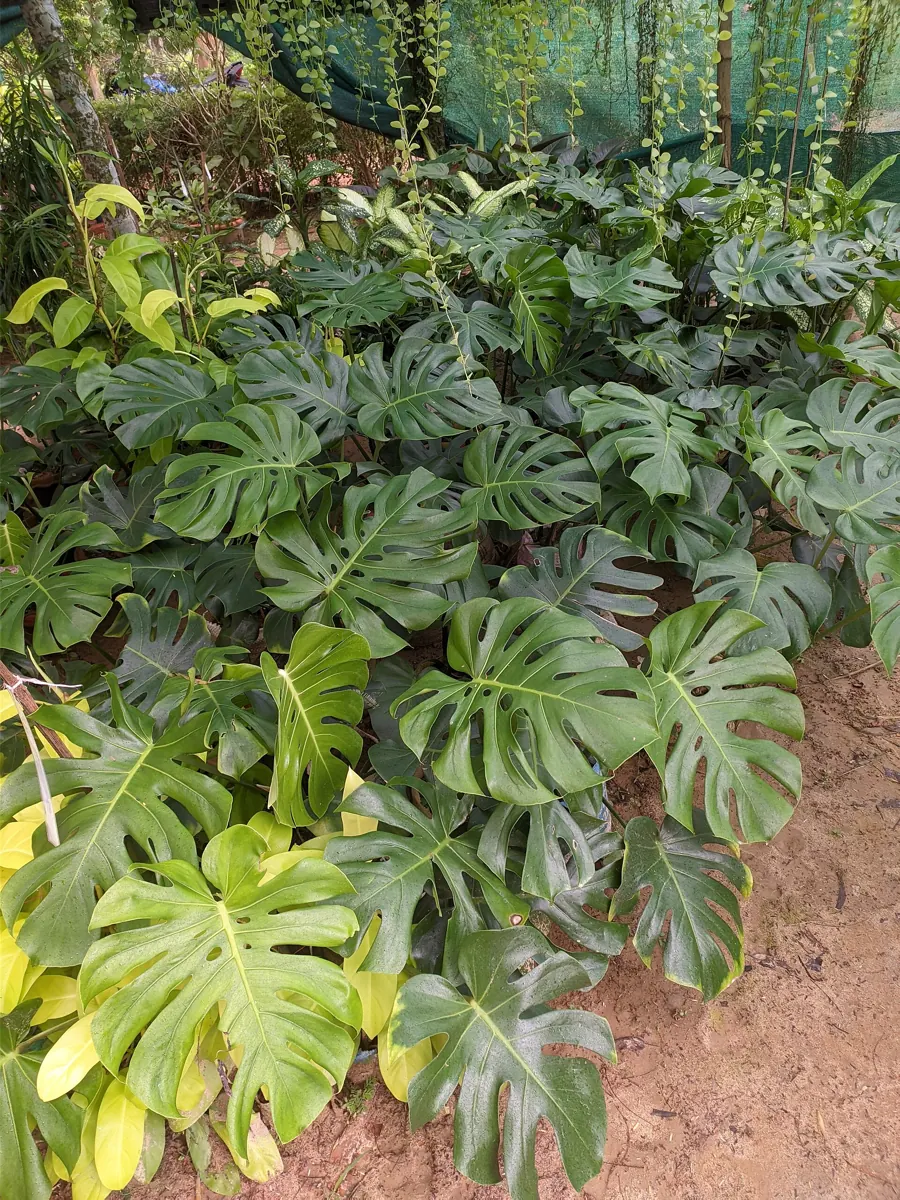
Common monstera problems
| What you see | Likely cause | What to do |
|---|---|---|
| No splits in new leaves | Low light or young plant | More light; add a pole; be patient |
| Yellow leaves, wet soil | Overwatering | Let the top 2 inches dry; check drainage |
| Brown, crispy edges | Dry air or underwatering | Water on time; raise humidity |
| Water drops on leaf tips | Guttation (releasing extra water) | Normal; water a little less |
| Long stems, small leaves | Not enough light | Move closer to a window |
| Webbing, speckled leaves | Spider mites | Shower leaves; insecticidal soap |
A single old leaf at the bottom yellowing now and then is normal. It’s the plant recycling an old leaf as it grows new ones.
Monstera FAQs
How often should I water a monstera?
When the top 2 inches of soil are dry, about once a week in summer and every 2 weeks in winter.
How do I make my monstera leaves split?
Give it more bright, indirect light, let it mature, and give it a moss pole to climb. New leaves will get bigger and start splitting.
Should I cut the aerial roots off my monstera?
You can, but it’s better to guide them into the soil or onto a moss pole. They help the plant climb and take in water.
How fast does a monstera grow?
In good light and warmth, it can put out a new leaf every 4 to 6 weeks in spring and summer. Growth slows in winter.
Is monstera toxic to cats?
Yes. The ASPCA lists it as toxic to cats and dogs.
Sources and further reading
- ASPCA Animal Poison Control, Split-leaf philodendron
- North Carolina State Extension, Monstera deliciosa plant profile
- Wikipedia, Monstera deliciosa
More statement plants
Rubber plant
A glossy indoor tree in green, burgundy or variegated, and how to make it bushier.
Bird of paradise
Huge tropical leaves for your sunniest room, plus how to get the famous flowers.
Dumb cane (dieffenbachia)
Big, splashy leaves for lower light, and why this plant needs extra care around kids and pets.
More from Houseplant Care
-
Money Tree Leaves Turning Yellow? 7 Causes and Fixes
Why money tree (Pachira aquatica) leaves turn yellow: overwatering, low light, drafts, sunburn, nutrients, pests or age, with a step-by-step check and fixes. -
Song of India Plant Care (Dracaena Reflexa)
Song of India (Dracaena reflexa) care: light, watering, humidity, brown tips from tap water, shaping twisty stems, propagation, problems and pet safety. -
China Doll Plant Care: Stop the Leaf Drop
China doll plant (Radermachera sinica) care: bright light, careful watering, why it drops leaves and how to stop it, pruning to keep it bushy, and pet safety. -
Dumb Cane Plant (Dieffenbachia) Care and Safety Guide
Dumb cane (dieffenbachia) care: light, watering, soil, cutting back a leggy cane, propagation, yellow leaves, and important safety tips for kids and pets. -
Raven ZZ Plant Care: How to Keep It Black
Raven ZZ plant care: why new growth starts green and turns black, the light it needs to stay dark, watering, propagation, and how it differs from a ZZ. -
How to Propagate a Snake Plant: 4 Easy Methods
How to propagate a snake plant in water, in soil, by division or from rhizomes, with timelines, the variegation catch and fixes for rotting cuttings.