
Last updated September 30, 2026
Nothing turns a living room tropical faster than a bird of paradise. Huge paddle-shaped leaves fan out like a small banana tree, and in the right conditions the orange species produces one of the strangest, most beautiful flowers you’ll ever see: a flash of orange and blue shaped like a bird’s head. It’s less fussy than it looks. But it has one demand most people badly underestimate, and that’s light.
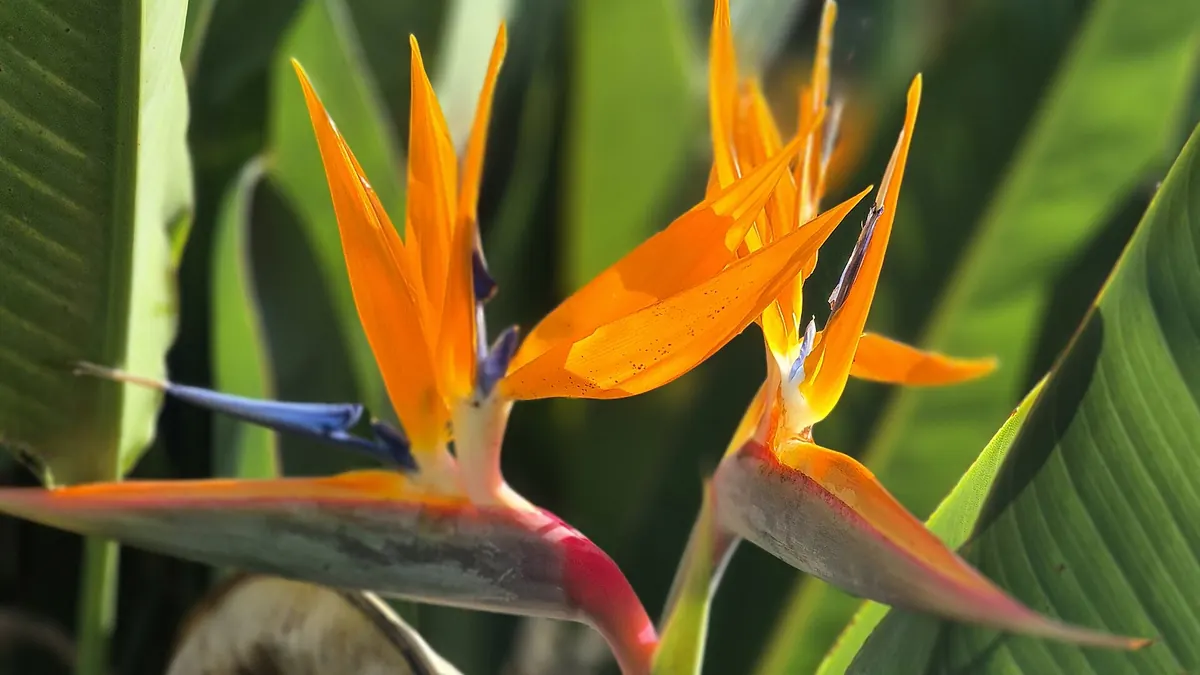
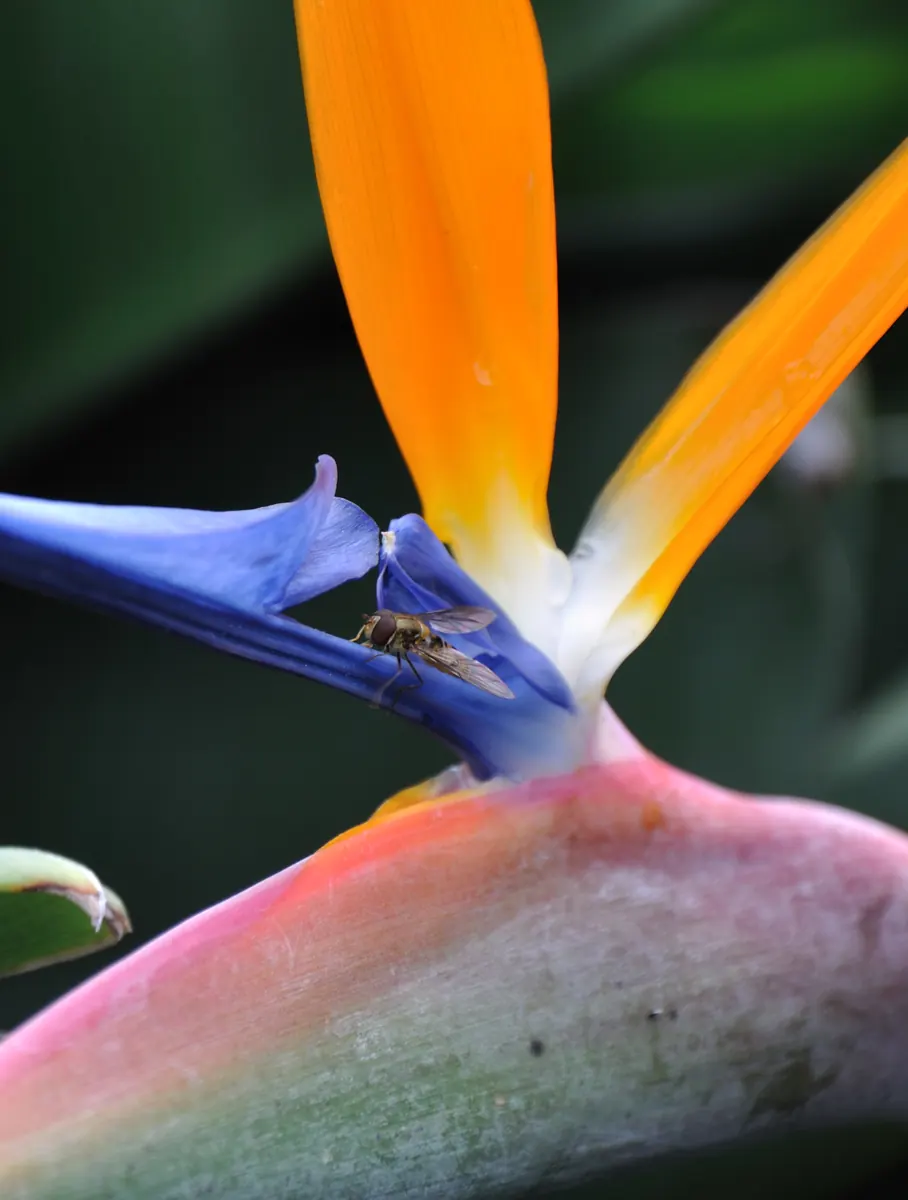
First, which bird of paradise do you have?
“Bird of paradise” is stuck on several quite different plants, and it matters which one is in your pot.
| Orange bird of paradise | Giant white bird of paradise | Mexican / red bird of paradise | |
|---|---|---|---|
| Botanical name | Strelitzia reginae | Strelitzia nicolai | Caesalpinia species |
| Leaves | Narrower, gray-green or blue-green, on stiff stalks | Broad, bright green, banana-like | Small and feathery |
| Size indoors | 3–5 ft | 6–8 ft or more; develops a trunk | Outdoor shrub |
| Flowers indoors | Possible when mature, in strong sun | Rare | Outdoors in hot climates |
| Relation | True birds of paradise; same care | Unrelated pea-family shrub, more toxic | |
If your plant was labeled simply “bird of paradise” and it’s already several feet tall with big leaves, it’s almost certainly S. nicolai, which is what most shops sell as a floor plant. The orange S. reginae, also called crane flower, comes from South Africa’s Eastern Cape and KwaZulu-Natal and is the official flower of Los Angeles. Heliconia, sometimes called false bird of paradise, is another different plant again. This guide covers the two Strelitzia species; where their care differs, we’ll say so.
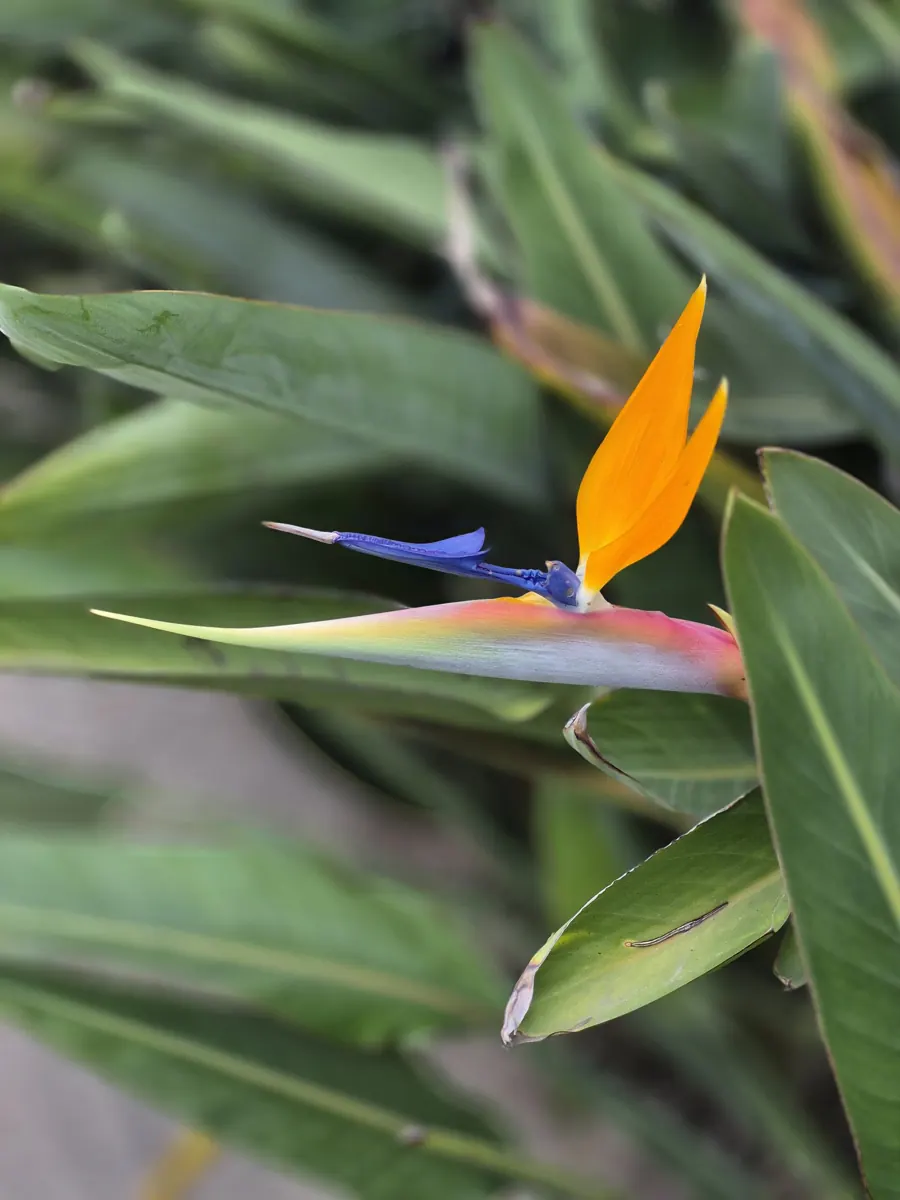
Light: give it your sunniest window
Not enough light is the number one reason these plants struggle indoors. In the wild they grow in full sun, so indoors they want the brightest spot you’ve got: ideally right in front of a south- or west-facing window, with several hours of direct sun on top of bright light all day.
Too little light
Slow or no new growth, leaves stretching on long weak stalks that droop or lean, dull color, and no flowers. In a dim corner a bird of paradise slowly declines.
Too much sun, too suddenly
A plant moved straight from a shaded store into strong sun can get brown or bleached scorch patches. Increase direct sun over two or three weeks.
No sunny window? A strong full-spectrum LED grow light can make up much of the difference. Either way, turn the plant regularly so it grows evenly.
The rest of the routine
Water
When top 2–3 in are dry
Soil
Rich, chunky, well-draining
Humidity
50% or more is ideal
Temperature
65–85°F, above 55°F
Feeding
Every 2–4 weeks, spring–summer
Repot
Every 2–3 years
Watering
Water when the top 2–3 inches of soil are dry, often every one to two weeks in a bright, warm room during spring and summer. Big pots dry more slowly. In fall and winter let it dry a little further before watering. Those thick, fleshy roots store water, so the plant handles brief dryness far better than soggy soil: wet soil leads to root rot, while long droughts bring curled leaves and crispy edges.
Water thoroughly until it runs from the drainage holes, let it drain, and empty the saucer. If your tap water is very hard, use filtered or rainwater now and then and flush the soil to reduce salt buildup, which browns leaf edges.
Soil and pot
Use a rich, well-draining indoor mix, for example two parts peat- or coir-based potting mix, one part orchid bark and one part perlite. Pick a sturdy, heavy pot with drainage holes only slightly bigger than the root ball; tall plants are top-heavy and tip easily in light plastic.
Humidity and temperature
Average household humidity is tolerated, but it looks best at 50% or higher. In dry winter air the edges go brown and crispy and spider mites move in; a humidifier nearby is the most effective fix. Keep it at 65–85°F by day, nights not much below 60°F, and never below about 55°F for long. Outdoors, S. reginae is hardy in roughly USDA zones 9 or 10 to 12, and S. nicolai in 10 to 12. Elsewhere both make great summer patio plants in full or part sun; bring them in before nights drop below 55°F.
Feeding
Bird of paradise plants are fairly hungry while they’re growing. Use a balanced liquid houseplant fertilizer every two to four weeks in spring and summer at the label rate or slightly weaker, or slow-release granules in spring. Stop in fall and winter. Brown tips or a white crust on the soil mean it’s time to flush the pot and cut back.
Split leaves are normal (really)
Lots of owners panic when those big leaves start tearing along the veins. Don’t. In the wild, splitting is a natural adaptation that lets wind through without ripping the whole plant apart. Indoors it’s more common on older leaves, and dry air, brushing past the plant or moving it all encourage it. A few splits don’t mean anything’s wrong. If a leaf gets badly shredded, cut it off at the base.
Growth is moderate in bright light and warmth, with a new leaf every few weeks in the growing season, each unrolling slowly from the center. Indoors, S. reginae usually reaches 3–5 feet and S. nicolai 6–8 feet or more. In fall and winter growth slows; water less, stop feeding and keep it in the brightest spot you can. An older outer leaf browning in winter is normal.
How to get a bird of paradise to flower
An orange bird of paradise can bloom indoors, but it needs every one of these boxes ticked:
Maturity
Plants usually need to be at least three to five years old.
Very bright light
Several hours of direct sun every day. This matters more than anything else on the list.
A snug pot
Slightly root-bound plants flower more readily than ones in roomy pots, so don’t rush to repot.
Regular feeding
Feed consistently through spring and summer.
A winter rest
A slightly cooler, drier spell in winter helps trigger blooms.
The giant white S. nicolai rarely flowers indoors; it needs years of growth and huge amounts of light. Most people grow it purely for the foliage, and that’s reason enough.
Repotting and dividing
Repot every two to three years in spring, or when roots poke out of the drainage holes or crowd the pot. Go up one size only, and less often if you’re hoping for flowers. For big floor plants, refreshing the top few inches of soil each spring is a good alternative.
Division is the easiest way to make more plants. Expect a new division to droop or pause for a few weeks while it recovers.
Water the day before
Then ease the plant carefully out of its pot.
Find natural divisions
Look for clumps of stems or offsets growing from the base, each with its own roots.
Separate them
Pull them apart by hand or cut with a clean, sharp knife, keeping as many roots as possible with each piece.
Pot each piece
Use fresh, well-draining mix in a pot just big enough for the roots, and water.
Ease it back into sun
Keep divisions in bright, indirect light for a week or two before moving them back to full brightness.
Growing from seed
Fresh Strelitzia seeds are hard, with a bright orange tuft attached. Remove the tuft, soak the seeds in warm water for 24–48 hours, and lightly nick or file the seed coat. Sow about half an inch deep in moist seed-starting mix and keep it warm (70–85°F) and evenly moist. Germination is slow and patchy, often one to three months or more, and seedlings take several years to reach flowering size.
Troubleshooting
Curling leaves
The leaves curl inward to save water. Check the soil first: if the top few inches are dry, water thoroughly. If it’s moist, look at humidity and temperature, since dry heated air and cold drafts both cause curling. If the soil is soggy and leaves are curling or yellowing, check the roots for rot.
Yellow leaves
One lower, outer leaf yellowing and dying now and then is normal growth. Several yellow leaves with damp soil means overwatering. Let more of the soil dry between waterings, make sure the pot drains, and check the roots if it continues.
| Symptom | Likely cause | Fix |
|---|---|---|
| Brown, crispy edges | Dry air, underwatering or salt buildup | Raise humidity; water consistently; flush soil |
| Drooping or leaning leaves | Too little light, or watering problems | Move to much brighter light; check the soil |
| No flowers | Not enough sun, too young, pot too big, or it’s S. nicolai | More direct sun; patience; keep the pot snug |
| Brown scorch patches | Sudden strong sun | Acclimatize gradually; trim badly damaged leaves |
| Sticky residue, brown bumps or webbing | Scale, mealybugs or spider mites | Wipe leaves; insecticidal soap or horticultural oil |
Wiping the leaves with a damp cloth every few weeks removes dust that blocks light and lets you spot pests early, especially on the undersides and where the stalks meet.
Bird of paradise FAQs
How much light does a bird of paradise need indoors?
As much as you can give it: very bright light with several hours of direct sun, such as right in front of a south- or west-facing window. In low light it grows slowly, droops and won’t flower.
Why are my bird of paradise leaves splitting?
It’s natural. In the wild, split leaves let wind pass through without damaging the plant. Dry air, bumping the leaves or moving the plant can increase splitting, but it doesn’t mean the plant is unhealthy.
How often should I water a bird of paradise?
When the top two to three inches of soil are dry, often every one to two weeks in spring and summer and less in winter. Water thoroughly, let it drain, and never leave the pot standing in water.
Will my bird of paradise flower indoors?
A mature orange bird of paradise (Strelitzia reginae) can, if it gets several hours of direct sun daily, is at least three to five years old, and is kept in a slightly snug pot. The giant white Strelitzia nicolai rarely flowers indoors.
Is bird of paradise toxic to cats?
Yes. The ASPCA lists Strelitzia reginae as toxic to cats, dogs and horses. Eating the fruit or seeds can cause mild nausea, vomiting and drowsiness.
Sources and further reading
- ASPCA Animal Poison Control, Bird of paradise
- North Carolina State Extension, Strelitzia reginae plant profile
- Wikipedia, Strelitzia reginae
Big plants for bright rooms
Rubber plant
A glossy indoor tree in green, burgundy or variegated, and how to make it bushier.
ZZ plant
The low-light, low-water plant for beginners, and the one mistake that kills it.
Snake plant
Upright, drought-tolerant and almost indestructible, as long as the soil dries out.
More from Houseplant Care
-
Money Tree Leaves Turning Yellow? 7 Causes and Fixes
Why money tree (Pachira aquatica) leaves turn yellow: overwatering, low light, drafts, sunburn, nutrients, pests or age, with a step-by-step check and fixes. -
Song of India Plant Care (Dracaena Reflexa)
Song of India (Dracaena reflexa) care: light, watering, humidity, brown tips from tap water, shaping twisty stems, propagation, problems and pet safety. -
China Doll Plant Care: Stop the Leaf Drop
China doll plant (Radermachera sinica) care: bright light, careful watering, why it drops leaves and how to stop it, pruning to keep it bushy, and pet safety. -
Dumb Cane Plant (Dieffenbachia) Care and Safety Guide
Dumb cane (dieffenbachia) care: light, watering, soil, cutting back a leggy cane, propagation, yellow leaves, and important safety tips for kids and pets. -
Monstera Plant Care: Bigger Leaves With More Holes
Monstera care: the light that makes split leaves, watering, soil, adding a moss pole, pruning and propagating from a node, yellow leaves and pet safety. -
Raven ZZ Plant Care: How to Keep It Black
Raven ZZ plant care: why new growth starts green and turns black, the light it needs to stay dark, watering, propagation, and how it differs from a ZZ.