
Last updated September 30, 2026
Kalanchoe (say it “kal-un-KOH-ee”) is the cheerful flowering plant you see in grocery stores, covered in tiny red, pink, orange, yellow or white blooms. Many people toss it once the flowers fade. You don’t have to. It’s a succulent, so it’s easy to keep alive, and with one simple trick you can make it bloom again.
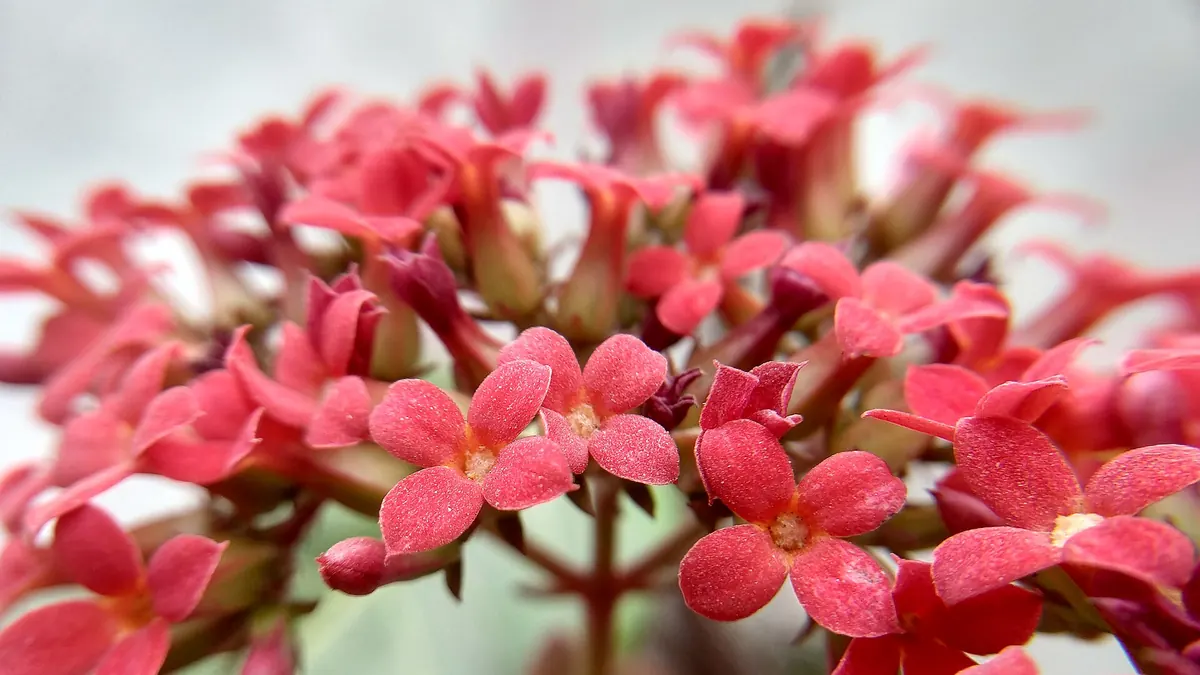
Quick care: bright light with some direct sun, water only when the soil is dry, cactus or succulent mix, 60–85°F, and 14 hours of darkness a night for about six weeks to trigger new flowers.
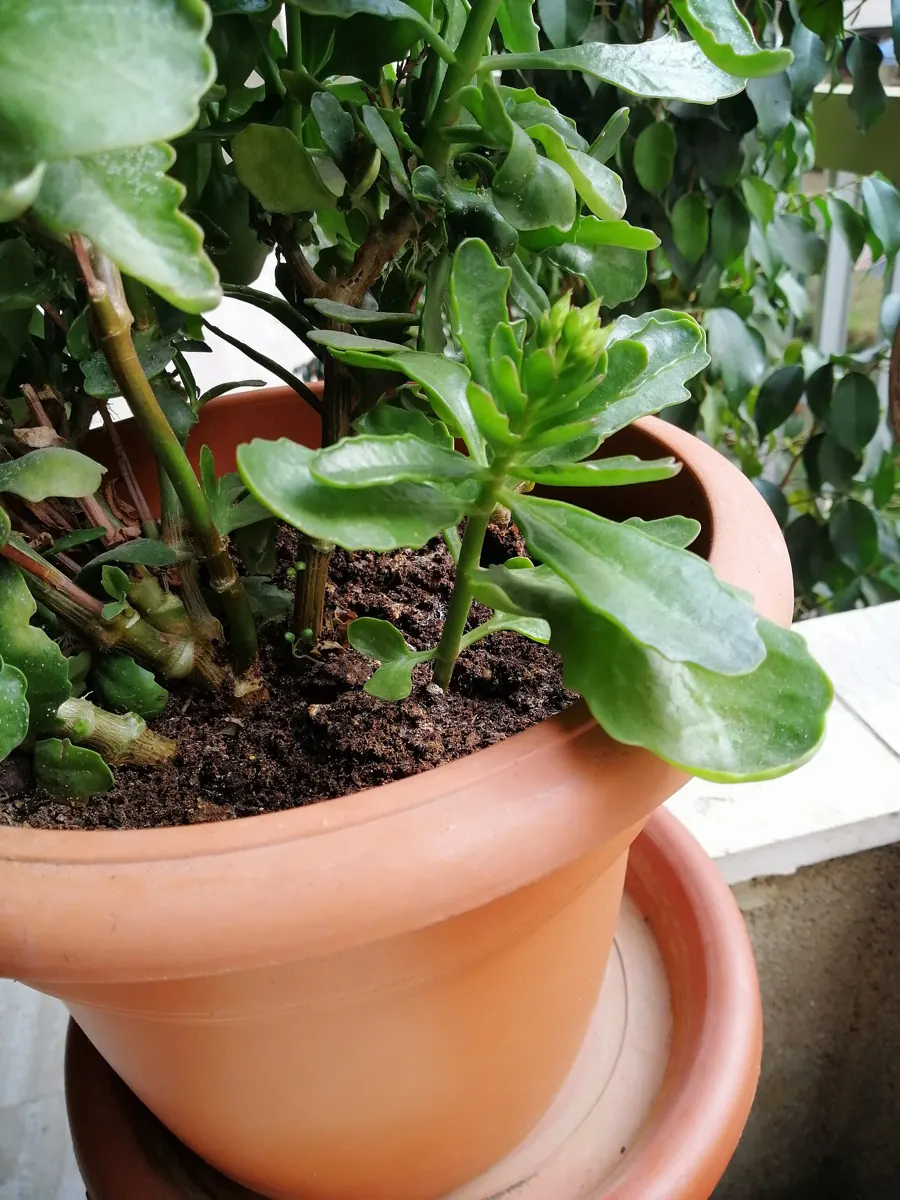
Kalanchoe care basics
Light
Bright light, including a few hours of direct sun, keeps kalanchoe compact and flowering. A south- or west-facing window is great. In low light the stems stretch and it won’t rebloom.
Water
Water deeply, then let the soil dry out almost completely. Indoors that’s often every 1 to 2 weeks, less in winter. The thick leaves store water, so too much is worse than too little.
Soil and pot
Use a cactus and succulent mix, or potting mix with added perlite. The pot needs a drainage hole. Terracotta helps the soil dry faster.
Temperature
Keep it between 60 and 85°F. It can’t take frost. Outdoors, it only lives year-round in about zones 10 to 12, but it makes a nice summer patio plant.
Feeding: after flowering, feed every 3 to 4 weeks in spring and summer with a balanced fertilizer at half strength. Stop feeding in fall while you’re getting it ready to bloom.
Humidity: normal home humidity is fine. Skip misting; wet leaves can rot or spot.
Keeping the flowers going
A kalanchoe in full bloom can stay colorful for 6 to 8 weeks. To get the most out of it, keep it in bright light but out of scorching afternoon sun through glass, and snip off each flower cluster as it fades. Cut the whole flower stalk back to just above a pair of leaves. That keeps the plant tidy and can encourage a few more buds.
How to make a kalanchoe bloom again
Kalanchoe is a “short-day” plant. In nature, it forms flower buds when the nights get long in fall and winter. Growers fool it into blooming by giving it long, dark nights. You can do the same at home.
Let it rest after blooming
Once the last flowers fade, cut off the old flower stalks. Give it a month or so of normal care in bright light so it can grow new leaves.
Start the long nights
In early fall, give the plant 14 hours of total darkness every night for about six weeks. Put it in a closet from about 5 p.m. to 7 a.m., or cover it with a cardboard box. Even a little lamp light can break the cycle.
Give it bright days
During the day, bring it back to its bright window for the other 10 hours.
Water lightly
Water a little less than usual during these six weeks, only when the soil is dry. Don’t fertilize.
Watch for buds
After about six weeks, you should see tiny flower buds at the tips. Now you can stop the dark treatment and return to normal care. Flowers usually open a few weeks later.
Kinds of kalanchoe
| Type | What it looks like | Grown for |
|---|---|---|
| Flaming Katy (K. blossfeldiana) | Glossy scalloped leaves, flat clusters of small flowers | Flowers; the classic gift plant |
| Calandiva | Same plant with double, rose-like flowers | Showier flowers |
| Paddle plant (K. luciae, K. thyrsiflora) | Round, flat leaves that blush red in sun | Leaves |
| Panda plant (K. tomentosa) | Fuzzy gray leaves with brown tips | Leaves |
| Mother of thousands (K. daigremontiana) | Tiny plantlets along the leaf edges | Curiosity; spreads very easily |
How to propagate kalanchoe
Kalanchoe roots easily from stem cuttings, and spring or summer is the best time.
- Cut a 3- to 4-inch piece of stem with a few leaves, just below a leaf joint.
- Pull off the bottom leaves and let the cutting dry for a day or two so the cut seals.
- Push it into a small pot of moist cactus mix.
- Keep it in bright, indirect light and water lightly when the soil dries. Roots form in 2 to 4 weeks.
A single healthy leaf can root too, but it’s slower. Mother of thousands does the work for you: the baby plantlets drop off and root wherever they land.
Common kalanchoe problems
Stretched stems and no flowers
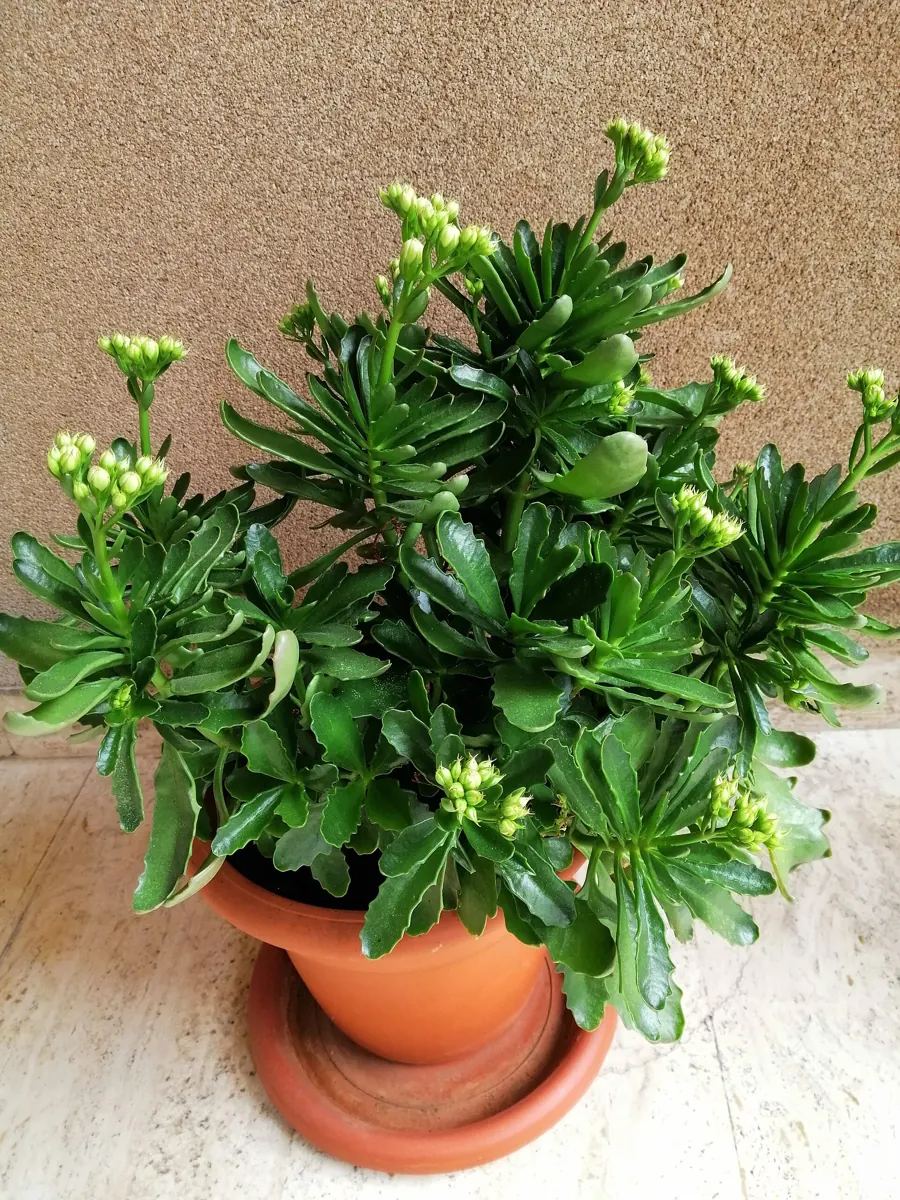
This almost always means not enough light. Move it to a brighter spot, pinch back leggy stems to make it bushier, and try the long-night method in fall.
Soft, mushy stem or leaves
Too much water. Let the soil dry completely. If the base of the stem is black and soft, take healthy cuttings from the top and start over.
| Other symptom | Likely cause | Fix |
|---|---|---|
| Wrinkled, soft leaves with dry soil | Thirst | Water deeply |
| Red or brown leaf edges | Strong sun or cold | Some red in sun is normal; protect from cold windows |
| Powdery white coating | Powdery mildew | Improve airflow; keep leaves dry; remove bad leaves |
| White cottony clumps | Mealybugs | Dab with rubbing alcohol; use insecticidal soap |
Kalanchoe FAQs
How often should I water a kalanchoe?
Only when the soil is almost completely dry. Indoors, that’s usually every 1 to 2 weeks in spring and summer and less often in winter.
Will my kalanchoe bloom again?
Yes. After it rests, give it 14 hours of darkness each night for about six weeks in fall, with bright light during the day. Buds should appear after that.
Is kalanchoe an indoor or outdoor plant?
Both. It’s usually grown indoors, but it can live outside all year in frost-free areas, zones 10 to 12, and spend summers outside anywhere else.
Should I cut off dead kalanchoe flowers?
Yes. Snip spent flower stalks back to just above a pair of leaves. It keeps the plant neat and can encourage more buds.
Is kalanchoe a succulent?
Yes. Its thick leaves store water, so it needs well-draining soil and should dry out between waterings.
Sources and further reading
- ASPCA Animal Poison Control, Kalanchoe
- North Carolina State Extension, Kalanchoe blossfeldiana plant profile
- Wikipedia, Kalanchoe blossfeldiana
More flowering houseplants
Lipstick plant
A trailing, pet-safe basket plant with red tubular flowers, and how to make it rebloom.
Anthurium
Waxy heart-shaped blooms for months, if you get light, water and soil right.
Succulents
The soil, pot and watering rules that keep succulents firm and colorful.
More from Houseplant Care
-
Money Tree Leaves Turning Yellow? 7 Causes and Fixes
Why money tree (Pachira aquatica) leaves turn yellow: overwatering, low light, drafts, sunburn, nutrients, pests or age, with a step-by-step check and fixes. -
Song of India Plant Care (Dracaena Reflexa)
Song of India (Dracaena reflexa) care: light, watering, humidity, brown tips from tap water, shaping twisty stems, propagation, problems and pet safety. -
China Doll Plant Care: Stop the Leaf Drop
China doll plant (Radermachera sinica) care: bright light, careful watering, why it drops leaves and how to stop it, pruning to keep it bushy, and pet safety. -
Dumb Cane Plant (Dieffenbachia) Care and Safety Guide
Dumb cane (dieffenbachia) care: light, watering, soil, cutting back a leggy cane, propagation, yellow leaves, and important safety tips for kids and pets. -
Monstera Plant Care: Bigger Leaves With More Holes
Monstera care: the light that makes split leaves, watering, soil, adding a moss pole, pruning and propagating from a node, yellow leaves and pet safety. -
Raven ZZ Plant Care: How to Keep It Black
Raven ZZ plant care: why new growth starts green and turns black, the light it needs to stay dark, watering, propagation, and how it differs from a ZZ.