
Last updated September 30, 2026
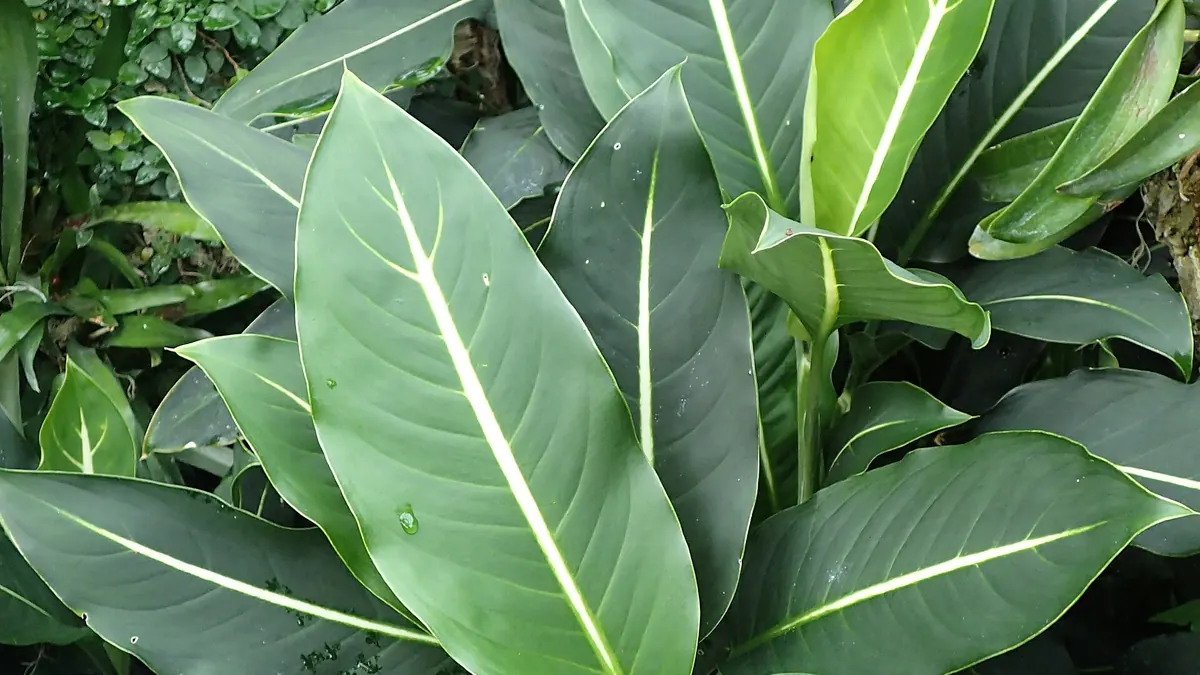
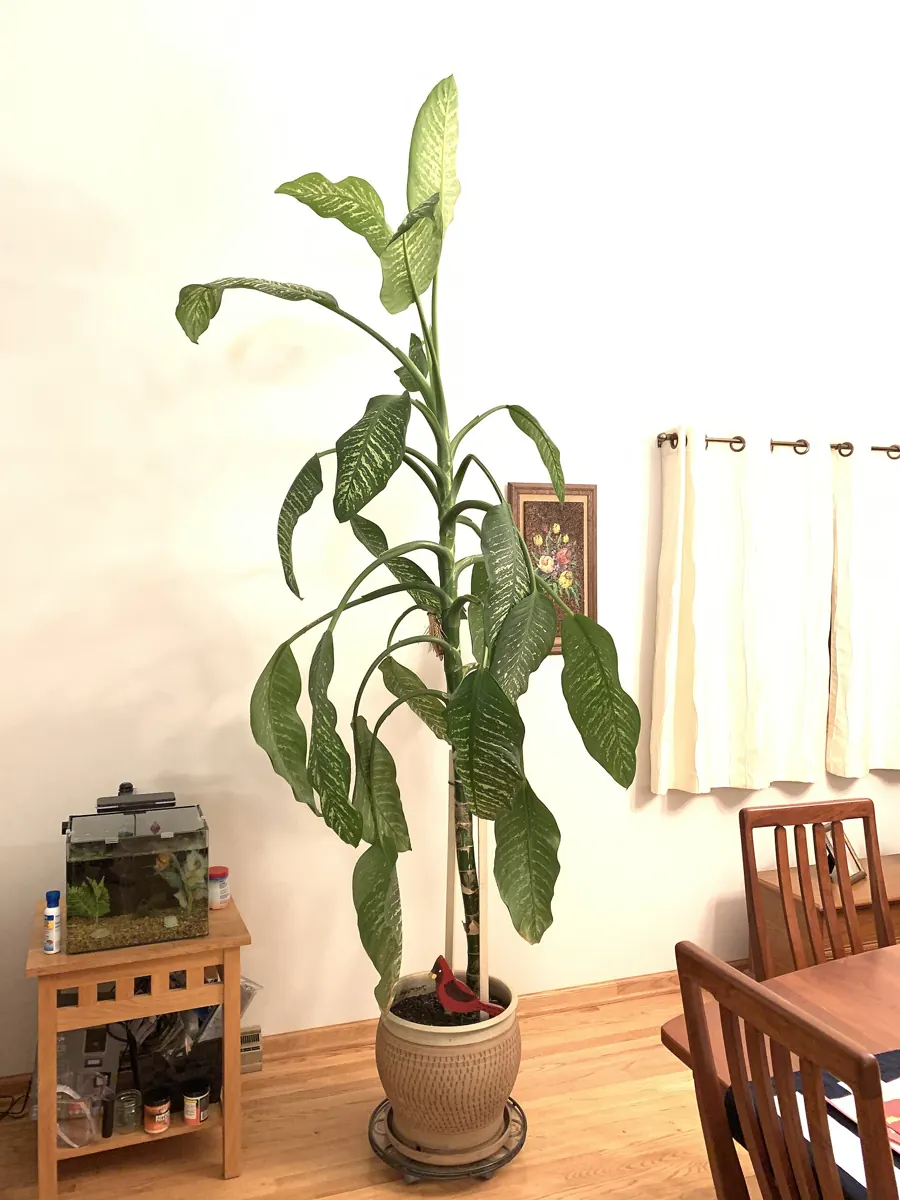
Dieffenbachia, better known as dumb cane, has big, bold leaves splashed with cream, white and pale green. It grows fast, handles medium light, and makes a lush statement in a living room or office. It also has a name that’s a warning: its sap can make the mouth and throat swell so badly that it’s hard to speak. So let’s start with safety, then get into care.
Dieffenbachia care at a glance
Light
Medium to bright indirect
Water
When top inch is dry
Soil
Well-draining potting mix
Temperature
65–80°F
Humidity
Average; likes 50%+
Growth
Fast, up to 3–6 ft indoors
Light
Dumb cane grows best in bright, indirect light, but it handles medium light well, which makes it a good choice for rooms that aren’t super sunny. Keep it out of direct afternoon sun, which scorches the big, thin leaves. In low light, the patterns fade and the stem stretches. Turn the pot every week or two so it grows straight.
Watering
Water when the top inch of soil is dry, soaking it until water drains out, then empty the saucer. In summer that’s often once a week; in winter, every 1 to 2 weeks. Soggy soil causes yellow leaves and stem rot, so don’t let it sit in water. Drooping leaves with dry soil just mean it’s thirsty.
Soil and feeding
A regular indoor potting mix with some perlite is fine, in a pot with a drainage hole. Feed with a balanced liquid fertilizer at half strength every 4 to 6 weeks in spring and summer.
Temperature and humidity
Keep it between 65 and 80°F, away from cold drafts and heater vents. Cold below about 55°F can cause leaf drop. It’s happy in normal household humidity, and brown leaf edges in winter usually mean the air is very dry.
Popular dieffenbachia varieties
| Variety | Look |
|---|---|
| ‘Camille’ | Creamy yellow centers with green edges; compact |
| ‘Tropic Snow’ | Large leaves with white and pale green splashes; tall |
| ‘Compacta’ | Smaller, bushier plant with cream markings |
| ‘Reflector’ | Green leaves with bright pale green and white patterns |
| ‘Sterling’ | Dark green leaves with a silvery-white center vein |
How to fix a tall, leggy dumb cane
As dieffenbachia grows, it drops its lower leaves and turns into a bare cane with a tuft of leaves on top. It looks odd, but it’s easy to fix, and you get extra plants out of it. Wear gloves for this.
Cut the top off
Cut the cane to the height you want, about 6 inches above the soil for a full restart. The old stump will sprout new shoots in a few weeks.
Root the top
Stand the leafy top in a jar of water or push it into moist potting mix. Roots form in 3 to 6 weeks.
Use the bare cane too
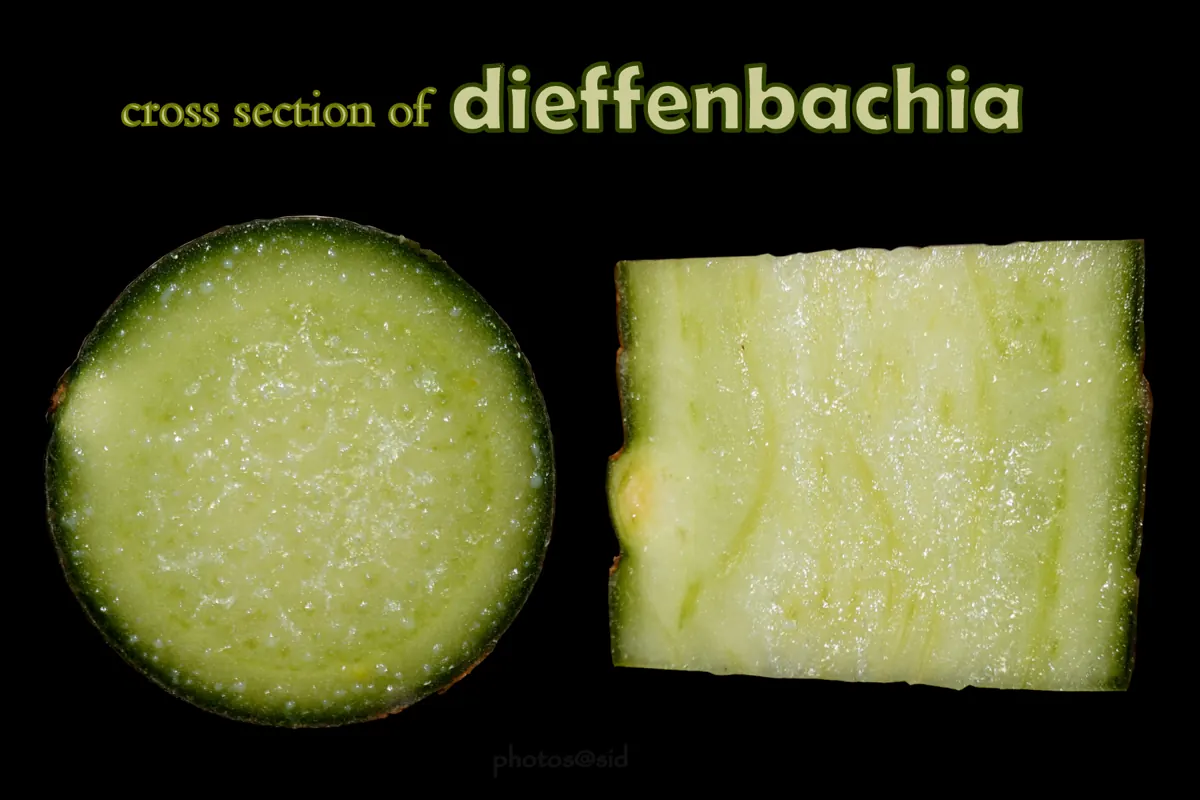
Cut the leftover bare cane into 2- to 3-inch pieces, each with at least one node (the ring-like joints). Lay them sideways, half-buried, in moist potting mix. New shoots grow from the nodes in a month or two.
Common problems
| What you see | Likely cause | What to do |
|---|---|---|
| Yellow lower leaves | Normal aging or overwatering | A few are normal; if many, water less |
| Soft, mushy stem at the soil | Stem rot | Cut healthy tops and reroot them |
| Brown, crispy edges | Dry air or dry soil | Water on time; raise humidity |
| Pale, washed-out leaves | Too much direct sun | Move to indirect light |
| Faded patterns, leaning stem | Too little light | Move closer to a window; turn the pot |
| Webbing or sticky leaves | Spider mites, mealybugs or scale | Wipe leaves; insecticidal soap |
Dumb cane FAQs
Why is it called dumb cane?
Chewing the plant causes swelling in the mouth and throat that can make it hard to speak for a while. “Dumb” is an old word for unable to speak.
Is dieffenbachia toxic to touch?
Touching the leaves is usually fine, but the sap can irritate skin and eyes. Wear gloves when cutting it and wash your hands afterward.
How often should I water a dieffenbachia?
When the top inch of soil is dry, usually once a week in summer and every 1 to 2 weeks in winter.
Can dumb cane grow in low light?
It handles medium light well and survives lower light, but it grows leggy and loses some of its patterning. Bright, indirect light is best.
Why are the leaves on my dieffenbachia turning yellow?
A few lower leaves yellow as the plant grows. Many yellow leaves usually mean overwatering or cold.
Sources and further reading
- ASPCA Animal Poison Control, Dieffenbachia
- North Carolina State Extension, Dieffenbachia seguine plant profile
- Wikipedia, Dieffenbachia
Safer choices for homes with kids and pets
If you have little ones or pets that chew, consider a pet-safe option like the spider plant, pilea or china doll plant. See all our pet-safe plants.
More from Houseplant Care
-
Money Tree Leaves Turning Yellow? 7 Causes and Fixes
Why money tree (Pachira aquatica) leaves turn yellow: overwatering, low light, drafts, sunburn, nutrients, pests or age, with a step-by-step check and fixes. -
Song of India Plant Care (Dracaena Reflexa)
Song of India (Dracaena reflexa) care: light, watering, humidity, brown tips from tap water, shaping twisty stems, propagation, problems and pet safety. -
China Doll Plant Care: Stop the Leaf Drop
China doll plant (Radermachera sinica) care: bright light, careful watering, why it drops leaves and how to stop it, pruning to keep it bushy, and pet safety. -
Monstera Plant Care: Bigger Leaves With More Holes
Monstera care: the light that makes split leaves, watering, soil, adding a moss pole, pruning and propagating from a node, yellow leaves and pet safety. -
Raven ZZ Plant Care: How to Keep It Black
Raven ZZ plant care: why new growth starts green and turns black, the light it needs to stay dark, watering, propagation, and how it differs from a ZZ. -
How to Propagate a Snake Plant: 4 Easy Methods
How to propagate a snake plant in water, in soil, by division or from rhizomes, with timelines, the variegation catch and fixes for rotting cuttings.