
Last updated September 30, 2026
Spider plants (Chlorophytum comosum) have hung in kitchen windows for generations, and there’s a reason they never go out of style. They grow fast, put up with a lot, are safe around cats and dogs, and keep sending out little baby plants you can pot up and hand to friends. Their one famous flaw is brown leaf tips, and that almost always comes down to a handful of fixable things.
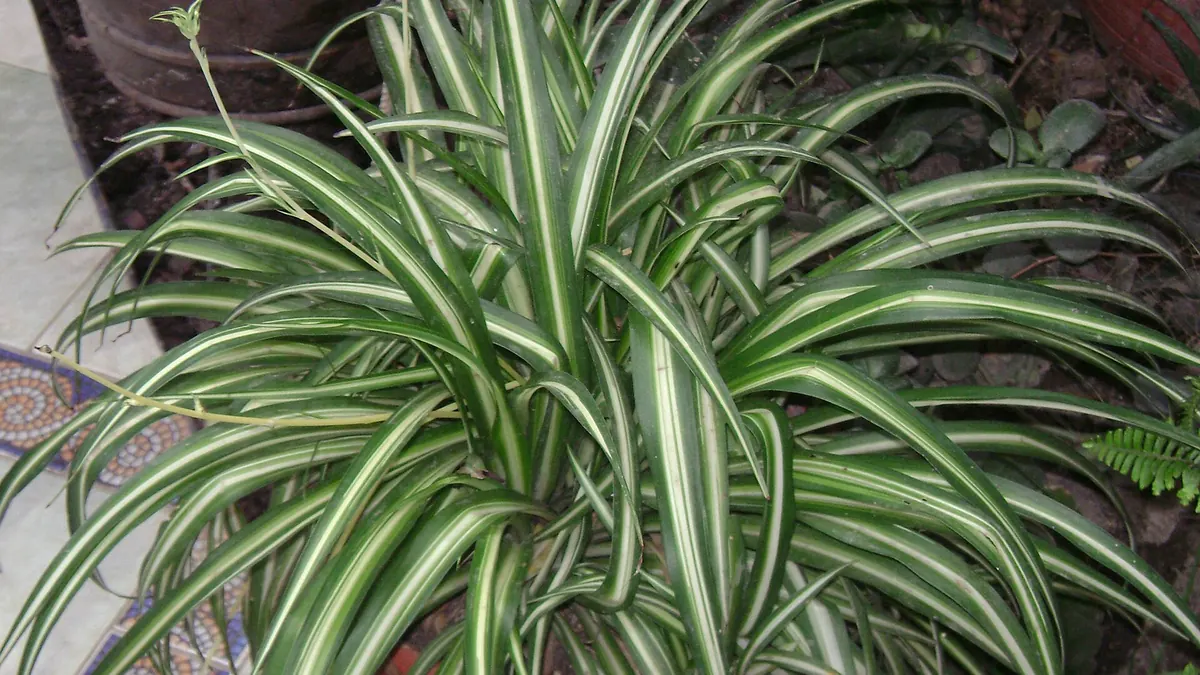
In short: bright, indirect light; water when the top inch or two of soil is dry; any decent well-draining potting mix; 60–80°F; a light monthly feed in spring and summer; and rain, distilled or filtered water if your tap water is giving it brown tips.
How to root spider plant babies
Let’s start with the fun part. Those dangling “spiderettes” are ready-made plants, and they root so easily that it’s hard to get wrong. Pick babies that already have little nubs of root at the base; they take off fastest.
Still attached
Set a small pot of moist mix beside the mother plant and press a baby onto the soil while it’s still on its runner. Pin it with a bent paperclip if needed. When it resists a gentle tug, after one to two weeks, snip the runner. Almost foolproof.
In water
Snip the baby off and sit it in a small glass so only its base touches the water. Change the water every few days and pot it up once the roots are an inch or two long, usually in one to two weeks.
Straight into soil
Snip it and plant the base directly into moist potting mix. Keep it evenly moist and out of direct sun until you see new growth, usually within two to three weeks.
Want a full-looking plant quickly? Pot three to five babies together. And if you’ve got a huge, crowded mother plant, you can also divide it in spring: take it out of the pot, pull or cut the root mass into sections that each have leaves and roots, and pot them separately.

Why isn’t my spider plant making babies?
Babies come after flowers, and spider plants flower once they’re mature and a little root-bound. You’ll see small white, star-shaped flowers along long arching stems, and the plantlets form at those same points. If yours isn’t producing any, one of these is usually why:
- It’s too young. A new plant often needs a year or more before it sends out runners.
- The pot is too big. In a roomy pot, the plant spends its energy on roots instead.
- Not enough light. Less light means fewer flowers and fewer babies.
- Lights on late at night. Spider plants flower most readily with long, dark nights, so a room lit into the evening can hold them back.
- Too much fertilizer. Overfeeding pushes leaves at the expense of flowers.
Do you have to cut the babies off? No. They can stay on for years without hurting a healthy plant. Take them off if you want new plants, or if the mother starts looking tired, since making lots of babies costs energy.
Brown tips: why they happen and how to stop them
Spider plants are unusually sensitive to fluoride, and they also react to chlorine and to salts from hard water and fertilizer. Those build up at the leaf tips and kill the tissue. Dry air near a heater and letting the soil dry right out make it worse.
Brown tissue won’t turn green again, so the goal is to stop new damage:
- Water with rainwater, distilled or filtered water for a few months.
- Flush the soil thoroughly every few months to rinse out built-up salts.
- Cut back on fertilizer.
- Don’t let the soil dry out completely.
- Move the plant away from heating vents.
Everyday spider plant care
| Need | What works |
|---|---|
| Light | Bright indirect is best; copes with medium light; avoid hot afternoon sun |
| Water | When the top 1–2 inches are dry, roughly weekly in summer |
| Soil | General-purpose indoor mix with a little perlite |
| Humidity | Normal household air; keep away from heating vents |
| Temperature | 60–80°F; keep above 50°F |
| Feeding | Half-strength balanced fertilizer, monthly in spring and summer |
| Size | 12–24 in tall and wide, runners trailing 2 ft or more |
Light
An east- or north-facing window, or a few feet back from a south- or west-facing one, is ideal. Spider plants also do well under grow lights or in a bright office. With too little light they grow slowly, make fewer babies, and variegated types turn greener as the white stripes shrink. Too much direct sun gives you pale, washed-out leaves and brown scorch. They love a summer outdoors in dappled shade, too; just bring them in before nights drop below 50°F, and check carefully for pests first.
Watering
Water when the top inch or two is dry: often about once a week in a warm, bright room in summer, every one to two weeks in winter. Hanging baskets dry out faster than you’d think, so check them more often. Water until it drains, let it drain fully and empty the saucer. For baskets, water over the sink or tub and let the drips finish before you hang it back up.
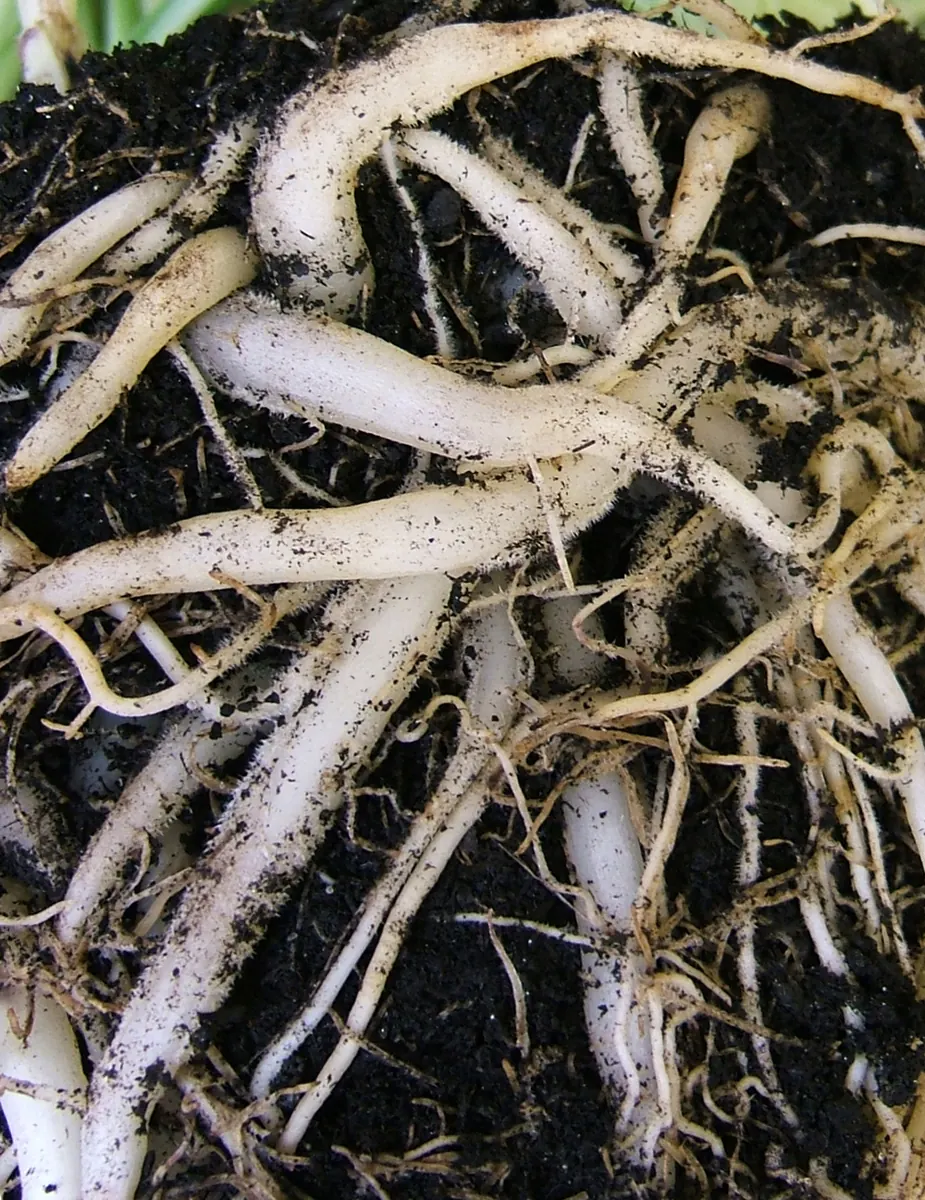
Under the soil, spider plants grow thick, white, water-storing roots. That’s why they forgive a missed watering far more easily than soggy soil. Limp, pale leaves that fold lengthwise mean thirst; yellow leaves in wet soil mean too much water.
Soil, pot and repotting
They aren’t fussy: a general-purpose indoor potting mix with some perlite works. Skip dense garden soil and mixes loaded with fertilizer. Any pot with a drainage hole is fine, though those fleshy roots expand quickly and can crack a rigid pot, so flexible plastic is forgiving.
Repot every one to two years in spring, when roots push out of the drainage hole or above the soil, or the plant dries out within a day or two of watering. Go up just one size; a snug pot encourages babies.
Temperature, humidity and feeding
Ordinary household humidity is fine. Keep it between 60 and 80°F; it shrugs off brief dips into the 40s, but long spells below 50°F slow growth and can damage leaves. Outdoors it grows year-round only in about USDA zones 9 to 11. Feed with a balanced liquid fertilizer at half strength about once a month in spring and summer, and stop in fall and winter. When in doubt, feed less.
Spider plant varieties
‘Vittatum’
Green leaves with a broad creamy-white center stripe. The one you’ll see most often.
‘Variegatum’
The reverse: green centers with white edges.
‘Bonnie’
Compact, with curly, twisting leaves.
‘Ocean’
Shorter and more upright, with white margins.
Plain green
The species itself. The most vigorous, and the best in lower light.
Spider plants come from tropical and southern Africa, where they grow as clumping perennials. You’ll also hear them called airplane plant, ribbon plant, spider ivy and St. Bernard’s lily. The “spider” part is the babies, hanging off their runners like spiders on silk.
Other spider plant problems
| What you see | Likely cause | What to do |
|---|---|---|
| Yellow leaves, damp soil | Overwatering | Let the top inch or two dry; check drainage |
| Yellow or pale leaves in a sunny window | Sun stress | Move to bright, indirect light |
| Limp, folded leaves | Thirst | Water thoroughly |
| Stripes fading | Too little light | Move somewhere brighter |
| Mushy base, wilting in wet soil | Root rot | Unpot, cut away rotten roots, repot in fresh mix |
| Sticky leaves, webbing or white fluff | Aphids, spider mites, mealybugs or scale | Rinse, then insecticidal soap weekly |
A few yellowing leaves on the oldest, outermost growth are normal aging; just pull them off.
Spider plant FAQs
Why does my spider plant have brown tips?
Usually fluoride, chlorine or salts in tap water, too much fertilizer, very dry air, or soil that dries out completely. Switch to rain, distilled or filtered water, flush the soil, feed less, and water when the top inch or two is dry.
How often should I water a spider plant?
When the top one to two inches of soil are dry. That’s usually about once a week in spring and summer and every one to two weeks in winter. Check hanging baskets more often, since they dry quickly.
Are spider plants toxic to cats?
No. The ASPCA lists them as non-toxic to cats and dogs. A cat that eats a lot of leaves may vomit because they’re hard to digest, but the plant isn’t poisonous.
How do I get my spider plant to have babies?
Give it bright, indirect light, let it get slightly root-bound, don’t overfeed, and give it normal dark nights. Young plants may need a year or more before they start.
Can spider plants live in low light?
They’ll survive in fairly low light, but they grow slowly, make fewer babies, and variegated types lose some striping. Bright, indirect light is best.
Sources and further reading
- ASPCA Animal Poison Control, Spider plant
- North Carolina State Extension, Chlorophytum comosum plant profile
- Wikipedia, Chlorophytum comosum
Pet-safe and easy: what to grow next
Prayer plant
Patterned leaves that fold up every evening, and how to stop the crispy brown edges.
Lipstick plant
A trailing, pet-safe basket plant with red tubular flowers, and how to make it rebloom.
Snake plant
Upright, drought-tolerant and almost indestructible, as long as the soil dries out.
More from Houseplant Care
-
Money Tree Leaves Turning Yellow? 7 Causes and Fixes
Why money tree (Pachira aquatica) leaves turn yellow: overwatering, low light, drafts, sunburn, nutrients, pests or age, with a step-by-step check and fixes. -
Song of India Plant Care (Dracaena Reflexa)
Song of India (Dracaena reflexa) care: light, watering, humidity, brown tips from tap water, shaping twisty stems, propagation, problems and pet safety. -
China Doll Plant Care: Stop the Leaf Drop
China doll plant (Radermachera sinica) care: bright light, careful watering, why it drops leaves and how to stop it, pruning to keep it bushy, and pet safety. -
Dumb Cane Plant (Dieffenbachia) Care and Safety Guide
Dumb cane (dieffenbachia) care: light, watering, soil, cutting back a leggy cane, propagation, yellow leaves, and important safety tips for kids and pets. -
Monstera Plant Care: Bigger Leaves With More Holes
Monstera care: the light that makes split leaves, watering, soil, adding a moss pole, pruning and propagating from a node, yellow leaves and pet safety. -
Raven ZZ Plant Care: How to Keep It Black
Raven ZZ plant care: why new growth starts green and turns black, the light it needs to stay dark, watering, propagation, and how it differs from a ZZ.