
Last updated September 30, 2026
Garlic might be the easiest crop you can grow. You push a single clove into the ground in fall, forget about it over winter, and dig up a whole head of garlic the next summer. It takes up little space, few pests bother it, and homegrown garlic tastes far better than most store-bought bulbs.
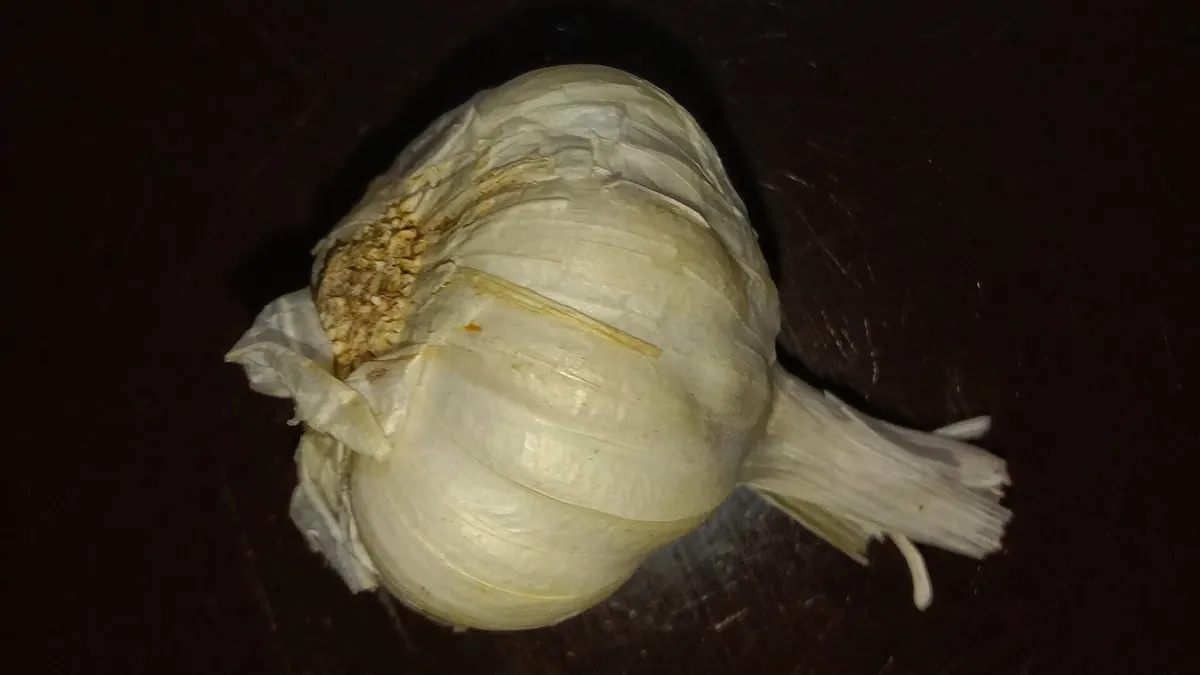
Garlic at a glance
- When: fall, a few weeks before the ground freezes. October is ideal for much of the US.
- Depth: about 2 inches deep, pointy end up.
- Spacing: 6 inches apart, in rows 12 inches apart.
- Sun: full sun, at least 6 hours a day.
- Harvest: early to mid summer, when about half the leaves have turned brown.
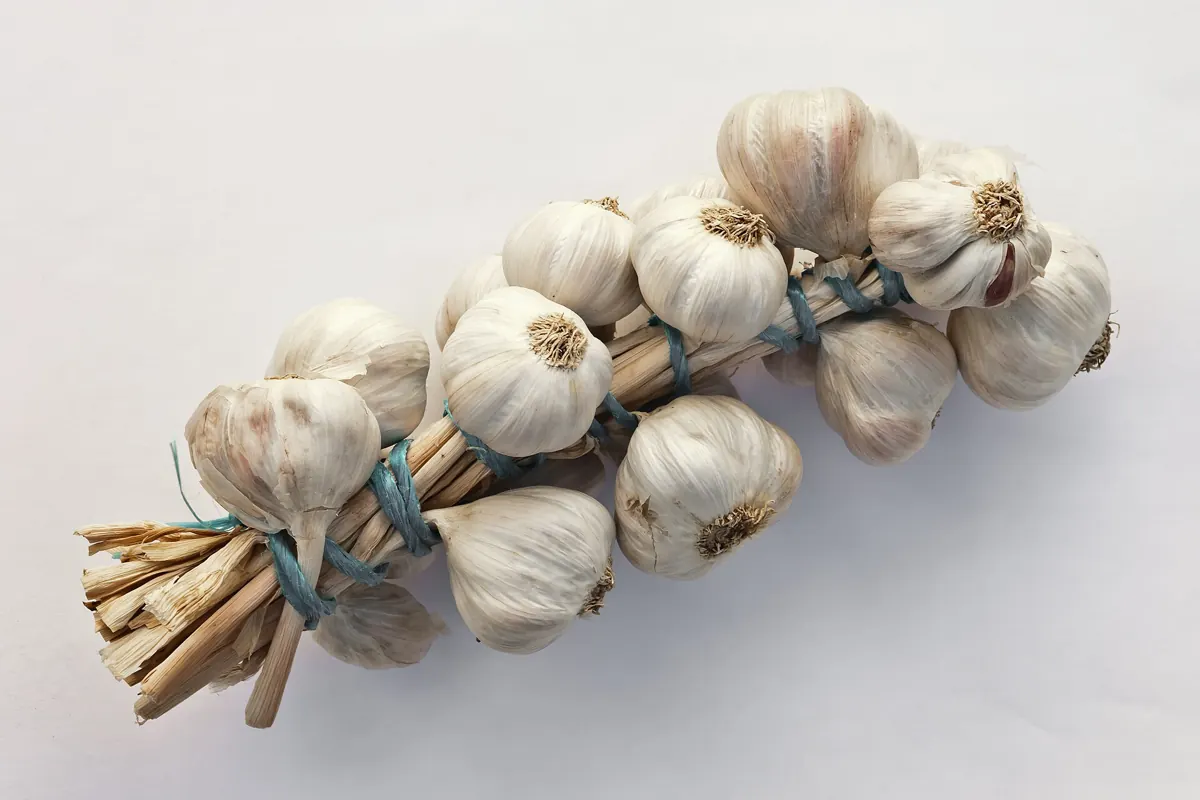
Hardneck or softneck: which garlic should you grow?
There are two main kinds of garlic. The right one depends mostly on your winters.
Hardneck garlic
Best for cold winters (roughly zones 3 to 6). It grows a stiff central stalk and sends up a curly flower stem called a scape in early summer. Cloves are bigger and easier to peel, with a rich, bold flavor. It stores for about 4 to 6 months.
Softneck garlic
Best for mild winters (roughly zones 7 to 10). It has no stiff stalk, so the soft leaves can be braided. Heads hold more, smaller cloves. It’s the type sold in most grocery stores and stores for 6 to 9 months.
Buy “seed garlic” from a garden center or seed company rather than planting grocery-store garlic. Store garlic is often a softneck grown far away, may not suit your climate, and is sometimes treated to stop it from sprouting.
When to plant garlic
Garlic needs a cold spell of several weeks to split into cloves. Without it, you may get one big round bulb instead of a head. So plant in fall, and aim to get cloves in the ground about two to four weeks before the soil freezes. That gives roots time to grow before winter, without so much top growth that the leaves get damaged.
- Cold zones (3–5): late September to mid-October.
- Middle zones (6–7): mid-October to early November.
- Warm zones (8–10): November to December. Some growers chill cloves in the fridge for a few weeks first.
How to plant garlic, step by step
- Prepare the bed. Pick a sunny spot with loose soil that drains well. Mix in 2 or 3 inches of compost. Raised beds work great.
- Split the heads. Right before planting, gently break the heads into single cloves. Keep the papery skin on each clove.
- Choose the biggest cloves. Big cloves grow big heads. Cook with the small ones.
- Plant pointy end up. Push each clove about 2 inches deep, with the flat root end down. Space them 6 inches apart in rows 12 inches apart.
- Water in. Give the bed a good soak after planting.
- Mulch. Once the ground starts to get cold, cover the bed with 4 to 6 inches of straw or shredded leaves. This protects cloves from freezing and thawing over winter.
Care from spring to harvest
Spring
Green shoots often poke up in late fall or early spring. Pull the mulch back a little once hard freezes are over, so the soil warms up, but leave some to hold moisture and keep weeds down. Feed with a nitrogen-rich fertilizer or compost when the leaves start growing strongly. Garlic hates competition, so pull weeds while they’re small.
Watering
Garlic needs about 1 inch of water a week while it’s growing, from rain or the hose. Stop watering about two weeks before harvest, once the lower leaves start turning brown. Dry soil at the end helps the heads cure and store well.
Scapes: the bonus crop
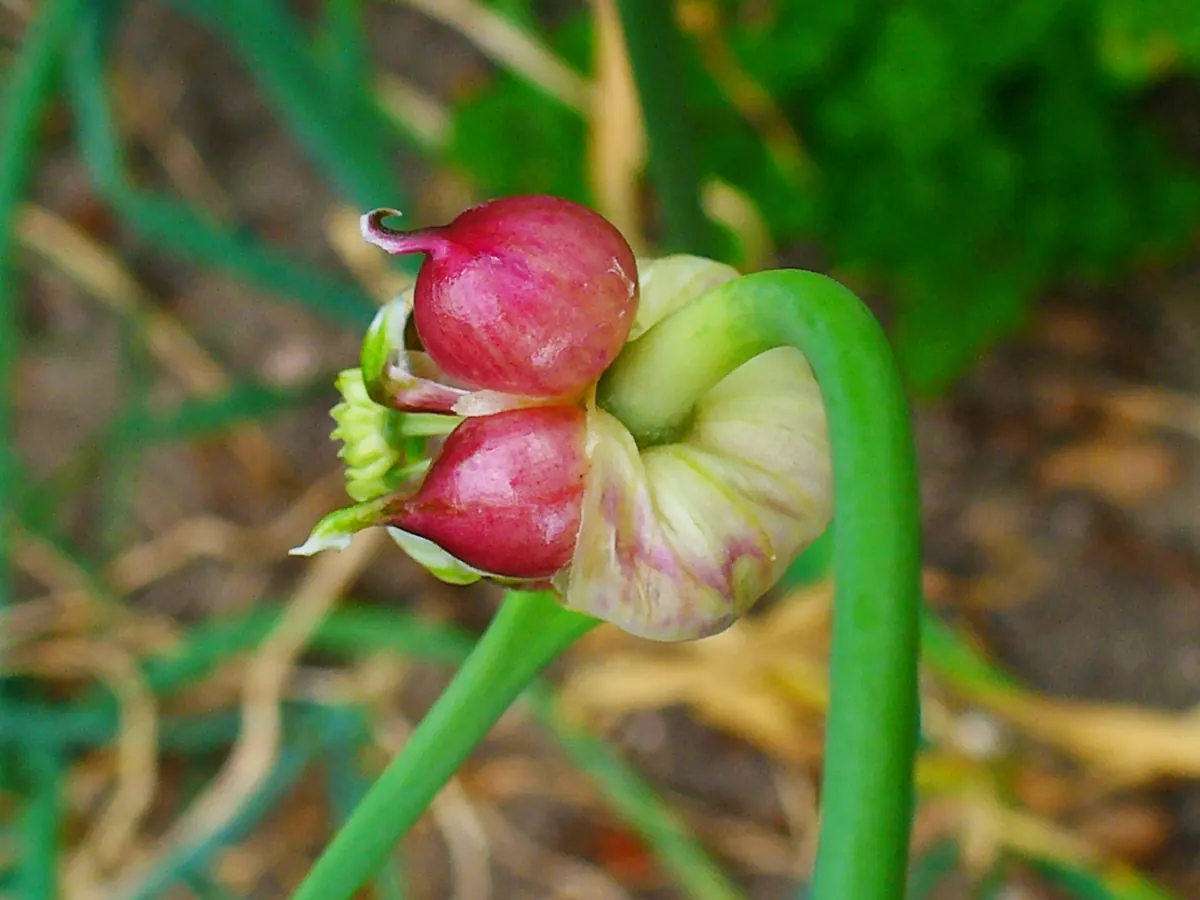
In early summer, hardneck garlic sends up a curly flower stalk called a scape. Snap or cut it off once it makes a loop. This pushes the plant’s energy into the bulb, so you get bigger heads. And don’t throw scapes away. They taste like mild garlic and are great in pesto, stir-fries and eggs.
When and how to harvest garlic
Harvest when about half of the leaves have turned brown and the rest are still green, usually in June or July. Each green leaf is one wrapper around the head, so waiting too long leaves the heads with fewer wrappers and they don’t store as well.
Loosen, don’t pull
Use a garden fork to loosen the soil a few inches away from the plant. Then lift the head out gently. Pulling on the stalk can snap it off.
Brush off the soil
Shake or gently brush off loose dirt. Don’t wash the heads.
Cure for 2 to 4 weeks
Hang garlic in bunches, or lay it on a screen, in a shady, dry place with good airflow. The necks and wrappers should be fully dry.
Trim and store
Cut stalks to about an inch above the head and trim the roots. Store in a cool, dry, dark place with airflow, such as a mesh bag. Save the biggest heads to plant next fall.
Common garlic problems
| Problem | Likely cause | Fix |
|---|---|---|
| One round bulb, no cloves | Not enough cold, or planted too late | Plant in fall; chill cloves in warm zones |
| Small heads | Small cloves, weeds, too little water or scapes left on | Plant big cloves, weed often, water weekly, remove scapes |
| Yellow leaves in spring | Low nitrogen or waterlogged soil | Feed with compost or fertilizer; improve drainage |
| Heads rot in storage | Harvested wet or not cured fully | Stop watering before harvest; cure in dry air |
Garlic growing FAQs
When is the best time to plant garlic?
In fall, about two to four weeks before the ground freezes. For much of the US, that means October or early November.
How deep should I plant garlic cloves?
About 2 inches deep, pointy end up, and 6 inches apart. In very cold areas, go a little deeper and use thick mulch.
Can I plant garlic from the grocery store?
It may grow, but it’s a gamble. Store garlic may be treated to stop sprouting and may not suit your climate. Seed garlic from a garden supplier is more reliable.
Can you plant garlic in the spring?
You can, but heads will be smaller, and they may not form cloves without winter cold. Fall planting gives much better results.
How do I know when garlic is ready to harvest?
When about half of the leaves have turned brown and the rest are still green, usually in early to mid summer.
Sources and further reading
- North Carolina State Extension, Allium sativum plant profile
- ASPCA Animal Poison Control, Garlic
- Wikipedia, Garlic
Keep growing
Fall is bulb season, so this is also the perfect time to plant tulip bulbs for spring color. Find more edible plants in our herbs and edibles section.
More from Herbs & Edible Plants
-
Bay Leaf Plant: How to Grow Bay Laurel in a Pot
How to grow a bay leaf plant (Laurus nobilis): pots and soil, sun, watering, bringing it indoors for winter, pruning, harvesting and drying leaves, and pests. -
How to Grow Basil for a Big, Bushy Harvest
How to grow basil from seed or a store-bought plant: warmth and sun, watering, the pinching trick for bushy plants, harvesting and fixing problems. -
How to Plant Lavender So It Actually Survives
How to plant lavender: choosing English, French or lavandin types, when to plant, soil and drainage, spacing, growing in pots, watering and pruning.