
Last updated September 30, 2026
Every evening the prayer plant (Maranta leuconeura) lifts its leaves upright, like hands pressed together, and every morning it lays them flat again. Throw in red veins, lime-green feathering and dark blotches, and you can see why so many people bring one home. You can also see why so many of them end up with crispy brown edges a month later. The prayer plant isn’t hard. It just has firm opinions about water and air.
Light
Medium to bright indirect
Water
When the top inch is dry
Water type
Filtered, distilled or rain
Humidity
50–60% or more
Temperature
65–80°F
Pets
Non-toxic (ASPCA)
Why prayer plant leaves move at night
The movement has a name: nyctinasty. At the base of each leaf blade sits a small swollen joint called a pulvinus. As the light fades, cells in the pulvinus shift their water pressure and lift the leaf upright. When light comes back, the leaf lowers again. It’s a normal daily rhythm, not stress, and honestly it’s half the fun of owning one.
Because the rhythm follows light, a plant under lamps that stay on late, or in a spot that’s too bright all day, may stop folding properly. If yours has quit “praying”, check its light cycle before you worry about anything else.

Is it a Maranta or a Calathea?
Strictly speaking, “prayer plant” means Maranta. The name gets borrowed by its relatives in the arrowroot family (Marantaceae), especially calatheas (most now reclassified as Goeppertia), stromanthes and ctenanthes, which also fold their leaves at night. This guide covers true marantas, but here’s how the two you’re most likely to meet compare.
| Maranta (prayer plant) | Calathea | |
|---|---|---|
| Growth habit | Low, spreading, trails over the pot edge | Upright clumps of leaves on long stalks |
| Size | About 12 in tall, 12–18 in wide | Often 1–3 ft tall |
| Fussiness | Moderate | Higher, especially about humidity |
| Propagation | Stem cuttings root easily | Division only |
| Pets | Non-toxic | Non-toxic |
The marantas you’ll see for sale are mostly these four:
- Red prayer plant (var. erythroneura, sold as ‘Fascinator’, herringbone or tricolor): dark green leaves, bright red herringbone veins and a lime-green feathered center. The most common by far.
- ‘Lemon Lime’: bright green with yellow-green veining and no red.
- Rabbit’s foot or rabbit tracks (var. kerchoveana): pale green leaves with dark brown blotches like footprints.
- Black prayer plant (‘Massangeana’): nearly black-green leaves, silvery veins, purple underside.
In the wild, Maranta leuconeura grows low on the forest floor in Brazil, in shade, warmth and damp air. Keep that picture in mind and the rest of its care makes sense.
The prayer plant care checklist
Light
Bright to medium indirect: close to a north- or east-facing window, or a few feet back from a south- or west-facing one, ideally behind a sheer curtain. Direct sun fades the colors and scorches the edges; too little light makes it leggy.
Water
Keep the soil lightly and evenly moist. Water when the top inch feels dry, roughly weekly in summer and every 10–14 days in winter. Never bone dry, never soggy.
Humidity
50–60% or higher. A winter home with the heating on can sit at 20–30%, which is where the brown edges come from.
Soil and pot
Airy but moisture-holding: about two parts peat or coco coir, one part perlite, one part fine orchid bark. Shallow, wide pots suit the shallow roots. Drainage hole essential.
Temperature
65–80°F. Below about 60°F growth stalls and leaves curl. Keep it away from cold windows, doors and heating or AC vents.
Feeding
Balanced liquid fertilizer at half strength or weaker, every 2–4 weeks in spring and summer. Nothing in fall and winter. Always feed damp soil.
Watering: evenly moist, and the water itself matters
This is where the prayer plant parts ways with the drought-tolerant plants many of us start with. Marantas have fine, shallow roots and don’t store much water, so the soil needs to stay lightly moist. Let a pot dry out completely and you’ll get curled leaves and crispy edges. Keep it constantly wet and you’ll get yellow leaves and root rot. You’re aiming for the middle.
Just as important is what you pour in. Prayer plants react badly to the fluoride, chlorine and dissolved minerals in a lot of city tap water. Those build up in the soil and burn the tips and edges. If your plant keeps browning even though humidity and watering look fine, switch to filtered, distilled or collected rainwater. Leaving tap water out overnight lets some chlorine escape, but it doesn’t remove fluoride, chloramine or minerals. Use it at room temperature; cold water can shock the roots.
- Water evenly over the soil until it runs from the drainage hole.
- Let the pot drain completely, then empty the saucer.
- Every few months, flush the pot with a generous amount of distilled or rainwater to rinse out built-up salts.
Raising humidity: what works and what doesn’t
A cheap digital hygrometer will tell you your real humidity, and it’s usually lower than people think. Here’s how the common fixes stack up.
| Method | How much it helps | Verdict |
|---|---|---|
| Humidifier near the plant | A lot, and consistently | The best option by a wide margin |
| Grouping plants together | A little | Worth doing anyway |
| A bright bathroom or kitchen | Moderate | Good if the light is right |
| Pebble tray | Slight, very local | Helps a bit; keep the pot above the water |
| Misting | Only for minutes | Skip it; wet leaves invite fungal spots |
Fixing the big three: brown tips, curling and yellow leaves
Brown, crispy tips and edges
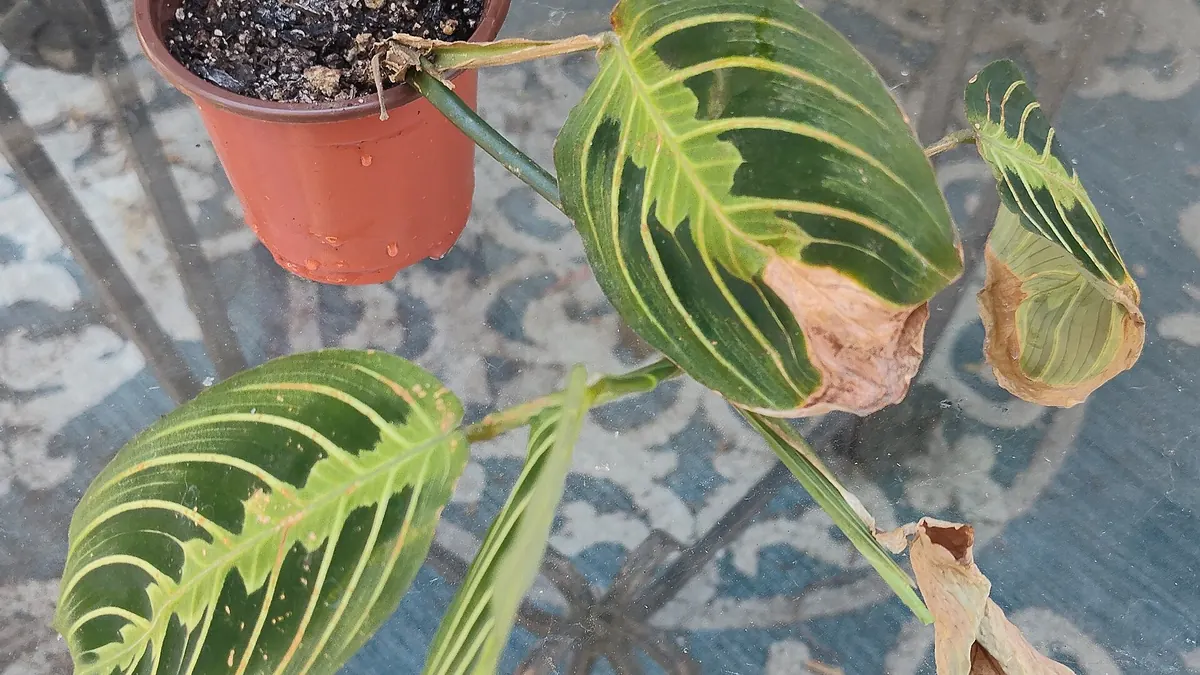
This is the classic prayer plant complaint, and there’s usually more than one cause at once. Work through them in order: humidity (is it under 50%?), water quality (hard or fluoridated tap water?), watering (is the soil drying out completely?), then fertilizer (are you feeding too strongly?). Brown areas won’t turn green again, so trim them with clean scissors, following the leaf’s natural shape, and judge your progress by the new leaves.
Leaves curling inward
Prayer plant leaves roll up to save water. If the soil is dry, water thoroughly. If it’s moist, the likely culprit is dry air or cold; move the plant away from vents and windows and raise the humidity. Don’t confuse this with the normal evening fold, which happens at the leaf joint rather than along the leaf.
Yellow leaves
One or two yellowing leaves at the base of an otherwise healthy plant is just aging. Widespread yellowing, especially with soggy soil, means overwatering. Let the top inch dry out before you water again and check that the pot drains freely. If the stems at soil level are soft or dark and the soil smells sour, look for root rot: unpot, cut away mushy roots, and repot in fresh mix.
| Other symptom | Likely cause | Fix |
|---|---|---|
| Faded, bleached colors | Too much direct light | Move to softer, indirect light |
| Long, bare, leggy stems | Too little light, or age | More light; prune above a node |
| Leaves not folding at night | Irregular light cycle or too much light | Keep a normal day-night pattern |
| Fine webbing, speckled leaves | Spider mites | Shower the plant; insecticidal soap weekly; raise humidity |
| Wilting with wet soil | Root rot | Unpot, remove rotten roots, repot |
Spider mites are the prayer plant’s most common pest, and they love dry winter air. Look for fine webbing under the leaves and tiny pale speckles. Rinse the whole plant in the shower, treat with insecticidal soap every five to seven days until they’re gone, and raise the humidity so they don’t come back. Mealybugs, thrips and fungus gnats turn up now and then too.
Pruning, repotting and flowers
Prayer plants grow at a moderate pace in warm months, spreading low and then trailing over the edge of the pot, which makes them lovely in hanging baskets. If yours gets long and sparse, prune in spring or summer: cut just above a leaf node (the little joint where a leaf meets the stem) and it’ll push new growth from below the cut. Keep those trimmings; they’re your next plants.
Repot every one to two years in spring, when roots circle the pot or poke out of the drainage hole, or when the soil dries out within a couple of days. Go up just an inch or two and keep the pot shallow.
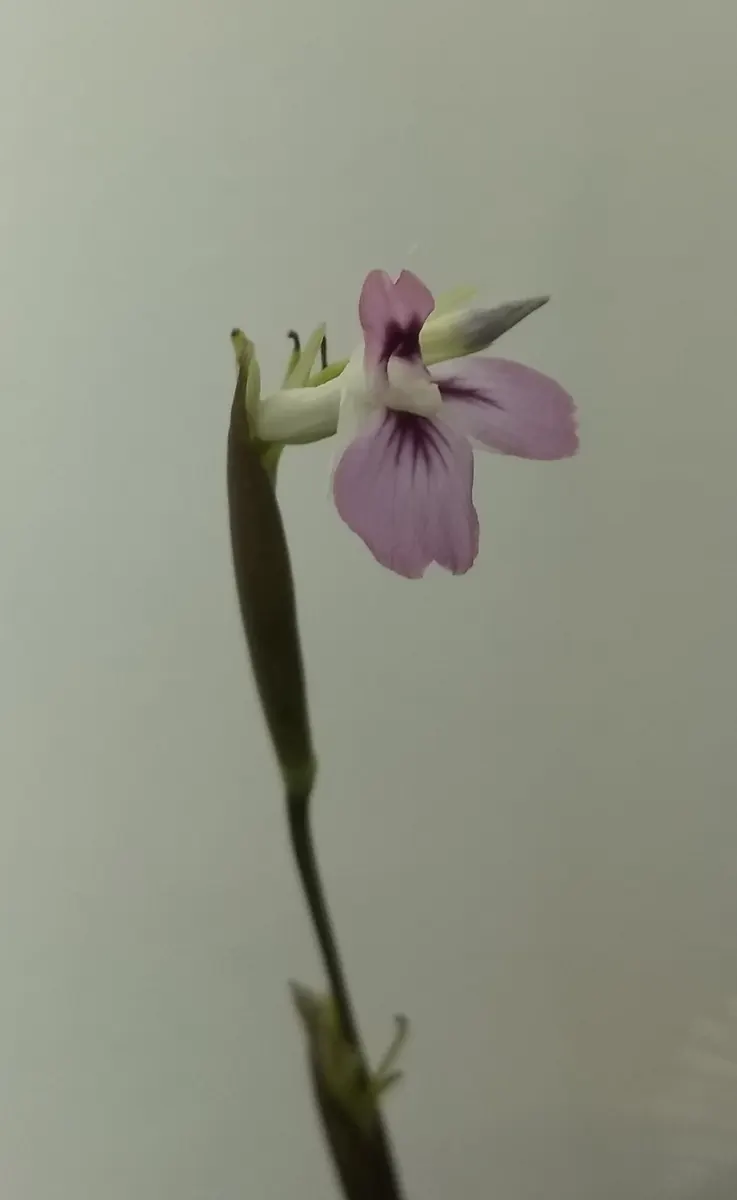
Healthy marantas sometimes send up small white or pale lavender flowers on thin stalks. They’re pretty but minor; pinch them off if you’d rather the plant put its energy into leaves. In fall and winter growth slows, so water a little less, stop feeding, and keep a closer eye on humidity.
How to root prayer plant cuttings
Stem cuttings in water usually root in two to four weeks, and in soil in three to five. You can also divide a big plant when you repot.
Pick a healthy stem
Choose one with at least two or three leaves.
Cut just below a node
Use clean scissors and cut about a quarter inch below a node. That’s where the roots will grow; a cutting without a node won’t root.
Water or soil
Stand the cutting in room-temperature filtered water with the node under the surface, or plant it an inch deep in moist, airy mix.
Keep it warm and humid
Bright indirect light and warmth. A clear plastic bag loosely over a soil cutting holds in humidity. Change the water weekly.
Pot it up
When water roots are 1–2 inches long, move the cutting to soil and keep it slightly moister than usual for a few weeks. Pot several cuttings together for a fuller plant.
To divide instead, tease the root ball apart into two or three sections at repotting time, each with its own roots and several stems. Pot them up, water well and keep the humidity high. A week or two of drooping is normal.
Prayer plant FAQs
Why do prayer plant leaves close at night?
They fold up in the evening and open in the morning through a daily rhythm called nyctinasty. A joint at the base of each leaf changes its internal water pressure in response to light. It’s completely normal and a sign of a healthy plant.
How often should I water a prayer plant?
When the top inch of soil feels dry: often about once a week in spring and summer, and every 10 to 14 days in winter. Keep the soil lightly moist, never soggy, and don’t let it dry out completely.
Why are the tips of my prayer plant turning brown?
Usually low humidity, minerals and fluoride in tap water, underwatering, or too much fertilizer. Raise humidity above 50%, switch to filtered, distilled or rainwater, and keep the soil evenly moist.
Is a prayer plant toxic to cats?
No. The ASPCA lists the prayer plant as non-toxic to cats, dogs and horses.
Can prayer plants grow in low light?
They put up with medium and fairly low light better than many colorful houseplants, but they’ll grow slowly, get leggy and lose some color. Bright, indirect light without direct sun gives the best results.
Sources and further reading
- ASPCA Animal Poison Control, Prayer plant
- North Carolina State Extension, Maranta leuconeura plant profile
- Wikipedia, Maranta leuconeura
More plants for a bright, humid spot
Wandering jew (inch plant)
A fast trailing plant with silver and purple stripes, and how to keep it from getting leggy.
Lipstick plant
A trailing, pet-safe basket plant with red tubular flowers, and how to make it rebloom.
Spider plant
A fast, forgiving, pet-safe classic that makes babies you can give away.
More from Houseplant Care
-
Money Tree Leaves Turning Yellow? 7 Causes and Fixes
Why money tree (Pachira aquatica) leaves turn yellow: overwatering, low light, drafts, sunburn, nutrients, pests or age, with a step-by-step check and fixes. -
Song of India Plant Care (Dracaena Reflexa)
Song of India (Dracaena reflexa) care: light, watering, humidity, brown tips from tap water, shaping twisty stems, propagation, problems and pet safety. -
China Doll Plant Care: Stop the Leaf Drop
China doll plant (Radermachera sinica) care: bright light, careful watering, why it drops leaves and how to stop it, pruning to keep it bushy, and pet safety. -
Dumb Cane Plant (Dieffenbachia) Care and Safety Guide
Dumb cane (dieffenbachia) care: light, watering, soil, cutting back a leggy cane, propagation, yellow leaves, and important safety tips for kids and pets. -
Monstera Plant Care: Bigger Leaves With More Holes
Monstera care: the light that makes split leaves, watering, soil, adding a moss pole, pruning and propagating from a node, yellow leaves and pet safety. -
Raven ZZ Plant Care: How to Keep It Black
Raven ZZ plant care: why new growth starts green and turns black, the light it needs to stay dark, watering, propagation, and how it differs from a ZZ.