
Last updated September 30, 2026
The ZZ plant (Zamioculcas zamiifolia) is the houseplant people buy when they have been told they kill houseplants. It stores water in thick underground rhizomes, shrugs off dim corners and dry air, and can go a month without a drink. What actually kills a ZZ plant is almost never neglect. It is kindness, in the form of too much water.
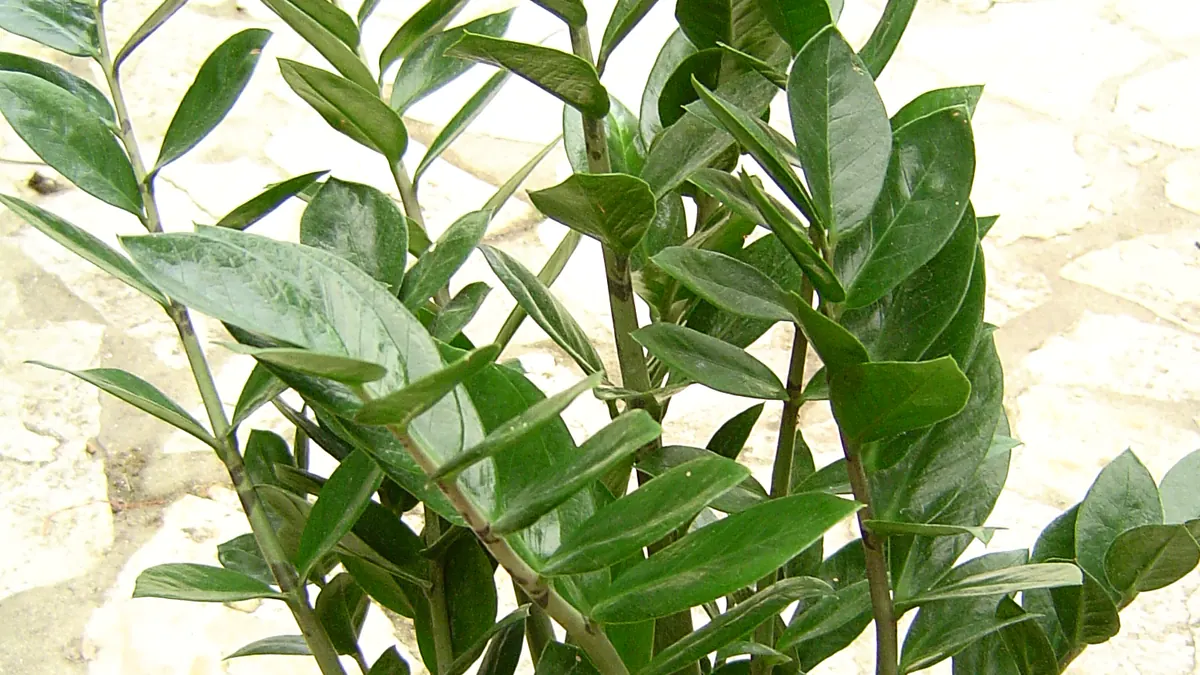
Key takeaways
- Water only when the soil is completely dry all the way down: roughly every 2–3 weeks in summer and every 4–6 weeks in winter.
- Light: bright, indirect light for growth. It tolerates low light, but barely grows there.
- Soil: fast-draining cactus mix in a pot with a drainage hole, only slightly wider than the roots.
- Warmth: 65–80°F, never below 60°F for long.
- Safety: mildly toxic if chewed. Keep it away from pets and small children.

Botanical name
Zamioculcas zamiifolia
Family
Araceae (aroids)
Light
Bright indirect; tolerates low
Water
When soil is fully dry
Humidity
Normal household air
Temperature
65–80°F
Size indoors
2–3 ft tall and wide
Growth
Slow, in flushes
The one rule: water only when the pot is dry all the way down
Start here, because this is the section that matters. Overwatering is the most common way ZZ plants die. Soggy soil suffocates and rots the rhizomes long before the leaves show any sign of trouble, and by the time stems go yellow and mushy at the base, the damage underground is usually well advanced.
Water only when the soil is completely dry, not just dry on top. Push a finger or a wooden chopstick all the way down into the pot. If it comes out with any damp soil clinging to it, wait. As a rough guide, that works out to every two to three weeks in a warm, bright spring or summer, and every four to six weeks (sometimes longer) in winter or in low light. Treat those numbers as a starting point, not a schedule; the soil is the schedule.
The plant will also tell you. A thirsty ZZ has leaflets that look slightly less glossy and may begin to curl inward, and in a plastic pot the whole thing feels noticeably light when you lift it.
Soak it slowly
Water slowly and thoroughly until water runs freely out of the drainage hole, so the whole root ball is wetted, not just one channel.
Let it drain
Leave the pot to drain completely for 10–15 minutes.
Empty the saucer
Tip out the saucer or cachepot. Never leave a ZZ standing in water.
A deep soak followed by a long dry spell mimics the plant’s natural rainy-then-dry rhythm. Frequent small sips do the opposite: they keep the top of the soil damp while the roots underneath never get a proper drink or a proper rest.
How much light does a ZZ plant need?
ZZ plants are sold as “low-light plants”, and that is only half true. A ZZ will survive in low light, including a room lit mostly by overhead bulbs, for a long time. It will not grow much there.
Low light
Survives, barely grows. Expect a new stem or two a year, stems that lean toward the nearest window, and soil that dries slowly. Water much less often here.
Bright, indirect (best)
A few feet back from a south- or west-facing window, or right beside an east- or north-facing one. A healthy ZZ here pushes out several new stems every spring and summer.
Hot direct sun
Yellowed, bleached or brown scorched patches on the leaflets facing the glass. Gentle morning sun is fine; hot afternoon sun through a south or west window is not.
Artificial light works well. A ZZ does fine under a full-spectrum LED grow light or in a bright office lit by fluorescent tubes for most of the day. Signs of too little light are long, floppy stems with widely spaced leaflets and a strong lean in one direction. Rotate the pot a quarter turn every time you water so the stems grow evenly.
Soil, pot and repotting
ZZ plants need soil that drains fast and dries out evenly. A bagged cactus and succulent mix works on its own. If you only have regular indoor potting mix, cut it with roughly one part perlite and one part orchid bark to every two parts mix. The goal is a mix that water runs straight through rather than pooling in.
The pot must have a drainage hole. Decorative pots without one are fine as an outer cachepot, as long as the plant sits inside in a nursery pot you can lift out to drain. Choose a pot only slightly wider than the root mass: a ZZ in an oversized pot sits in a large volume of soil that stays wet for weeks, which is exactly the condition that rots rhizomes.
When to repot
Repot every two to three years, in spring or early summer, when you see any of these signs:
- Rhizomes pushing up above the soil line or bulging against the sides of the pot
- A plastic nursery pot that has visibly deformed or split
- Roots circling out of the drainage hole
- Water running straight through without soaking in, because the pot is mostly rhizome
Move up only one pot size, about 1–2 inches wider. Set the rhizomes at the same depth they were growing before, fill in with fresh fast-draining mix, and wait about a week before watering so any roots damaged in the move can callus over.
Humidity, temperature and fertilizer
This is the easy part. ZZ plants are comfortable in ordinary household humidity, including dry, heated winter air. You do not need a humidifier, a pebble tray or misting; misting does little for any houseplant and only encourages leaf spot on this one.
Keep your ZZ between 65 and 80°F for steady growth. It tolerates brief dips into the 50s, but prolonged cold below about 60°F slows it to a halt, and frost will damage it. Keep it away from drafty doors and from heating and air-conditioning vents. Outdoors, it is only hardy year-round in USDA zones 10 to 12; elsewhere it can summer on a shaded patio and come back inside before nights drop below 55°F.
ZZ plants are light feeders. A balanced liquid houseplant fertilizer diluted to half strength, once a month from spring through summer is plenty, and many growers feed only two or three times a year. Do not feed in fall and winter, and never fertilize a bone-dry plant; water first, then feed at the next watering. Brown, crispy leaflet tips and a white crust on the soil mean too much fertilizer: flush the pot with plain water for a minute and skip feeding for a few months.
What a ZZ plant actually is
The ZZ plant is the only species in the genus Zamioculcas, and it belongs to the aroid family alongside pothos, monstera and peace lily. You will see it sold as the ZZ plant, Zanzibar gem, Zuzu plant, eternity plant and aroid palm. They are all the same plant; “ZZ” is simply shorthand for the two Z’s in its botanical name.
It is native to eastern and southeastern Africa, from Kenya and Tanzania south to South Africa, where long dry seasons are normal. That single fact explains nearly everything about its care: it is built to survive drought, and it is not built to sit in wet soil.
What most people call a “stem” is actually the stalk of one enormous compound leaf, and the glossy oval “leaves” along it are leaflets. Below the soil, every stalk grows from a fat, potato-like rhizome, the plant’s water tank.
Standard green ZZ
The classic: bright green new growth that darkens to deep glossy green.
Raven ZZ (‘Dowon’)
New stems emerge lime green and mature to purple-black. Same care, but slightly better light helps it hold its dark color.
‘Zamicro’
A compact dwarf with smaller leaflets, suited to shelves and desks.
Variegated ZZ
Cream or white streaked leaflets. Slower, pricier, and needs brighter light because it has less chlorophyll to work with.
Growth, flowering and the winter slowdown
ZZ plants grow slowly to moderately. Rather than growing steadily, they send up new stems in flushes, often several at once in late spring or summer. A new stem emerges tightly curled like a spear, then unfurls its leaflets over a few weeks. Indoors, a mature plant typically reaches 2 to 3 feet tall and about as wide.

Mature plants occasionally flower indoors, but you may never notice: the bloom is a creamy spadix wrapped in a green-to-bronze spathe, low down near the base of the stems. It is harmless; leave it or cut it off.
ZZ plants do not go fully dormant indoors, but growth all but stops in fall and winter. Water much less often during this period, and do not fertilize. A few older lower leaflets dropping in winter is usually the plant rebalancing, not a crisis.
Three ways to propagate a ZZ plant
All three methods work. They differ enormously in how long they take.
| Method | Reliability | Time to a new plant | Best for |
|---|---|---|---|
| Division | Very high | Immediate | Getting two full-size plants from one |
| Stem cuttings | High | Roots in 1–3 months; first new shoot often 6+ months | Rescuing healthy stems from a rotting plant |
| Leaflet cuttings | Moderate to high | Tiny rhizome in 2–4 months; first shoot often 9+ months | Making many plants from very little material |
Division
The fastest route. When repotting, ease the whole plant out of its pot and gently separate the rhizome clump into two or more sections, each with its own stems and roots. Pot each section in fresh mix and water about a week later.
Stem cuttings
Cut a healthy stem at its base with clean shears, let the cut end dry for a day, then stand it in a jar of water or push it 1–2 inches into moist, fast-draining mix. Keep it in bright, indirect light and, if using water, change the water weekly. Roots appear in roughly one to three months, and a small rhizome forms after that. The cutting itself will not grow taller, and the first new stem can take the better part of a year.
Leaflet cuttings
Pull or cut individual leaflets, let them dry for a few hours, and insert the base about a third of the way into moist cactus mix. Each leaflet can form its own small rhizome and roots over a few months. It is the slowest method, but a single stem can yield a dozen new plants.
ZZ plant problems: a symptom checker
Almost every ZZ plant problem traces back to water or light. Find the symptom, then read the detail below.
| Symptom | Most likely cause | Fix |
|---|---|---|
| Yellow leaflets, soft stems | Overwatering | Check rhizomes; let soil dry fully; repot if rot is present |
| Yellowing only on the oldest, lowest stems | Natural aging | Remove the old stem at the base |
| Mushy, dark stem base | Rhizome or root rot | Unpot, cut away rot, repot in dry mix |
| Wrinkled stems, curling leaflets | Severe underwatering | Deep soak, then return to normal routine |
| Brown crispy tips | Fertilizer buildup or long drought | Flush the soil; stop feeding |
| Brown or bleached patches | Sunburn | Move out of direct afternoon sun |
| Long, floppy, leaning stems | Not enough light | Move to brighter indirect light |
| No new growth for a year | Low light or winter | More light; feed lightly in spring |
Yellow leaves
Yellowing on a ZZ plant is overwatering until proven otherwise. Stop watering and check the soil a few inches down. If it is wet, and especially if the yellow stems also feel soft, slide the plant out and inspect the rhizomes. Healthy rhizomes are firm and pale; rotting ones are brown, soft and smell sour. If only one or two of the oldest outer stems are yellowing and everything else is firm and green, that is normal aging.
Root and rhizome rot
Unpot the plant and wash the soil off the roots. Cut away every soft, brown or smelly section of rhizome and root with clean shears, back to firm tissue. Let the cut surfaces air-dry for a day, then repot into a clean pot with fresh, dry, fast-draining mix, and do not water for about a week. If rot has taken most of the rhizome, save any healthy stems as cuttings instead.
Drooping or falling-over stems
Floppy stems have two opposite causes. Bone-dry soil plus wrinkled stems means the plant is thirsty. Wet soil plus soft stem bases means rot. Stems that are firm but lean or sprawl are stretching for light; move the plant somewhere brighter, and cut the tallest floppy stems at the base, since they will not straighten.
Pests
ZZ plants are rarely bothered by pests, but mealybugs (white cottony clusters where leaflets meet the stem), scale (small brown bumps) and spider mites (fine webbing, usually in hot, dry rooms) can turn up. Wipe leaflets with a cloth dampened with water and a drop of mild dish soap, dab mealybugs with rubbing alcohol on a cotton swab, and repeat weekly until they are gone. Fungus gnats point to soil that is staying wet for too long.
ZZ plant care FAQs
How often should I water a ZZ plant?
Only when the soil is completely dry all the way down. In a bright, warm room that is usually every two to three weeks; in winter or in low light it can be every four to six weeks or longer. Always check the soil rather than watering on a fixed schedule.
Can a ZZ plant live in a room with no windows?
It can survive for a long time under bright artificial light, such as office fluorescents or an LED grow light kept on for most of the day. In a genuinely dark room with lights on only occasionally, it will slowly decline.
Why is my ZZ plant turning yellow?
The most common cause is overwatering, which rots the rhizomes under the soil. Check that the soil is drying out fully between waterings and that the pot drains. If only the oldest lower stems are yellowing and the rest of the plant is firm, it is normal aging.
How fast does a ZZ plant grow?
Slowly to moderately. In bright indirect light a healthy plant sends up several new stems each spring and summer, usually in flushes. In low light it may produce only one or two new stems a year.
Should I cut off yellow ZZ plant stems?
Yes. A fully yellow stem will not turn green again. Cut it off at the base with clean shears, then fix the cause, which is usually overwatering, so the rest of the plant stays healthy.
Sources and further reading
- ASPCA Animal Poison Control, Toxic and Non-Toxic Plants list
- North Carolina State Extension, Zamioculcas zamiifolia plant profile
- Wikipedia, Zamioculcas
If you like the ZZ plant, try these next
Snake plant
Upright, drought-tolerant and almost indestructible, as long as the soil dries out.
Rubber plant
A glossy indoor tree in green, burgundy or variegated, and how to make it bushier.
Bird of paradise
Huge tropical leaves for your sunniest room, plus how to get the famous flowers.
More from Houseplant Care
-
Money Tree Leaves Turning Yellow? 7 Causes and Fixes
Why money tree (Pachira aquatica) leaves turn yellow: overwatering, low light, drafts, sunburn, nutrients, pests or age, with a step-by-step check and fixes. -
Song of India Plant Care (Dracaena Reflexa)
Song of India (Dracaena reflexa) care: light, watering, humidity, brown tips from tap water, shaping twisty stems, propagation, problems and pet safety. -
China Doll Plant Care: Stop the Leaf Drop
China doll plant (Radermachera sinica) care: bright light, careful watering, why it drops leaves and how to stop it, pruning to keep it bushy, and pet safety. -
Dumb Cane Plant (Dieffenbachia) Care and Safety Guide
Dumb cane (dieffenbachia) care: light, watering, soil, cutting back a leggy cane, propagation, yellow leaves, and important safety tips for kids and pets. -
Monstera Plant Care: Bigger Leaves With More Holes
Monstera care: the light that makes split leaves, watering, soil, adding a moss pole, pruning and propagating from a node, yellow leaves and pet safety. -
Raven ZZ Plant Care: How to Keep It Black
Raven ZZ plant care: why new growth starts green and turns black, the light it needs to stay dark, watering, propagation, and how it differs from a ZZ.