
Last updated September 30, 2026
Dracaenas are the upright, palm-like plants you’ve seen in offices, malls and waiting rooms for decades. There’s a good reason for that: they handle lower light, dry air and a bit of neglect better than most houseplants. Their one weakness is their water, both how much and what kind.
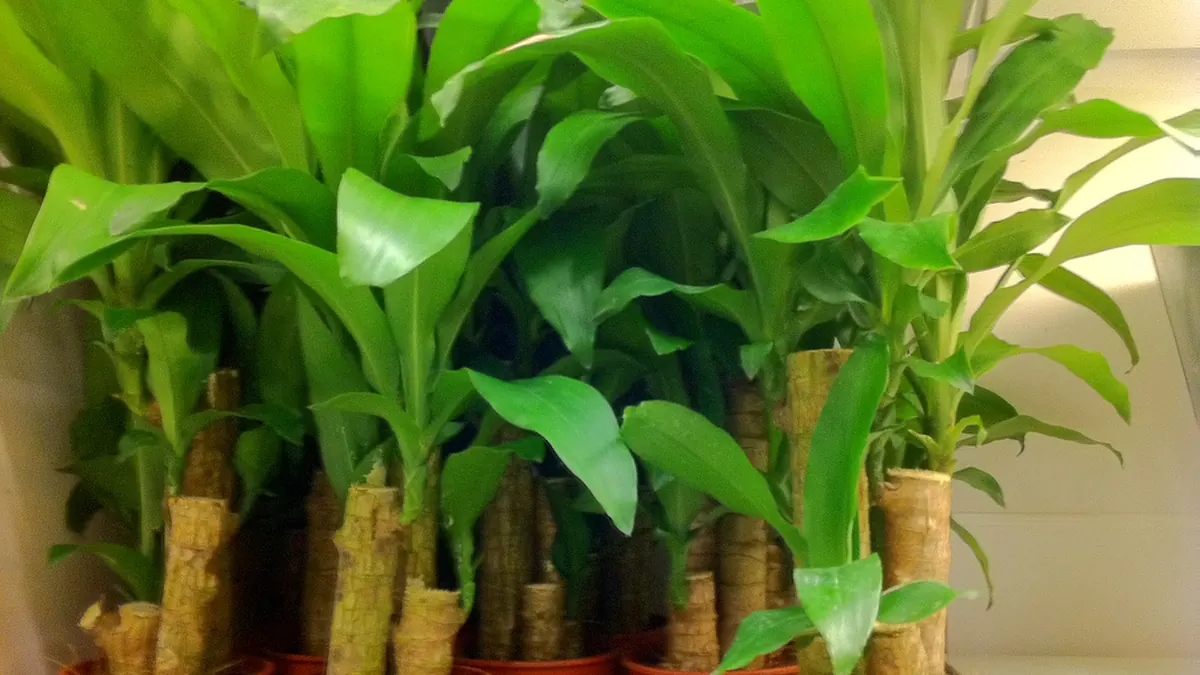
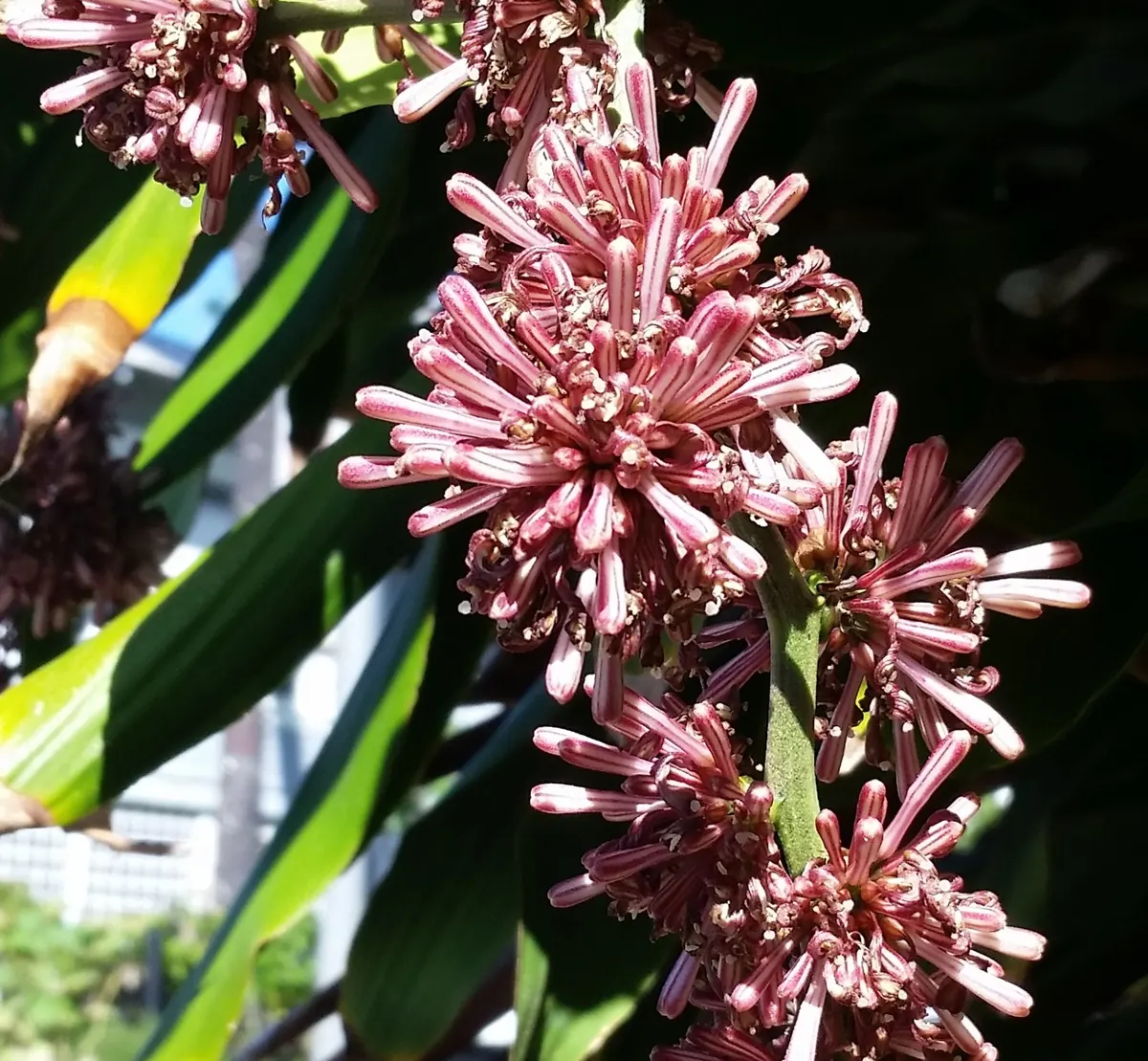
Which dracaena do you have?
“Dracaena” covers a big group of plants. The care is almost the same for all of them, but it helps to know your type.
Dragon tree (D. marginata)
Thin, spiky leaves edged in red on tall, bendy stems. Very tough. Varieties like ‘Tricolor’ add pink and cream stripes.
Corn plant (D. fragrans)
Wide, arching leaves, often with a yellow stripe down the middle, on thick woody canes. It looks a bit like a corn stalk.
‘Janet Craig’
Glossy, solid dark green leaves. One of the best choices for low light. ‘Compacta’ is a small, dense version.
‘Lemon Lime’ and ‘Warneckii’
Bright striped leaves in lime, yellow and green, or green and white. They need a bit more light to keep their color.
Song of India (D. reflexa)
Short, yellow-edged leaves packed around bendy stems. See our full song of India care guide.
Snake plant
Yes, really. Botanists now group the snake plant with dracaenas too, though it needs much less water. See our snake plant guide.
Dracaena care at a glance
| Need | What works |
|---|---|
| Light | Medium to bright indirect light. Tolerates low light but grows slowly. |
| Water | When the top 1–2 inches of soil are dry. Never soggy. |
| Water type | Filtered, distilled or rain water if you see brown tips |
| Soil | Regular, well-draining indoor potting mix with some perlite |
| Humidity | Average is fine; very dry air browns the tips |
| Temperature | 65–80°F; keep above 55°F |
| Feeding | Half-strength fertilizer every 4–6 weeks in spring and summer |
Light
Dracaenas do best near a bright window with no harsh direct sun: a few feet from a south or west window, or close to an east or north one. They survive in dimmer spots, which is why offices love them, but growth slows and striped types fade. Direct afternoon sun burns the leaves, leaving pale or brown patches.
Watering
Water when the top inch or two of soil feels dry, then water until it runs from the drainage hole and empty the saucer. That’s often every 1 to 2 weeks in summer and every 2 to 3 weeks in winter. Overwatering is the most common way people kill dracaenas. Yellow lower leaves and a soft base are warning signs.
How to cut back a tall dracaena
Dracaenas can grow tall and lanky over time, with leaves only at the top of a bare cane. Good news: you can cut the cane and it will sprout again. Do it in spring or summer.
Pick your height
Decide how tall you want the plant. Cut the cane there with clean, sharp pruners or a small saw.
Wait for new shoots
In a few weeks, one to three new shoots usually pop out just below the cut. Keep the plant in bright, indirect light to help them along.
Root the top
Don’t toss the top you cut off. Pull off a few lower leaves and stand it in water or moist potting mix. It roots in a few weeks and becomes a new plant.
Stem pieces work too. Cut a bare cane into 6- to 8-inch sections, remember which end was up, and push the bottom end into moist soil. New leaves sprout from the side in a month or two.
Repotting
Dracaenas grow slowly and don’t mind being a bit crowded. Repot every 2 to 3 years in spring, when roots fill the pot. Go up just one size. For big floor plants, you can simply replace the top couple of inches of soil each year.
Common dracaena problems
| What you see | Likely cause | What to do |
|---|---|---|
| Brown tips | Fluoride, salts, dry air or drought | Use filtered or rain water; flush soil; water on time |
| Yellow lower leaves | Normal aging or overwatering | A few are normal; if many, let soil dry more |
| Soft, mushy cane | Root or stem rot | Cut off healthy tops and reroot them |
| Brown patches | Sunburn | Move out of direct sun |
| Faded stripes | Too little light | Move closer to a window |
| Webbing, speckled leaves | Spider mites | Shower the plant; use insecticidal soap |
It’s normal for the oldest, lowest leaves to yellow and drop as the plant grows. That’s how dracaenas form their bare canes.
Dracaena FAQs
How often should I water a dracaena?
When the top 1 to 2 inches of soil are dry. That’s usually every 1 to 2 weeks in summer and every 2 to 3 weeks in winter.
Why are the tips of my dracaena turning brown?
Usually fluoride and salts in tap water, dry air, or letting the soil dry out too much. Switch to filtered or rain water and flush the soil now and then.
Can dracaena live in low light?
Yes, better than most plants, especially ‘Janet Craig’. It will grow slowly, and striped types may fade.
Can I cut the top off my dracaena?
Yes. Cut the cane at the height you want. New shoots grow below the cut, and the top can be rooted as a new plant.
Is dracaena safe for cats?
No. The ASPCA lists dracaena as toxic to cats and dogs.
Sources and further reading
- ASPCA Animal Poison Control, Dracaena
- North Carolina State Extension, Dracaena fragrans plant profile
- Wikipedia, Dracaena fragrans
More tough, upright plants
Song of India
Bright yellow-edged leaves on twisting stems: care, shaping and fixing brown tips.
Snake plant
Upright, drought-tolerant and almost indestructible, as long as the soil dries out.
ZZ plant
The low-light, low-water plant for beginners, and the one mistake that kills it.
More from Houseplant Care
-
Money Tree Leaves Turning Yellow? 7 Causes and Fixes
Why money tree (Pachira aquatica) leaves turn yellow: overwatering, low light, drafts, sunburn, nutrients, pests or age, with a step-by-step check and fixes. -
Song of India Plant Care (Dracaena Reflexa)
Song of India (Dracaena reflexa) care: light, watering, humidity, brown tips from tap water, shaping twisty stems, propagation, problems and pet safety. -
China Doll Plant Care: Stop the Leaf Drop
China doll plant (Radermachera sinica) care: bright light, careful watering, why it drops leaves and how to stop it, pruning to keep it bushy, and pet safety. -
Dumb Cane Plant (Dieffenbachia) Care and Safety Guide
Dumb cane (dieffenbachia) care: light, watering, soil, cutting back a leggy cane, propagation, yellow leaves, and important safety tips for kids and pets. -
Monstera Plant Care: Bigger Leaves With More Holes
Monstera care: the light that makes split leaves, watering, soil, adding a moss pole, pruning and propagating from a node, yellow leaves and pet safety. -
Raven ZZ Plant Care: How to Keep It Black
Raven ZZ plant care: why new growth starts green and turns black, the light it needs to stay dark, watering, propagation, and how it differs from a ZZ.