
Last updated September 30, 2026
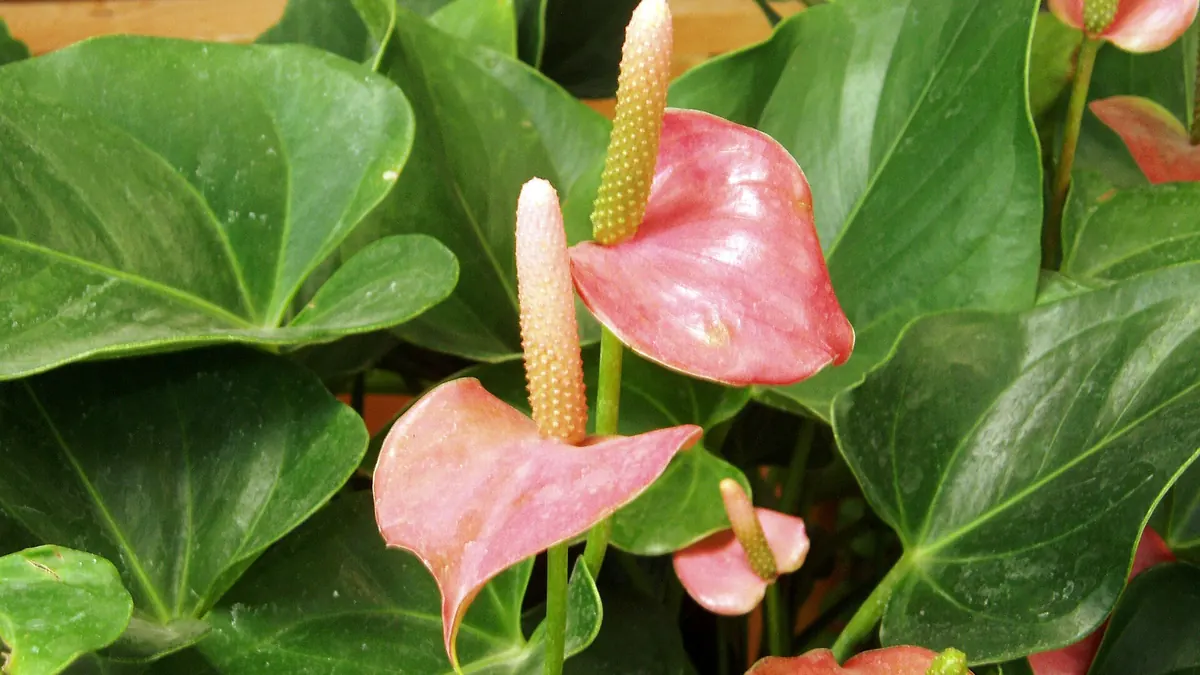
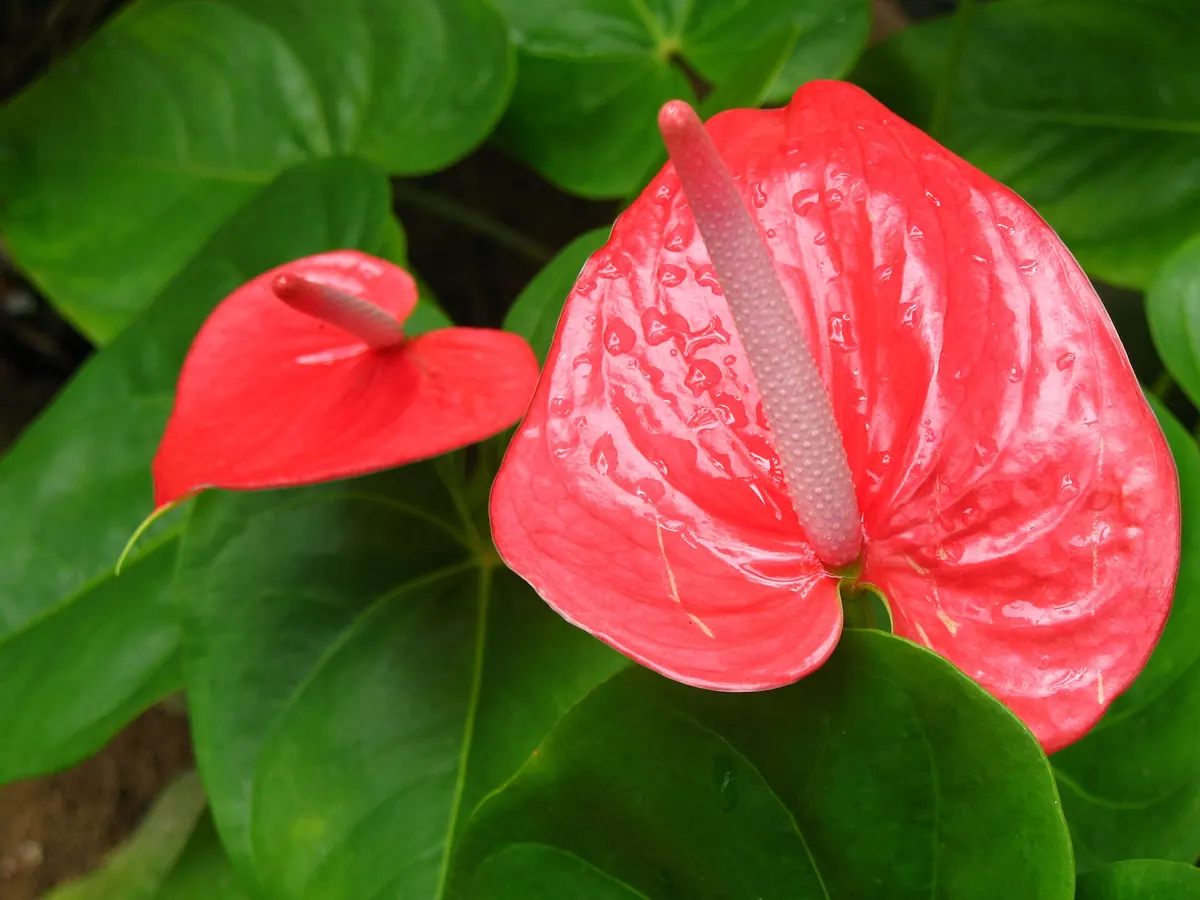
Anthuriums look almost fake: glossy, heart-shaped “flowers” in red, pink, white or purple that last for weeks and come back again and again. Those shiny hearts are actually special leaves called spathes, and the little spike in the middle holds the real, tiny flowers. With the right light and an airy soil, an anthurium can bloom on and off almost all year.
Light
Bright, indirect
Water
When top inch is dry
Soil
Chunky: bark + perlite mix
Humidity
50% or higher is best
Temperature
65–85°F
Pets
Toxic
The secret: it’s not a normal potted plant
In the rainforests of Central and South America, many anthuriums grow on tree trunks and branches, not in the ground. Their thick roots cling to bark and moss and get drenched by rain, then dry quickly in moving air. That’s why they hate heavy, soggy potting soil. Give them an airy, chunky mix, and most other problems disappear.
How to get more flowers
Most anthuriums sold in stores are bred to bloom a lot. If yours has stopped, work through this list:
More light
This is the big one. Anthuriums need bright, indirect light to flower: near an east window, or a few feet back from a south or west one. In a dim room they grow leaves but few blooms.
Feed for flowers
Every 4 to 6 weeks in spring and summer, use a houseplant fertilizer a little higher in phosphorus (the middle number), at a quarter to half strength.
Keep humidity up
Dry air stresses the plant. Aim for 50% humidity or more with a humidifier or by grouping plants together.
Give a short cool rest
About six weeks at around 60°F in winter, with a bit less water, can trigger a new round of blooms in spring.
Remove old blooms
When a spathe turns green or brown, cut its stem off at the base. This keeps energy going into new flowers.
Everyday care
Watering
Water when the top inch of soil feels dry, then water until it runs out of the drainage hole and empty the saucer. That’s often once a week in summer and every 1 to 2 weeks in winter. Anthuriums like to be evenly moist but never soggy. Wet, dense soil is the fastest way to root rot.
Light
Bright, indirect light, as above. Strong direct sun through glass burns the leaves, leaving yellow or brown patches. Too little light means dark green leaves and no flowers.
Humidity and temperature
Anthuriums prefer 65 to 85°F and don’t like anything below about 55°F. Keep them away from cold windows, drafts and heater vents. They grow fine in average home humidity but look their best above 50%. A humidifier nearby works best; a bathroom with a bright window is a good home too.
Cleaning leaves
Wipe dust off the glossy leaves every few weeks with a damp cloth. It helps them use light better and look great.
Repotting into the right mix
Many anthuriums come home in dense peat soil that stays wet. Repotting into a chunky mix in spring can transform them.
A good anthurium mix
About equal parts orchid bark, perlite and regular potting mix. Some growers add a handful of coco chips or charcoal. Water should run straight through.
When to repot
Every 2 to 3 years, or when roots circle the pot or push up above the soil. Go up just one pot size. A slightly snug pot helps flowering.
You may see thick roots growing above the soil or out of the stem. Those are aerial roots, a normal part of how anthuriums climb. You can tuck them into the mix when you repot or leave them be.
Propagating anthuriums
The easiest way is division. When you repot, gently pull the plant apart into sections, each with a few leaves and some roots, and pot them separately. Older plants with long stems can also be propagated by cutting the top section with a few aerial roots and potting it up.
Common anthurium problems
| What you see | Likely cause | What to do |
|---|---|---|
| No flowers | Not enough light | Move to bright, indirect light; feed with a bloom fertilizer |
| Yellow leaves | Overwatering or old leaves | Let the top inch dry; improve drainage |
| Brown leaf tips | Low humidity, salts or uneven watering | Raise humidity; flush soil; water on time |
| Brown or yellow patches | Sunburn | Move out of direct sun |
| Drooping with wet soil | Root rot | Unpot, trim black mushy roots, repot in chunky mix |
| Spathes turning green | Natural aging | Cut the old flower stem at the base |
| Webbing or sticky leaves | Spider mites, mealybugs or scale | Wipe leaves; insecticidal soap |
Anthurium FAQs
How often should I water an anthurium?
When the top inch of soil is dry, usually about once a week in summer and every 1 to 2 weeks in winter.
Why is my anthurium not flowering?
Most often it needs more bright, indirect light. Feeding with a bloom fertilizer and keeping humidity up also help.
How long do anthurium flowers last?
Each spathe can last six to eight weeks, and a healthy plant makes new ones through much of the year.
Should I cut off brown anthurium flowers?
Yes. Cut the whole flower stem at the base once the spathe fades or turns brown.
Can anthuriums grow in water?
They’re sometimes sold growing in water, but they live longer and bloom better in a chunky, well-draining mix.
Sources and further reading
- ASPCA Animal Poison Control, Flamingo plant
- North Carolina State Extension, Anthurium andraeanum plant profile
- Wikipedia, Anthurium andraeanum
More flowering houseplants
Lipstick plant
A trailing, pet-safe basket plant with red tubular flowers, and how to make it rebloom.
Bird of paradise
Huge tropical leaves for your sunniest room, plus how to get the famous flowers.
More from Houseplant Care
-
Money Tree Leaves Turning Yellow? 7 Causes and Fixes
Why money tree (Pachira aquatica) leaves turn yellow: overwatering, low light, drafts, sunburn, nutrients, pests or age, with a step-by-step check and fixes. -
Song of India Plant Care (Dracaena Reflexa)
Song of India (Dracaena reflexa) care: light, watering, humidity, brown tips from tap water, shaping twisty stems, propagation, problems and pet safety. -
China Doll Plant Care: Stop the Leaf Drop
China doll plant (Radermachera sinica) care: bright light, careful watering, why it drops leaves and how to stop it, pruning to keep it bushy, and pet safety. -
Dumb Cane Plant (Dieffenbachia) Care and Safety Guide
Dumb cane (dieffenbachia) care: light, watering, soil, cutting back a leggy cane, propagation, yellow leaves, and important safety tips for kids and pets. -
Monstera Plant Care: Bigger Leaves With More Holes
Monstera care: the light that makes split leaves, watering, soil, adding a moss pole, pruning and propagating from a node, yellow leaves and pet safety. -
Raven ZZ Plant Care: How to Keep It Black
Raven ZZ plant care: why new growth starts green and turns black, the light it needs to stay dark, watering, propagation, and how it differs from a ZZ.