
Last updated September 30, 2026
The lipstick plant (Aeschynanthus radicans) earns its name the moment it flowers: bright red tubes push up out of dark maroon cups, exactly like a lipstick being twisted up. Keeping one alive is easy. Keeping it flowering is where people get stuck, and the answer nearly always comes down to light and a cool winter rest.
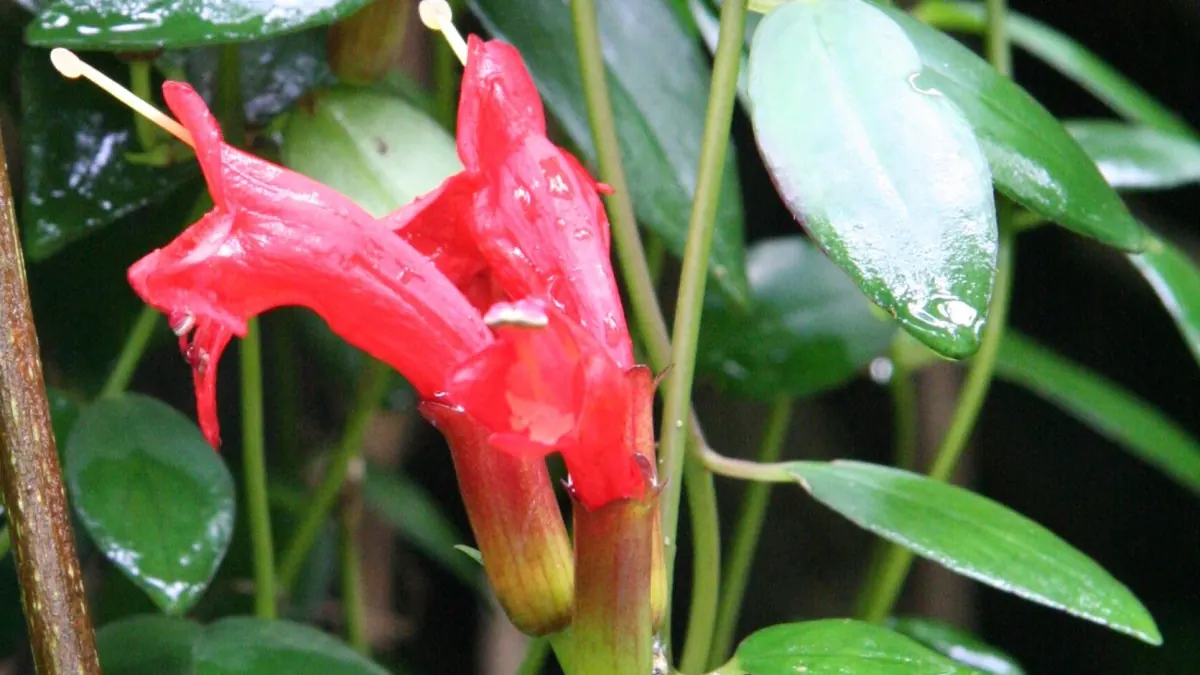
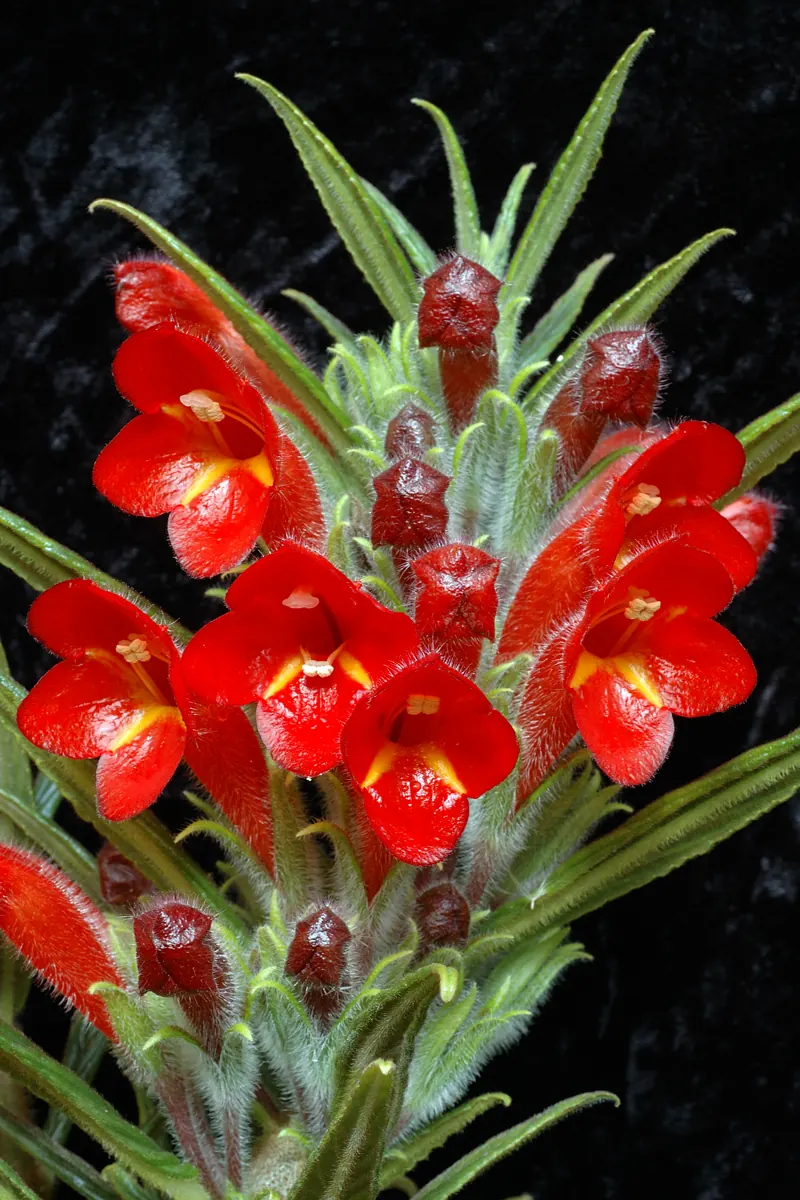
Why isn’t my lipstick plant blooming?
A healthy lipstick plant flowers mostly in summer and fall, sometimes on and off the rest of the year. If yours has leaves but no flowers, work down this list. It’s in order of how often each one turns out to be the problem.
Give it more light
This is the big one. Lipstick plants survive and even grow in modest light, but they won’t flower without bright, indirect light for most of the day.
Let it rest in winter
For a month or two in winter, keep it a little cooler, around 60–65°F, and water a bit less. That rest helps set buds for the next season.
Keep the pot snug
Slightly root-bound plants flower more freely. Don’t move it into a big pot.
Feed for flowers, not leaves
Use a diluted balanced or bloom fertilizer in the growing season and avoid high-nitrogen feeds, which push leaves instead of flowers.
Prune after flowering, not before
Flowers form at the stem tips. Cutting back just before blooming season removes the very growth that would have flowered.
Be patient with young plants
A freshly rooted plant may need a full season of growth before it blooms.
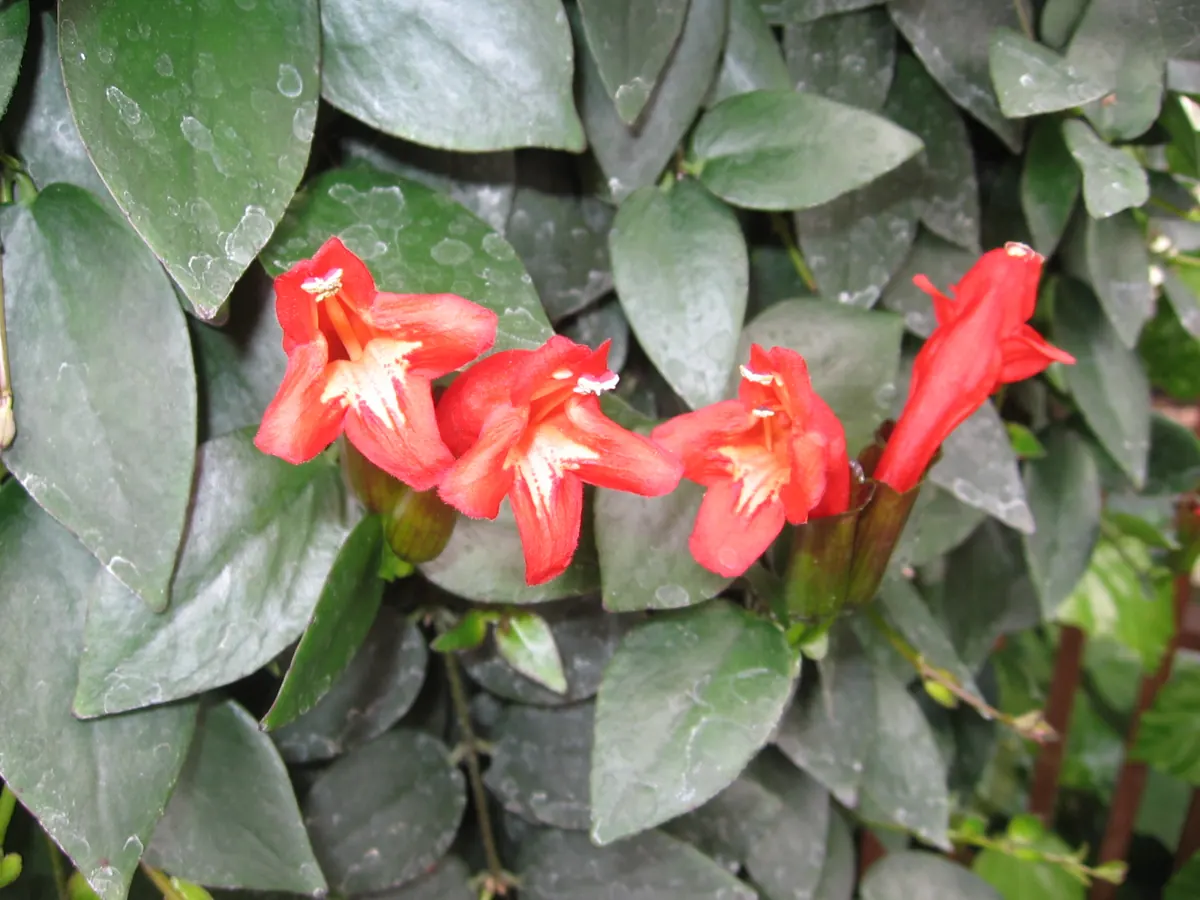
A year with a lipstick plant
| Season | What’s happening | What to do |
|---|---|---|
| Spring | Growth picks up | Repot if needed (every 2–3 years), take cuttings, start feeding every 2–4 weeks |
| Summer | Main flowering and growth | Water when the top 1–2 inches dry, keep feeding, keep humidity up |
| Fall | Flowering continues, then slows | Prune after the last flush; stop feeding by late fall |
| Winter | Rest | Keep bright but cooler (60–65°F), water less, no fertilizer |
Care basics
Light
Bright, indirect light: beside an east window, close to an unobstructed north window, or a few feet back from a south or west window behind a sheer curtain. A couple of hours of gentle morning sun helps. Too much hot sun turns leaves yellowish or bronze and can scorch them. It flowers well under a full-spectrum LED about 12 inches above the plant, 12–14 hours a day.
Water
When the top inch or two is dry: about weekly in spring and summer, less in winter. Use room-temperature water, since cold water can spot the leaves. Drain the basket fully before hanging it back, and never leave it in water. Overwatering is the most common mistake.
Soil and pot
Light and airy: two parts potting mix, one part orchid bark, one part perlite, or African violet mix with extra perlite or bark. A small pot or hanging basket with drainage holes; the roots are small and it blooms best snug.
Humidity and temperature
50% humidity or more is ideal; very dry air can shrivel leaves and make buds drop before opening. 65–80°F in the growing season, never below about 55°F. Keep it out of cold drafts.
Feeding: every two to four weeks in spring and summer with a balanced liquid fertilizer at half strength, or one made for flowering plants or African violets. Stop in late fall and winter. Too much fertilizer can burn the roots.
Outdoors, lipstick plants only live year-round in frost-free climates, around USDA zones 10 and 11, but they make gorgeous summer baskets on a shaded porch.
It’s an epiphyte, and that explains everything
In the rainforests of Southeast Asia, including the Malay Peninsula, Sumatra and Java, lipstick plants don’t grow in the ground at all. They’re epiphytes, living on tree branches and trunks, rooting into moss and leaf litter, with stems cascading down. Sunbirds pollinate those red flowers.
Think about what that means for the roots: soaked by rain, then drying quickly in moving air, under bright but filtered light, in humid air. That’s why they want an airy mix, hate dense soggy soil, and flower in good light. They’re in the same family as African violets and goldfish plants (Gesneriaceae) and share their taste for gentle, even conditions. You’ll also see them sold as lipstick vine and basket vine.
- ‘Mona Lisa’: the most common, with glossy green leaves and reliable red flowers.
- Curly lipstick plant (‘Rasta’ or ‘Twister’): twisted, curling leaves that look interesting even without flowers.
- ‘Black Pagoda’: mottled dark leaves with purple undersides and yellow-green to orange flowers.
- Variegated: cream-edged leaves; needs brighter light.
- ‘Tangerine’: orange flowers instead of red.
Pruning and propagating
Lipstick plants grow at a moderate pace, with trailing stems reaching about 2–3 feet. After a flush of flowers, trim long or bare stems back by up to a third, just above a leaf node. That encourages branching, and the new branches carry next season’s flowers. Older plants that have gone bare near the top can be cut back harder in spring and topped up with rooted cuttings.
Repot only every two to three years in spring, when roots fill the pot or the mix has broken down and stays soggy. Go up one size at most, or just refresh the mix in the same pot.
| Method | Time to roots | Notes |
|---|---|---|
| Stem cuttings in water | About 3–5 weeks | Easy to watch |
| Cuttings in soil or damp sphagnum | About 4–6 weeks | Stronger roots for potting up |
| Layering | Several weeks | Root a trailing stem into a pot beside the plant |
In spring or summer, cut non-flowering stem tips 4–6 inches long, just below a leaf node, and strip the leaves from the lower couple of nodes. Stand them in water, or push them into a moist, airy mix or damp sphagnum moss with the bare nodes covered. Keep them warm (70–80°F), bright and humid; a clear bag or propagation dome helps soil cuttings. Pot them up once roots are an inch or two long, several to a basket for a full look.
Leaf drop and other problems
Leaves falling off
Sudden leaf drop is how a lipstick plant reacts to stress. The usual triggers are cold or drafts, overwatering (especially in winter), and big changes in light or position. Make sure it’s warm, out of drafts, and that the soil dries slightly between waterings. If the stems at the base are soft and dark, check the roots for rot and take healthy cuttings if needed. A little leaf drop on older stems during the winter rest is normal, as long as new growth appears in spring.
Wrinkled or limp leaves
Wrinkled leaves mean water isn’t reaching them. That can be dry soil, or it can be roots rotted in soggy soil that can no longer take up water. Check the soil: dry means water thoroughly; wet means unpot it and inspect the roots.
| Symptom | Likely cause | Fix |
|---|---|---|
| Yellow leaves | Overwatering or too much direct sun | Water less; move out of harsh sun |
| Long, bare, stringy stems | Too little light, or no pruning | More light; prune after flowering |
| Brown or black spots on leaves | Cold water, cold drafts or sunburn | Room-temperature water; avoid cold spots and harsh sun |
| Buds dropping before opening | Dry air, underwatering or moving the plant | Raise humidity; water consistently; don’t move it in bud |
| White cottony clusters or sticky leaves | Mealybugs or aphids | Alcohol swab; insecticidal soap weekly |
Mealybugs are the pest you’re most likely to meet, tucked into leaf joints and stem tips; aphids, spider mites and thrips turn up too. Dab mealybugs with rubbing alcohol on a cotton swab, rinse the plant, and treat with insecticidal soap weekly. Test any spray on a few leaves first, as gesneriad leaves can be sensitive.
Lipstick plant FAQs
Why is my lipstick plant not blooming?
Most often, not enough light. Lipstick plants need bright, indirect light to flower. A slightly cooler, drier rest in winter, a snug pot, diluted feeding in spring and summer, and pruning after flowering rather than before also help.
How often should I water a lipstick plant?
When the top one to two inches of soil are dry, usually about once a week in spring and summer and less in winter. Use room-temperature water and never let the pot sit in water.
Why is my lipstick plant losing leaves?
Usually cold, drafts, overwatering or a sudden change in its surroundings. Keep it warm, out of drafts, in bright indirect light, and let the soil dry slightly between waterings.
Do lipstick plants like to be root bound?
Somewhat, yes. They have small root systems and usually flower better in a snug pot. Repot only every two to three years, one size up.
How do you make a lipstick plant fuller?
Prune long stems back by up to a third after flowering, just above a leaf node, give it bright indirect light, and plant rooted cuttings back into the pot.
Sources and further reading
- ASPCA Animal Poison Control, Basket vine
- North Carolina State Extension, Aeschynanthus radicans plant profile
- Wikipedia, Aeschynanthus radicans
More hanging-basket favorites
Wandering jew (inch plant)
A fast trailing plant with silver and purple stripes, and how to keep it from getting leggy.
Spider plant
A fast, forgiving, pet-safe classic that makes babies you can give away.
Prayer plant
Patterned leaves that fold up every evening, and how to stop the crispy brown edges.
More from Houseplant Care
-
Money Tree Leaves Turning Yellow? 7 Causes and Fixes
Why money tree (Pachira aquatica) leaves turn yellow: overwatering, low light, drafts, sunburn, nutrients, pests or age, with a step-by-step check and fixes. -
Song of India Plant Care (Dracaena Reflexa)
Song of India (Dracaena reflexa) care: light, watering, humidity, brown tips from tap water, shaping twisty stems, propagation, problems and pet safety. -
China Doll Plant Care: Stop the Leaf Drop
China doll plant (Radermachera sinica) care: bright light, careful watering, why it drops leaves and how to stop it, pruning to keep it bushy, and pet safety. -
Dumb Cane Plant (Dieffenbachia) Care and Safety Guide
Dumb cane (dieffenbachia) care: light, watering, soil, cutting back a leggy cane, propagation, yellow leaves, and important safety tips for kids and pets. -
Monstera Plant Care: Bigger Leaves With More Holes
Monstera care: the light that makes split leaves, watering, soil, adding a moss pole, pruning and propagating from a node, yellow leaves and pet safety. -
Raven ZZ Plant Care: How to Keep It Black
Raven ZZ plant care: why new growth starts green and turns black, the light it needs to stay dark, watering, propagation, and how it differs from a ZZ.