
Last updated September 30, 2026
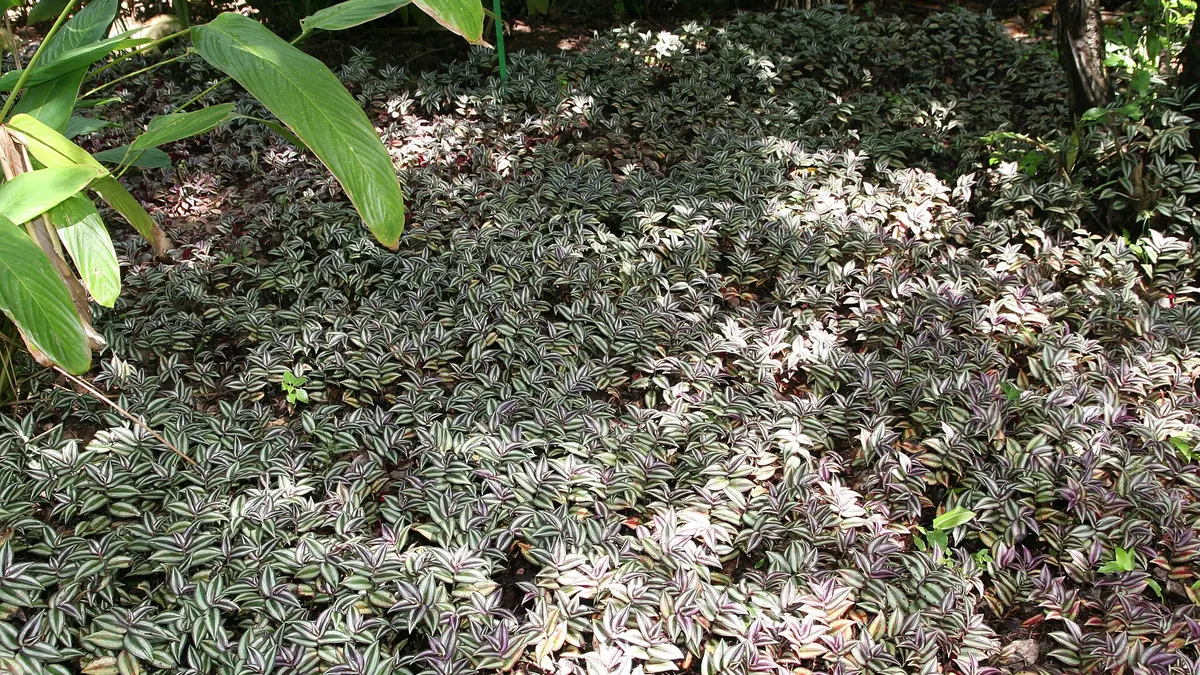
Tradescantia zebrina might be the most rewarding trailing plant you can grow. Its leaves shimmer with silver stripes over green and deep purple, the undersides glow magenta, and a single cutting can fill a hanging basket in one season. That speed is also its only real catch. Leave it alone and it turns long, stringy and bare on top. Keep it pinched and refreshed, and it stays full for years.
Quick care: bright, indirect light with a little morning sun for the best purple; water when the top inch of soil is dry; ordinary well-draining potting mix; 60–80°F; a light monthly feed in spring and summer; and regular pinching.
The secret to a full plant: pinch, root, replant
Even with perfect care, inch plants lose their lower leaves as the stems age, leaving a bare crown with long strands hanging below. Low light speeds it up. The fix isn’t a product or a fertilizer; it’s a simple loop you repeat every few weeks through spring and summer.
Pinch the tips
Snip or pinch off the ends of the longest stems, just above a leaf node. Each pinched stem branches from the nodes below.
Cut back the straggly ones
Any stems that are mostly bare get cut back hard, to a few inches above the soil. They’ll resprout.
Root the trimmings
Strip the bottom leaves from the healthiest pieces and root them in water or straight in soil.
Plant them back in the same pot
Tuck the rooted (or fresh) cuttings into gaps in the pot, especially around the crown. The pot fills back in within weeks.
Every year or two, most growers go one step further and restart the whole plant: take a handful of healthy tips, root them, and replant them in fresh soil. A few weeks later you have a young, full plant again, and it’s usually quicker than trying to rescue an old, woody one.
Getting the best purple and silver
Light controls both the color and the shape of this plant. It grows best in bright, indirect light: close to an east-facing window, or a few feet back from a south- or west-facing one. A couple of hours of gentle morning or late-afternoon sun makes the purple and silver really pop.
Too little light (the common one)
Stems stretch long and thin with big gaps between leaves, the purple fades to dull green, and the silver loses its shine.
Too much hot sun
Leaves look washed out or bleached and can scorch brown and crispy, especially through a south or west window in summer.
It also grows well under LED grow lights, and it loves a summer outdoors in a bright spot out of harsh midday sun. Go easy on fertilizer if you want strong color; heavy feeding pushes soft, green growth.
Watering and soil
Water when the top inch of soil is dry, often about once a week in a warm, bright room in spring and summer, and more for small pots and hanging baskets, which dry quickly. In winter, every one to two weeks is usually enough.
Inch plants like evenly moist soil, not soggy soil. A short dry spell just makes the stems soft and limp, and they perk up within hours of a drink. Constantly wet soil is what causes trouble: yellowing and mushy, rotting stems at the base.
- Water the soil, not the leaves. Water sitting in dense foliage encourages rot.
- Keep going until it runs out of the drainage hole.
- Let it drain fully and empty the saucer.
A standard indoor potting mix with a little perlite suits it fine, in any pot with a drainage hole. That trailing habit makes it perfect for hanging baskets, tall plant stands and high shelves. Plastic holds moisture longer than terracotta, which suits this thirsty, fast-growing plant. Repot once a year in spring, and use the moment to add fresh cuttings.
Other plants sold under the same names
T. zebrina comes from Mexico, Central America and northern South America, where it creeps across moist, partly shaded forest floors and roots wherever a node touches soil. A few relatives get sold under the same common names, and they all take very similar care.
| Plant | Leaves | Notes |
|---|---|---|
| T. zebrina | Silver and purple stripes, purple undersides | This guide. Cultivars include ‘Quadricolor’ and ‘Burgundy’. |
| T. fluminensis | Smaller, plain green or green-and-white | Called small-leaf spiderwort or wandering jew |
| T. pallida ‘Purple Heart’ | Long, solid purple | Handles much more sun |
| Tradescantia ‘Nanouk’ | Thick, upright, pink, cream and green stripes | Chunkier and less trailing |
Propagating inch plant cuttings
This is about as easy as propagation gets. Success rates are very high whichever way you do it.
| Method | Time to roots | Best for |
|---|---|---|
| Stem cuttings in water | Often 1–2 weeks | Watching roots form |
| Stem cuttings straight in soil | About 2–3 weeks | Refilling an existing pot |
| Layering (pinning a stem to soil) | About 2–3 weeks | No-fuss, beside the mother plant |
Cut a healthy stem tip 3–6 inches long, just below a leaf node. Strip the leaves from the bottom inch or two so one or two nodes are bare. Stand it in water with the bare nodes submerged, or push it about an inch into moist potting mix. Keep it in bright, indirect light, change the water every few days, and pot water cuttings up once the roots are about an inch long. Several cuttings per pot gives a full look fast.
Humidity, temperature and feeding
Average household humidity works, but moderate humidity (40–60%) keeps the leaves fuller and prevents crispy tips. In very dry heated rooms, group plants together or run a humidifier nearby. Skip regular misting; it can cause leaf spots in the dense foliage.
Keep it between 60 and 80°F, away from cold drafts. Below about 50°F the leaves get damaged. Outdoors it grows as a perennial groundcover only in frost-free areas, roughly USDA zones 9 to 12.
Feed a balanced liquid fertilizer at half strength once a month in spring and summer, and stop in fall and winter. Overfeeding makes growth soft and floppy, dulls the color and browns the tips.
Growth is very fast: several inches a month in good light, with stems trailing 2 feet or more while the plant itself stays 6–12 inches tall. Small three-petaled pink to purple flowers open for about a day at the stem tips now and then, a nice bonus. In fall and winter growth slows; water less, stop feeding, keep it bright, and save heavy pruning for spring.
Troubleshooting
Leggy growth
Almost always low light plus no pinching. Move it somewhere brighter, pinch the tips, and replant the cuttings. If it’s an older plant that’s mostly bare stems, don’t fight it: take the best tips and start fresh.
Brown, crispy leaves
Usually the soil dried out completely, or the air is very dry. Water as soon as the top inch is dry and move it away from heating vents. Pull off the crispy leaves; the plant regrows quickly.
Stem rot
If stems at the soil line go yellow, translucent, black or mushy, the soil has stayed too wet. Rotted stems won’t recover. Cut healthy tips well above the damage, root them in fresh soil, and water less in the new pot.
| Symptom | Likely cause | Fix |
|---|---|---|
| Faded color, less purple or silver | Too little light | Brighter, indirect light with some morning sun |
| Bleached or scorched leaves | Hot, direct sun | Move out of harsh afternoon sun |
| Bare stems near the soil | Natural aging | Cut back and replant tip cuttings |
| Fine webbing, speckled leaves | Spider mites | Rinse; insecticidal soap; raise humidity |
| Clusters of small green or black insects | Aphids | Rinse off; insecticidal soap |
Because the foliage is so dense, check under leaves and at the stem joints when you’re looking for pests. For a heavy infestation it’s often quicker to take a few clean cuttings and throw out the old plant.
Is wandering jew toxic to cats and dogs?
Treat it as mildly toxic. The ASPCA lists wandering jew (under Tradescantia fluminensis) as toxic to cats and dogs, with skin irritation (dermatitis) as the main sign. The sap of T. zebrina and T. pallida can also irritate the skin of sensitive pets and people, and eating the leaves may cause a mild stomach upset.
Hanging it out of reach is the easiest answer. If you have sensitive skin, wear gloves when pruning and wash your hands afterward. If your pet shows symptoms after contact, call your vet or the ASPCA Animal Poison Control Center at (888) 426-4435.
Inch plant FAQs
How often should I water a wandering jew plant?
When the top inch of soil feels dry. That’s often about once a week in spring and summer, more for hanging baskets, and every one to two weeks in winter. Keep the soil evenly moist but never soggy.
Why is my wandering jew plant leggy?
Usually too little light and not enough pruning. Older plants also naturally lose their lower leaves. Move it to brighter indirect light, pinch the tips regularly, and replant rooted cuttings into the pot to keep it full.
How do I keep my wandering jew purple?
Bright, indirect light with a little gentle morning sun. In low light the purple fades toward green. Avoid heavy fertilizing and harsh afternoon sun.
Can you root wandering jew in water?
Yes. Cut a 3 to 6 inch stem tip below a node, remove the lower leaves, and stand it in water with the bare nodes submerged. Roots often appear within one to two weeks.
What is another name for wandering jew plant?
Tradescantia zebrina is also called inch plant, silver inch plant, wandering dude and, historically, Zebrina pendula.
Sources and further reading
- ASPCA Animal Poison Control, Wandering jew
- North Carolina State Extension, Tradescantia zebrina plant profile
- Wikipedia, Tradescantia zebrina
More trailing plants
For more easy hanging plants, try the spider plant, grow the flowering lipstick plant in another basket, or go for the patterned, pet-safe prayer plant. Everything else is in our houseplant care guides A–Z.
More from Houseplant Care
-
Money Tree Leaves Turning Yellow? 7 Causes and Fixes
Why money tree (Pachira aquatica) leaves turn yellow: overwatering, low light, drafts, sunburn, nutrients, pests or age, with a step-by-step check and fixes. -
Song of India Plant Care (Dracaena Reflexa)
Song of India (Dracaena reflexa) care: light, watering, humidity, brown tips from tap water, shaping twisty stems, propagation, problems and pet safety. -
China Doll Plant Care: Stop the Leaf Drop
China doll plant (Radermachera sinica) care: bright light, careful watering, why it drops leaves and how to stop it, pruning to keep it bushy, and pet safety. -
Dumb Cane Plant (Dieffenbachia) Care and Safety Guide
Dumb cane (dieffenbachia) care: light, watering, soil, cutting back a leggy cane, propagation, yellow leaves, and important safety tips for kids and pets. -
Monstera Plant Care: Bigger Leaves With More Holes
Monstera care: the light that makes split leaves, watering, soil, adding a moss pole, pruning and propagating from a node, yellow leaves and pet safety. -
Raven ZZ Plant Care: How to Keep It Black
Raven ZZ plant care: why new growth starts green and turns black, the light it needs to stay dark, watering, propagation, and how it differs from a ZZ.