
Last updated September 30, 2026
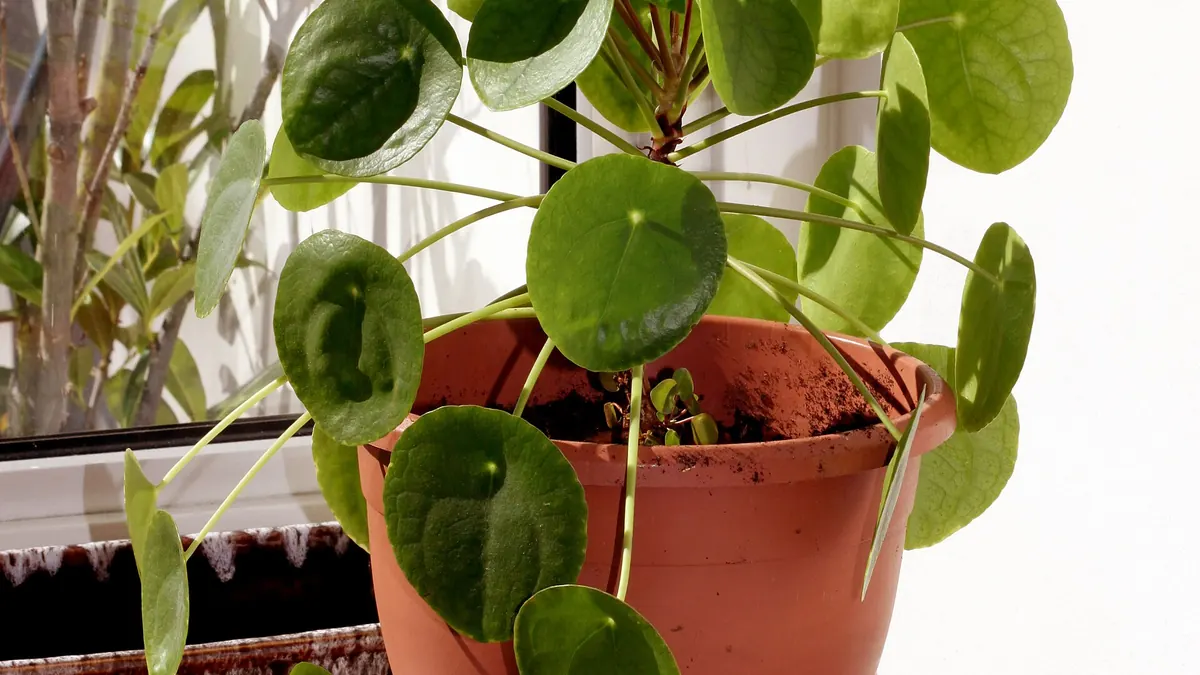
With its round, flat leaves perched on thin stems, the pilea looks a bit like a plant drawn by a child, and that’s exactly its charm. The best-known kind, the Chinese money plant (Pilea peperomioides), is easy to grow, safe around cats and dogs, and keeps making baby plants you can share. It became popular largely because friends passed pups to each other, which is why it’s sometimes called the “pass-it-on plant.”
Light
Bright, indirect
Water
When top 1–2 in are dry
Soil
Well-draining potting mix
Temperature
60–75°F
Growth
Fast in good light
Pets
Non-toxic (ASPCA)

Pilea types you might own
“Pilea” is a big group with hundreds of species. These are the ones you’re most likely to find in a US garden center:
| Pilea | Common names | Looks like |
|---|---|---|
| P. peperomioides | Chinese money plant, pancake plant, UFO plant | Round, flat, coin-shaped leaves on long stalks |
| P. cadierei | Aluminum plant | Green leaves with shiny silver patches |
| P. involucrata | Friendship plant | Quilted, bronzy leaves on a low, bushy plant |
| P. glauca | Silver sparkle pilea | Tiny blue-gray leaves on trailing red stems |
| P. microphylla | Artillery plant | Tiny, fern-like leaves |
Care is similar for all of them. This guide focuses on the Chinese money plant, and notes where the others differ.
Light: bright but not scorching
Pileas want bright, indirect light. A spot near an east-facing window is ideal, or a few feet back from a south or west window. A little soft morning sun is fine, but strong afternoon sun through glass can burn the leaves, leaving brown or pale patches.
In low light, the stems stretch long and thin, and leaves get smaller. The plant also leans hard toward the window. That’s why the most useful habit with a pilea is simple: turn the pot a quarter turn every few days. It keeps the plant round and upright instead of lopsided.
Watering: let it dry a little first
Water when the top inch or two of soil is dry. Water slowly until it runs out of the drainage hole, then empty the saucer. In a bright spot in summer, that’s often once a week. In winter, it may be every 10 to 14 days.
The Chinese money plant stores some water in its thick leaves and stems, so it handles a short dry spell better than soggy soil. Drooping leaves with dry soil mean it’s thirsty and will perk up within hours of a drink. Drooping leaves with wet soil mean too much water, which is more serious.
Soil, pots and feeding
Use a regular indoor potting mix with a handful of perlite added for drainage. The pot must have a drainage hole. Terracotta works well because it dries evenly.
Feed with a balanced liquid fertilizer at half strength about once a month in spring and summer. Skip feeding in fall and winter. Repot every year or two in spring, going up only an inch or two in pot size.
Pileas like normal room temperatures, about 60 to 75°F. Keep them away from cold drafts, heaters and air-conditioning vents. Average home humidity is fine.
How to pot up pilea babies
A healthy Chinese money plant sends up little pups from the soil around its base, and sometimes small plantlets right on the main stem. They’re easy to turn into new plants.
Wait until the pup has a few leaves
Pups are ready once they’re about 2 inches tall with four or five leaves.
Cut it free
Dig gently around the pup with your finger. Use a clean knife to cut the runner that connects it to the mother, about an inch below the soil. Try to keep some roots on the pup.
Pot it or root it
If it has roots, pot it straight into a small pot of moist mix. If it has no roots, stand it in a glass of water. Roots grow in 1 to 2 weeks.
Keep it bright and a little moist
Keep new pups in bright, indirect light and water lightly until they start growing. Then treat them like the adult plant.
Common pilea problems
Curling or domed leaves
Leaves curling downward like an umbrella usually mean too much light or heat. Leaves cupping upward often mean too little light. Adjust the spot and new leaves will flatten out.
Yellow lower leaves
A few old leaves yellowing at the bottom is normal. Many yellow leaves plus wet soil means overwatering. Let the soil dry more between waterings.
Brown spots or crispy edges
Sunburn, very dry soil, or salt buildup from fertilizer. Move it out of harsh sun, water on time, and flush the soil now and then.
Long, bare stem
Older plants naturally lose lower leaves and grow a trunk. More light keeps it fuller. You can also cut the top off, root it in water, and start fresh.
Pests are uncommon, but look under leaves for spider mites (fine webbing) and fungus gnats (tiny flies from wet soil). Wipe leaves, let the soil dry more, and use insecticidal soap for mites.
Pilea FAQs
How often should I water a Chinese money plant?
When the top inch or two of soil is dry, usually about once a week in summer and every 10 to 14 days in winter.
Why is my pilea leaning?
It’s growing toward the light. Turn the pot a quarter turn every few days to keep it straight.
Why are my pilea leaves curling?
Downward curling usually means too much light or heat. Upward cupping often means too little light. Move it to bright, indirect light.
Is a pilea safe for cats?
Yes. Pileas are considered non-toxic to cats and dogs.
Does the Chinese money plant bring good luck?
It’s linked with good fortune in some traditions because of its coin-shaped leaves. It’s a nice story, and an easy plant either way.
Sources and further reading
- ASPCA Animal Poison Control, Aluminum plant
- North Carolina State Extension, Pilea peperomioides plant profile
- Wikipedia, Pilea peperomioides
More pet-safe plants
Spider plant
A fast, forgiving, pet-safe classic that makes babies you can give away.
Prayer plant
Patterned leaves that fold up every evening, and how to stop the crispy brown edges.
China doll plant
Lacy, glossy leaves on a small indoor tree that’s safe around pets.
More from Houseplant Care
-
Money Tree Leaves Turning Yellow? 7 Causes and Fixes
Why money tree (Pachira aquatica) leaves turn yellow: overwatering, low light, drafts, sunburn, nutrients, pests or age, with a step-by-step check and fixes. -
Song of India Plant Care (Dracaena Reflexa)
Song of India (Dracaena reflexa) care: light, watering, humidity, brown tips from tap water, shaping twisty stems, propagation, problems and pet safety. -
China Doll Plant Care: Stop the Leaf Drop
China doll plant (Radermachera sinica) care: bright light, careful watering, why it drops leaves and how to stop it, pruning to keep it bushy, and pet safety. -
Dumb Cane Plant (Dieffenbachia) Care and Safety Guide
Dumb cane (dieffenbachia) care: light, watering, soil, cutting back a leggy cane, propagation, yellow leaves, and important safety tips for kids and pets. -
Monstera Plant Care: Bigger Leaves With More Holes
Monstera care: the light that makes split leaves, watering, soil, adding a moss pole, pruning and propagating from a node, yellow leaves and pet safety. -
Raven ZZ Plant Care: How to Keep It Black
Raven ZZ plant care: why new growth starts green and turns black, the light it needs to stay dark, watering, propagation, and how it differs from a ZZ.