
Last updated September 30, 2026
Look at a schefflera leaf from above and you’ll see why it’s called an umbrella plant: a ring of glossy leaflets spreads out from one point, like the ribs of an open umbrella. It’s a forgiving, fast-growing plant that can become a small indoor tree. Most problems come down to light and watering, and they’re easy to fix once you know the signs.
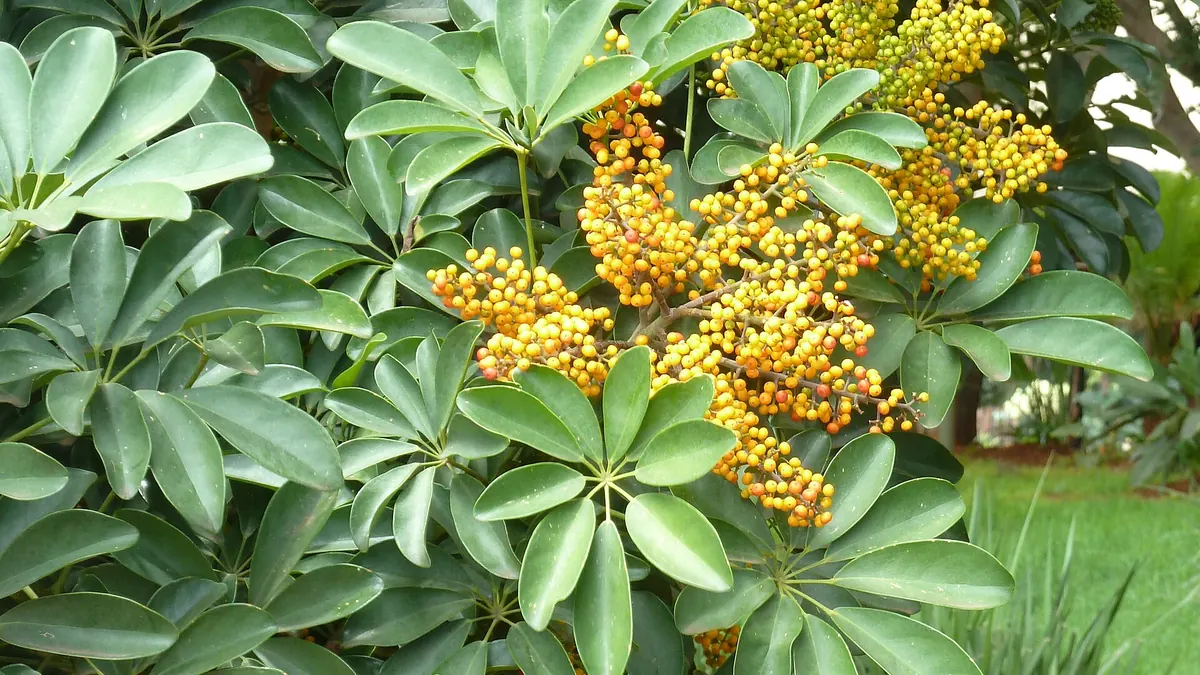
At a glance: bright, indirect light; water when the top inch or two of soil is dry; regular potting mix with good drainage; 60–75°F; pinch or prune to keep it bushy.
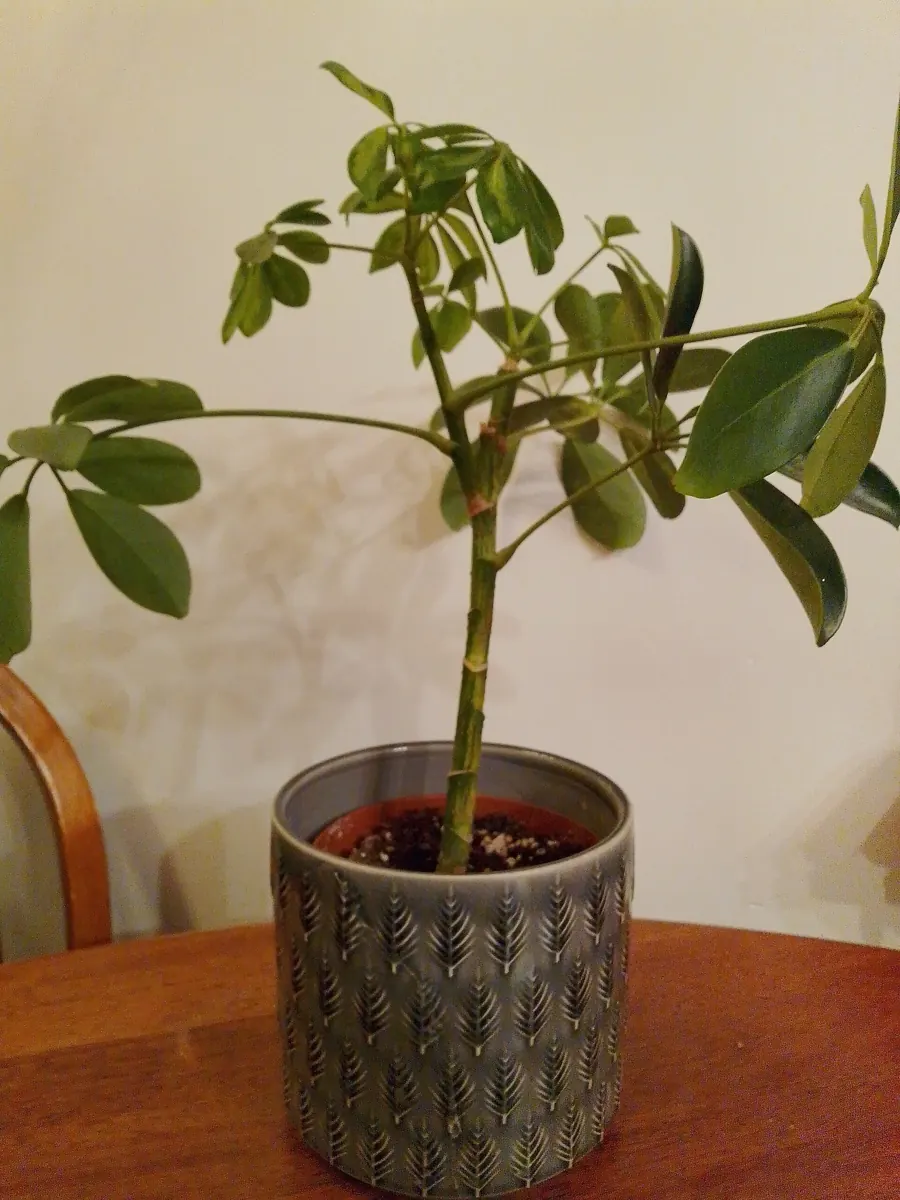
Dwarf or big umbrella tree?
| Dwarf umbrella tree | Umbrella tree | |
|---|---|---|
| Botanical name | Schefflera arboricola (now Heptapleurum arboricola) | Schefflera actinophylla (now Heptapleurum actinophyllum) |
| Leaflets | Small, 2–4 inches, often variegated | Large, up to 12 inches, glossy green |
| Indoor size | 3–6 ft | 6–10 ft or more |
| Best for | Tables, corners, bonsai | Big rooms with high ceilings |
Both get the same care. The dwarf type is by far the most common houseplant. You’ll also see ‘Gold Capella’ and ‘Trinette’ with yellow- or cream-splashed leaves; those need more light to keep their color.
Where to put it
Umbrella plants want bright, indirect light. Near an east window is perfect, or a few feet back from a south or west window. A little gentle morning sun is fine. In a dark corner, the stems stretch, the plant leans, and leaves start to drop. Turn the pot a quarter turn every week or so to keep it growing straight.
Keep it away from heating and cooling vents, drafty doors and cold windows in winter. Umbrella plants like the same temperatures you do, about 60 to 75°F, and sudden changes make them drop leaves.
Watering: the key to happy leaves
Water when the top inch or two of soil is dry. Soak it until water runs out the bottom, let it drain, and empty the saucer. That usually means every 1 to 2 weeks in spring and summer and less often in winter.
Umbrella plants would rather be a bit too dry than too wet. Soggy soil rots the roots, and the first sign is often leaves that turn yellow or black and fall. If you’re unsure, wait a day or two.
Soil: a regular indoor potting mix with a handful of perlite works well. Use a pot with a drainage hole. Humidity: average is fine, but very dry winter air can bring spider mites. Feeding: a balanced liquid fertilizer at half strength every 4 weeks in spring and summer.
Why is my umbrella plant dropping leaves?
This is the question almost every schefflera owner asks. Leaf drop is how the plant reacts to stress. Work through these causes in order:
1. Too much water
Yellow or black leaves falling, with soil that stays wet. Let it dry out more between waterings and check that the pot drains.
2. Not enough light
Green leaves dropping from the inside and bottom, with long gaps on the stems. Move it to a brighter spot.
3. A sudden change
Leaves dropping soon after you bought it, moved it or repotted it. Keep care steady and give it a few weeks to settle.
4. Cold or drafts
Leaves dropping in winter near a door, window or vent. Move it somewhere with a steady temperature.
Also check under the leaves for pests (see below). Fine webbing or sticky spots mean bugs are stressing the plant.
Pruning a leggy umbrella plant
Schefflera grows fast and can turn tall and bare. The good news is it responds really well to pruning. Spring and summer are the best times.
Pinch the tips
To keep a young plant bushy, pinch off the soft top of each stem every so often. It branches out below the pinch.
Cut back tall stems
On an older, leggy plant, cut tall stems back to the height you want, just above a leaf joint. New shoots appear below the cut within a few weeks.
Shape it
Cut some stems lower than others to get a full, rounded look instead of a flat top.
Pruning doesn’t hurt the plant. Many people even grow dwarf umbrella trees as bonsai because they handle heavy trimming so well.
How to propagate an umbrella plant
Take a 4- to 6-inch stem cutting in spring or summer, just below a leaf joint. Remove the lower leaves, dip the end in rooting hormone if you have it, and push it into moist potting mix. Cover it loosely with a clear plastic bag to hold in humidity and keep it in bright, indirect light. Roots usually form in 4 to 6 weeks. Cuttings also root in a glass of water.
Pests and other problems
| What you see | Likely cause | What to do |
|---|---|---|
| Fine webbing, pale speckles | Spider mites | Shower the leaves; insecticidal soap; raise humidity |
| Brown bumps, sticky leaves | Scale | Scrape off; wipe with rubbing alcohol; horticultural oil |
| White cottony clusters | Mealybugs | Dab with rubbing alcohol on a cotton swab |
| Brown, crispy spots | Sunburn or very dry soil | Filter harsh sun; water on time |
| Faded variegation | Too little light | Move to brighter, indirect light |
Umbrella plant FAQs
How often do you water an umbrella plant?
When the top inch or two of soil is dry, usually every 1 to 2 weeks in spring and summer and less in winter. Always empty the saucer.
Why is my umbrella plant losing leaves?
Most often from overwatering, low light, a recent move, or cold drafts. Check the soil and light first.
Can umbrella plants live in low light?
They survive for a while, but they get leggy and drop leaves. Bright, indirect light keeps them full.
How big does an umbrella plant get indoors?
The dwarf type usually reaches 3 to 6 feet indoors. The larger umbrella tree can reach 6 to 10 feet. Pruning keeps both smaller.
Is schefflera the same as an umbrella plant?
Yes. Schefflera is the old botanical name, and both names are used for the same plants.
Sources and further reading
- ASPCA Animal Poison Control, Schefflera
- North Carolina State Extension, Schefflera arboricola plant profile
- Wikipedia, Heptapleurum arboricola
Other easy indoor trees
Like the tree look? The rubber plant has big glossy leaves, the china doll plant has lacy, fern-like foliage, and a dracaena copes with lower light. See all our houseplant care guides.
More from Houseplant Care
-
Money Tree Leaves Turning Yellow? 7 Causes and Fixes
Why money tree (Pachira aquatica) leaves turn yellow: overwatering, low light, drafts, sunburn, nutrients, pests or age, with a step-by-step check and fixes. -
Song of India Plant Care (Dracaena Reflexa)
Song of India (Dracaena reflexa) care: light, watering, humidity, brown tips from tap water, shaping twisty stems, propagation, problems and pet safety. -
China Doll Plant Care: Stop the Leaf Drop
China doll plant (Radermachera sinica) care: bright light, careful watering, why it drops leaves and how to stop it, pruning to keep it bushy, and pet safety. -
Dumb Cane Plant (Dieffenbachia) Care and Safety Guide
Dumb cane (dieffenbachia) care: light, watering, soil, cutting back a leggy cane, propagation, yellow leaves, and important safety tips for kids and pets. -
Monstera Plant Care: Bigger Leaves With More Holes
Monstera care: the light that makes split leaves, watering, soil, adding a moss pole, pruning and propagating from a node, yellow leaves and pet safety. -
Raven ZZ Plant Care: How to Keep It Black
Raven ZZ plant care: why new growth starts green and turns black, the light it needs to stay dark, watering, propagation, and how it differs from a ZZ.