

 By
By Natural Ways to Control Oily Skin
Why Does Your Skin Get So Oily?
If your face is greasy by midday, you’re not alone. Oily skin is common and frustrating. Sebum, your skin’s natural oil, keeps skin healthy, but too much causes unwanted shine.
Fortunately, you can manage oily skin naturally, without costly products or harsh chemicals.
Start With the Right Cleansing Routine
One of the biggest mistakes people with oily skin make is over-washing their face. It sounds counterintuitive, but washing your face too often can actually strip away natural oils — and your skin responds by producing even more oil to compensate.
What may help instead:
- Wash your face twice a day, in the morning and at night.
- Use a gentle, sulfate-free cleanser.
- Avoid hot water; lukewarm water works better.
- Gently pat dry with a clean towel.
A simple, consistent cleansing routine can make a noticeable difference over time.
Natural Ingredients That May Help Reduce Oiliness
Many people incorporate kitchen staples and plant-based ingredients into their skincare routines. While results vary from person to person, the following are commonly used and generally considered skin-friendly.
Aloe Vera
Aloe vera gel is lightweight and non-greasy. Many people with oily skin use it as a moisturizer because it hydrates the skin without adding extra oil. Applying a thin layer after cleansing is a popular option.
Clay Masks (Kaolin or Bentonite)
Clay is well known for its ability to absorb excess oil from the surface of the skin. Using a clay mask once or twice a week may help reduce shine and keep pores looking cleaner.
Witch Hazel
Witch hazel is a natural astringent that many people use as a toner. It can help tighten the appearance of pores and may reduce oiliness when used regularly in small amounts.
Apple Cider Vinegar (Diluted)
Some people use a diluted mix of apple cider vinegar and water as a toner. It is important to always dilute it before applying it to the skin, as it can be too strong on its own.

Daily Habits That Can Make a Difference
Your skincare products matter, but so does your daily routine. Here are some habits that can support healthier, less oily skin:
- Stay hydrated – Drinking enough water may support overall skin balance.
- Eat a balanced diet – Reducing fried and processed foods is a common recommendation.
- Change your pillowcase regularly – Oils and bacteria can transfer to your skin overnight.
- Avoid touching your face – Your hands carry oils that can add to the problem.
- Use oil-free or non-comedogenic products – Check labels before buying moisturizers or sunscreens.
Small, consistent changes often add up more than one big fix.
Quick Tips at a Glance
- Blotting papers are a handy on-the-go solution for midday shine.
- Always moisturize — oily skin still needs hydration.
- Never skip sunscreen; choose a matte or gel-based formula.
- Try to manage stress, as it can trigger excess oil production.
FAQs
Q1: Can oily skin be controlled permanently with natural remedies? Natural remedies may help manage oily skin over time, but results depend on your skin type, genetics, and consistency. They are supportive habits rather than permanent fixes.
Q2: Is it okay to moisturize oily skin? Yes — skipping moisturizer can actually make oily skin worse. Choose a lightweight, oil-free moisturizer to keep skin balanced without adding extra grease.
Q3: How often should I use a clay mask for oily skin? Most skincare experts suggest using a clay mask once or twice a week. Overusing it may dry out your skin, which can lead to more oil production as a response.Natural Ways to Control Oily Skin
Why Does Your Skin Get So Oily?
If your face is greasy by midday, you’re not alone. Oily skin is common and frustrating. Sebum, your skin’s natural oil, keeps skin healthy, but too much causes unwanted shine.
Fortunately, you can manage oily skin naturally, without costly products or harsh chemicals.
Start With the Right Cleansing Routine
One of the biggest mistakes people with oily skin make is over-washing their face. It sounds counterintuitive, but washing your face too often can actually strip away natural oils — and your skin responds by producing even more oil to compensate.
What may help instead:
- Wash your face twice a day, in the morning and at night.
- Use a gentle, sulfate-free cleanser.
- Avoid hot water; lukewarm water works better.
- Gently pat dry with a clean towel.
A simple, consistent cleansing routine can make a noticeable difference over time.
Natural Ingredients That May Help Reduce Oiliness
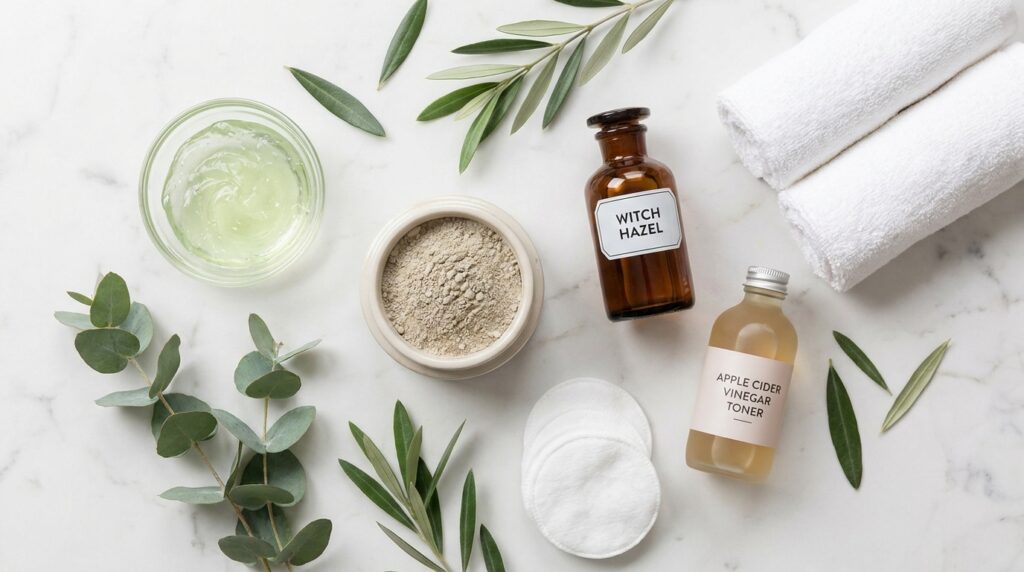
Many people incorporate kitchen staples and plant-based ingredients into their skincare routines. While results vary from person to person, the following are commonly used and generally considered skin-friendly.
Aloe Vera
Aloe vera gel is lightweight and non-greasy. Many people with oily skin use it as a moisturizer because it hydrates the skin without adding extra oil. Applying a thin layer after cleansing is a popular option.
Clay Masks (Kaolin or Bentonite)
Clay is well known for its ability to absorb excess oil from the surface of the skin. Using a clay mask once or twice a week may help reduce shine and keep pores looking cleaner.
Witch Hazel
Witch hazel is a natural astringent that many people use as a toner. It can help tighten the appearance of pores and may reduce oiliness when used regularly in small amounts.
Apple Cider Vinegar (Diluted)
Some people use a diluted mix of apple cider vinegar and water as a toner. It is important to always dilute it before applying it to the skin, as it can be too strong on its own.
Daily Habits That Can Make a Difference
Your skincare products matter, but so does your daily routine. Here are some habits that can support healthier, less oily skin:
- Stay hydrated – Drinking enough water may support overall skin balance.
- Eat a balanced diet – Reducing fried and processed foods is a common recommendation.
- Change your pillowcase regularly – Oils and bacteria can transfer to your skin overnight.
- Avoid touching your face – Your hands carry oils that can add to the problem.
- Use oil-free or non-comedogenic products – Check labels before buying moisturizers or sunscreens.
Small, consistent changes often add up more than one big fix.
Quick Tips at a Glance
- Blotting papers are a handy on-the-go solution for midday shine.
- Always moisturize — oily skin still needs hydration.
- Never skip sunscreen; choose a matte or gel-based formula.
- Try to manage stress, as it can trigger excess oil production.
FAQs
Q1: Can oily skin be controlled permanently with natural remedies? Natural remedies may help manage oily skin over time, but results depend on your skin type, genetics, and consistency. They are supportive habits rather than permanent fixes.
Q2: Is it okay to moisturize oily skin? Yes — skipping moisturizer can actually make oily skin worse. Choose a lightweight, oil-free moisturizer to keep skin balanced without adding extra grease.
Q3: How often should I use a clay mask for oily skin? Most skincare experts suggest using a clay mask once or twice a week. Overusing it may dry out your skin, which can lead to more oil production as a response.