
 By
By How to Stop Hair Fall Naturally: Simple Tips That May Help
Losing a few strands every day is completely normal. But when you start seeing clumps on your pillow or in the shower drain, it can feel alarming. The good news? There are several natural ways that may help reduce hair fall without expensive treatments or harsh chemicals.
Let’s walk through some of the most common and practical approaches people use at home.
Why Does Hair Fall Happen?
Before jumping to solutions, it helps to understand the common causes. Hair fall can happen for many reasons, including:
- Poor nutrition – Your hair needs vitamins and minerals to grow strong
- Stress – High stress levels are one of the most common triggers
- Scalp issues – Dandruff or an oily scalp can weaken hair roots.
- Harsh styling – Heat tools and tight hairstyles can cause breakage
- Hormonal changes – Especially during pregnancy or thyroid issues
Knowing your root cause can make it easier to pick the right approach.
Natural Oils That May Help Reduce Hair Fall
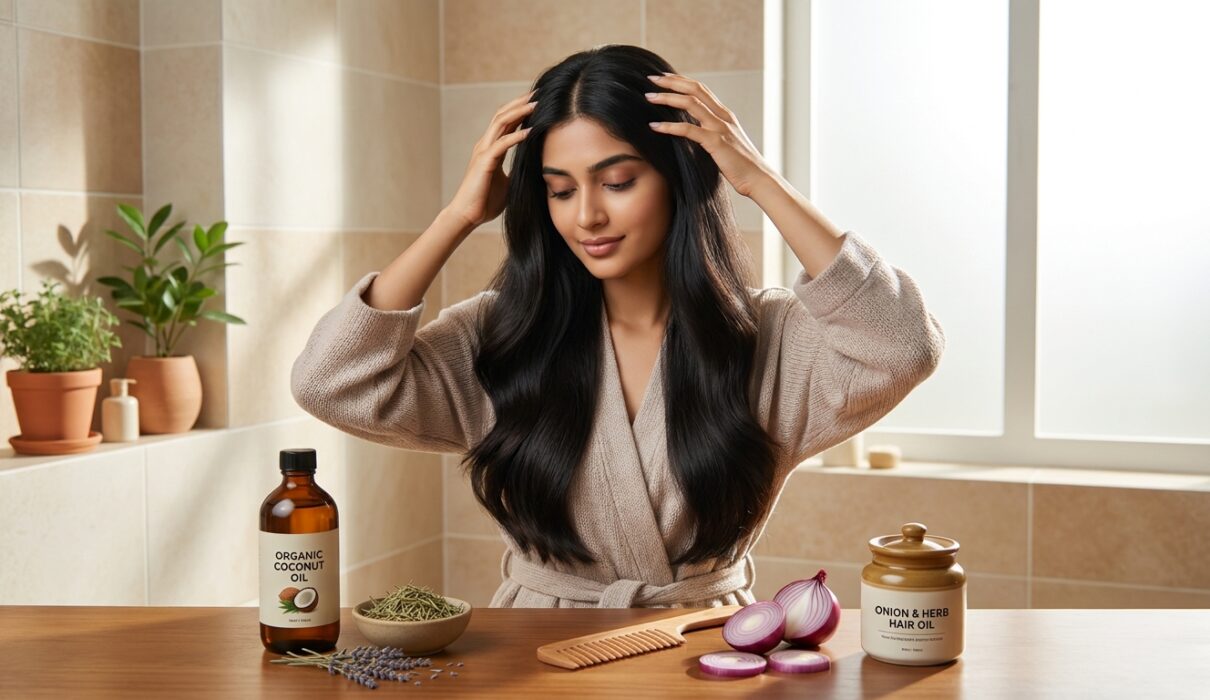
Oiling your scalp regularly is one of the oldest and most widely used hair care habits. Many people find it helpful for keeping their scalp healthy and hair roots nourished.
Best Oils to Try
- Coconut oil – Lightweight, deeply penetrating, and widely available
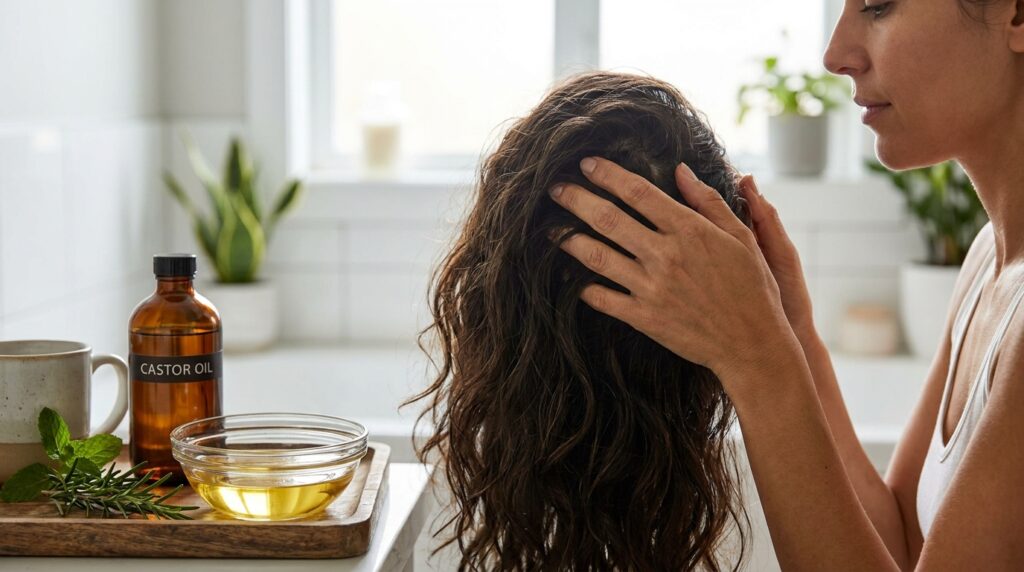
- Castor oil – Thick oil rich in fatty acids; commonly preferred for hair growth support
- Onion oil – Many users report reduced hair fall with regular use.
- Bhringraj oil – A popular Ayurvedic option used for centuries
How to use: Warm the oil slightly, massage it into your scalp in circular motions, and leave it on for at least an hour before washing. Doing this 2–3 times a week may help strengthen your roots over time.
Diet Changes That Can Improve Hair Health
What you eat plays a bigger role in hair health than most people realise. A diet lacking in key nutrients can make hair thinner and more prone to falling out.
Add These to Your Plate
- Protein-rich foods – Eggs, lentils, chicken, and Greek yoghurt support keratin production
- Iron sources – Spinach, beans, and lean meats may help prevent deficiency-related hair loss.
- Biotin foods – Nuts, seeds, and sweet potatoes are great natural sources.
- Vitamin C – Helps your body absorb iron better; think oranges, berries, and bell peppers
- Omega-3 fatty acids – Found in walnuts, flaxseeds, and fatty fish
Drinking enough water every day also matters more than people think.
Easy Lifestyle Habits That Support Hair Growth
Sometimes small daily habits make a big difference. Here are a few worth trying:
- Reduce stress – Try yoga, walking, or even 10 minutes of deep breathing daily.
- Avoid tight hairstyles – Ponytails and braids pulled too tightly can strain the roots.
- Use a wide-tooth comb – Especially on wet hair to avoid unnecessary breakage.
- Wash hair gently – Don’t scrub your scalp harshly; use lukewarm water instead of hot water.
- Trim regularly – Getting rid of split ends keeps your hair healthier overall.
- Limit heat tools – Air-dry when possible instead of using a blow dryer every day.

FAQs
Q1: How long does it take to see results from natural remedies? Natural methods usually take time. Most people start noticing a difference after 4 to 8 weeks of consistent use. Patience and regularity are key.
Q2: Can I use onion juice directly on my scalp? Yes, many people apply fresh onion juice to their scalp and leave it for 20–30 minutes before rinsing. It may cause a temporary smell, but it is generally considered safe for most people.
Q3: Is hair fall related to drinking less water? Dehydration can affect your overall health, including hair quality. While it may not directly cause heavy hair fall, staying well-hydrated can support a healthier scalp environment.
Conclusion
Hair fall can feel frustrating, but it doesn’t always mean something serious is wrong. With the right combination of nourishing oils, a balanced diet, and gentle daily habits, many people see noticeable improvement over time.
Start with one or two changes, stay consistent, and give your body time to respond. And if your hair fall is sudden, severe, or paired with other symptoms, it’s always a good idea to speak with a healthcare professional.
Your hair may just need a little extra care — and nature has plenty to offer.