

 By
By How to Make Hair Soft Naturally
Why Does Hair Feel Rough and Dry?
If your hair feels like straw lately, you are definitely not alone. Many people deal with rough, frizzy, or dry hair — and most of the time, simple daily habits are to blame.
Over-washing, heat styling, hard water, and skipping conditioner can all strip your hair of its natural moisture. The good news? You do not need expensive salon treatments to fix it. A few natural changes may help restore that softness.
Natural Ingredients That May Help Soften Hair
Before spending money on products, check your kitchen. Some of the best hair-softening ingredients are already sitting in your pantry.
Here are a few commonly used ones:
- Coconut oil – Many people use it as a pre-wash treatment. It may help lock in moisture and reduce breakage.
- Honey – A natural humectant that draws moisture into the hair shaft.
- Aloe vera – Lightweight and soothing. It can help smooth the hair cuticle.
- Egg yolk – Rich in proteins and fats. Many people use it as a weekly mask for soft, shiny hair.
- Banana – Naturally packed with potassium, which can improve hair elasticity.
You do not have to use all of these at once. Start with one or two and see how your hair responds.
Simple Hair Mask Recipes to Try at Home
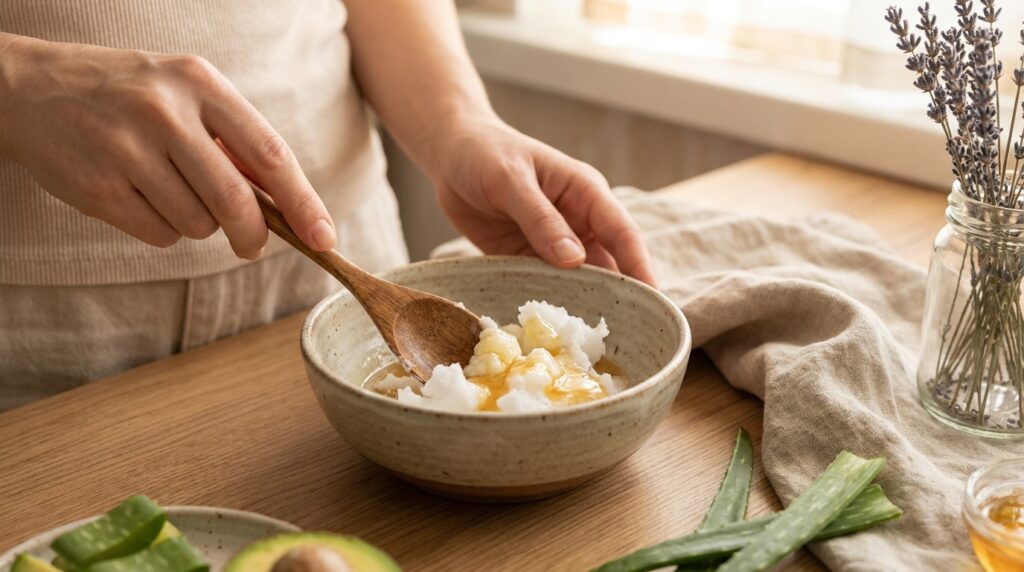
Coconut Oil + Honey Mask
This is one of the most popular natural hair masks, and it is easy to make.
- Mix 2 tablespoons of coconut oil with 1 tablespoon of honey.
- Apply it from mid-length to the ends of your hair.
- Leave it on for 20–30 minutes.
- Rinse thoroughly with lukewarm water.
Many people use this weekly and notice their hair feels smoother after just a few uses.
Aloe Vera + Olive Oil Mask
This combination may help with both dryness and frizz.
- Mix 3 tablespoons of fresh aloe vera gel with 1 tablespoon of olive oil.
- Apply evenly through damp hair.
- Leave on for 15–20 minutes.
- Wash out with a gentle, sulfate-free shampoo.
Everyday Habits That Can Make a Big Difference
Hair masks help, but your daily routine matters just as much. Here are some small changes that can improve hair softness over time:
- Use cold or lukewarm water – Hot water can strip natural oils from your scalp and hair.
- Let hair air dry when possible – Constant heat from blow dryers can lead to dryness and breakage.
- Use a wide-tooth comb – Especially on wet hair, this reduces damage and keeps strands smooth.
- Sleep on a satin pillowcase – Cotton can cause friction, leaving hair rough and tangled by morning.
- Deep condition once a week – Even a store-bought deep conditioner used consistently can improve texture.
- Trim regularly – Split ends travel up the hair shaft, making the whole strand feel rough.
These small habits add up. Consistency is what creates lasting softness.
Frequently Asked Questions
Q1: How often should I apply a natural hair mask? Once a week is a good starting point for most hair types. If your hair is very dry, you may benefit from twice weekly. Over-masking can sometimes weigh hair down, so adjust based on how your hair feels.
Q2: Can diet affect how soft my hair feels? Yes, it can. Hair health is often linked to what you eat. Foods rich in omega-3 fatty acids, biotin, and vitamins A and E may support healthier, softer-feeling hair over time. Staying well hydrated also helps.
Q3: Why does my hair feel soft right after washing but rough again the next day? This is usually a sign that your hair is not retaining moisture well. Try applying a small amount of leave-in conditioner or a light oil, such as argan oil, to damp hair before it dries. This can help seal in moisture and keep hair soft longer.

Final Thoughts
Making your hair soft naturally is very possible — it just takes a little patience and the right routine. Start with one or two changes, stay consistent, and give your hair time to respond.
Natural ingredients are gentle, affordable, and easy to find. Combined with better daily habits, they can genuinely improve how your hair looks and feels. No harsh chemicals or expensive products required.