
 By
By Best Vitamins for Healthy Hair: What Actually Works
Why Your Hair Might Be Struggling
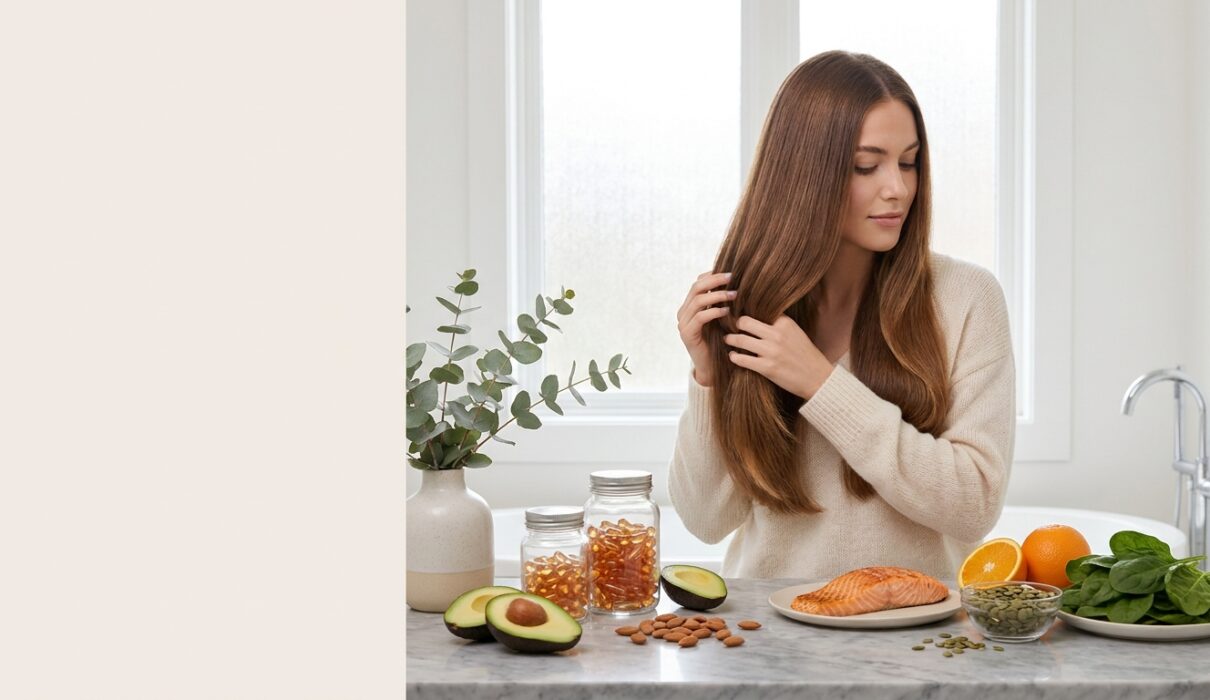
You wash it, condition it, and protect it from heat — but your hair still looks dull or keeps falling out. Sound familiar?
The truth is, great hair often starts from the inside. What you eat and which nutrients your body gets can make a real difference in how your hair looks and feels. Vitamins play a big role in keeping your scalp healthy and your strands strong.
Let’s break down the best vitamins for healthy hair that many people swear by.
The Top Vitamins That May Support Hair Health
1. Biotin (Vitamin B7)
Biotin is probably the most talked-about vitamin for hair. It’s a B-complex vitamin that supports keratin production — the protein your hair is actually made of.
Many people with biotin deficiency notice more hair shedding and brittle strands. Adding biotin through food or supplements may help improve hair strength over time.
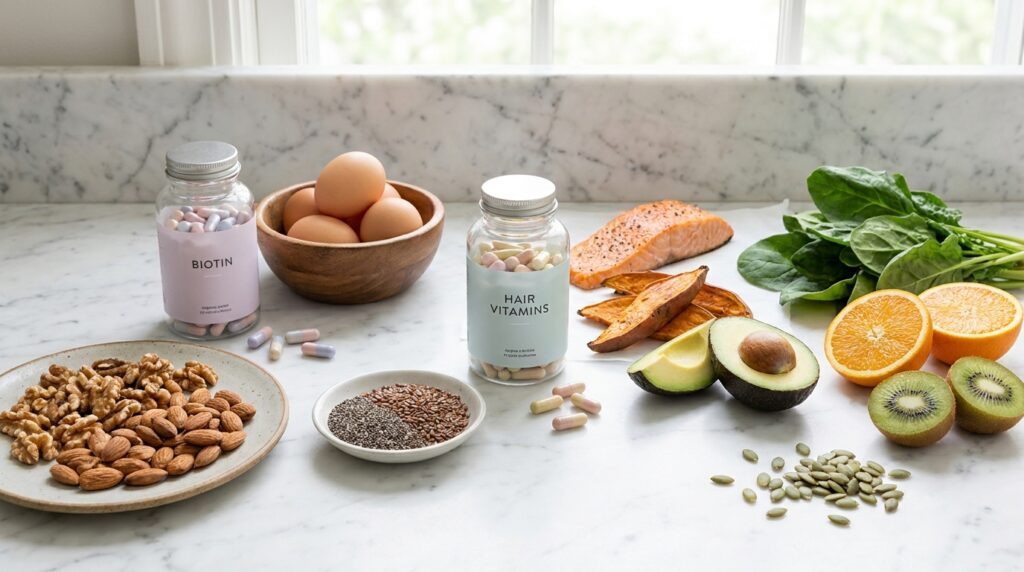
Good food sources: Eggs, nuts, seeds, sweet potatoes, and salmon.
2. Vitamin D
Research suggests a link between low vitamin D levels and hair thinning. Vitamin D may help activate hair follicles and keep the growth cycle running smoothly.
If you spend most of your time indoors, your vitamin D levels might be lower than ideal. A simple blood test can tell you where you stand.
Good food sources: Fatty fish, fortified milk, egg yolks, and sunlight exposure.
3. Vitamin E
Vitamin E is a powerful antioxidant. It may help reduce scalp oxidative stress, a factor linked to hair loss.
Some people use vitamin E oil directly on their scalp, while others prefer to get it through their diet.
Good food sources: Almonds, sunflower seeds, avocado, and spinach.
4. Iron and Vitamin C (The Power Combo)
Iron deficiency is one of the most common causes of hair loss, especially in women. Without enough iron, hair follicles don’t get the oxygen they need.
Here’s the trick: pair iron-rich foods with vitamin C. Vitamin C helps your body absorb iron much more efficiently.
Iron sources: Lentils, red meat, spinach, and beans. Vitamin C sources: Oranges, strawberries, bell peppers, and kiwi.
5. Zinc
Zinc supports hair tissue growth and repair. It also helps keep the oil glands around hair follicles working properly.
A zinc deficiency may lead to hair loss and a dry, flaky scalp. Many people don’t get enough zinc through diet alone, especially vegetarians.
Good food sources: Pumpkin seeds, chickpeas, cashews, and whole grains.

Simple Tips to Get the Most Out of Hair Vitamins
- Be consistent — vitamins work gradually, not overnight.
- Eat a balanced diet first before reaching for supplements.
- Stay hydrated — water supports nutrient absorption.
- Avoid crash diets — sudden calorie cuts can trigger hair shedding.
- Talk to a doctor before starting any new supplement, especially in high doses.
Frequently Asked Questions
Q1: How long does it take for hair vitamins to show results? Most people notice changes after 2 to 4 months of consistent use. Hair grows slowly, so patience is important.
Q2: Can I take all these vitamins together? Many of them can be taken together, especially through a well-rounded multivitamin. However, it’s always a good idea to check with a healthcare provider before combining multiple supplements.
Q3: Is biotin alone enough for hair growth? Biotin may help if you have a deficiency, but hair health depends on multiple nutrients working together. A balanced diet generally yields better results than relying on a single vitamin.
Conclusion
Healthy hair isn’t just about the products you use — it’s also about what your body gets on the inside. Vitamins like biotin, vitamin D, iron, zinc, and vitamin E may all play a supportive role in keeping your hair strong and growing well.
Start with your diet, stay consistent, and don’t expect overnight miracles. Small, steady habits are what make the biggest difference over time.