
 By
By Best Natural Oils for Hair Growth
Is Your Hair Telling You It Needs Some Help?
Hair fall, slow growth, and dull strands — if any of these sound familiar, you are definitely not the only one dealing with them. Many people turn to natural oils as part of their hair care routine, and it is easy to see why.
Natural oils have been used for generations to nourish the scalp and support healthier-looking hair. They are affordable, easy to find, and simple to use at home.
In this post, we will walk through some of the most popular natural oils that people commonly use for hair growth and overall scalp health.
Why Natural Oils Are So Popular for Hair Care
Before getting into the list, it is worth understanding why so many people reach for oils in the first place.
- They may help moisturise a dry scalp.
- Some oils are known to improve blood circulation when massaged in
- They can strengthen hair strands from root to tip.
- Many are rich in vitamins, fatty acids, and antioxidants.
- They are a great budget-friendly alternative to expensive treatments.
Of course, results can vary from person to person. But adding the right oil to your routine is a simple step that many find helpful over time.
Top Natural Oils for Hair Growth
1. Castor Oil
Castor oil is probably the most talked-about oil in the hair growth community — and for good reason. It is thick, rich, and packed with ricinoleic acid, which may help support scalp circulation.
Many people use it by massaging a small amount into the scalp and leaving it overnight before washing it out. Because it is quite heavy, mixing it with a lighter oil, such as coconut or almond oil, can make it easier to apply.
2. Rosemary Oil
Rosemary oil has gained a lot of attention in recent years, and some studies suggest it may be as effective as certain over-the-counter scalp treatments for supporting hair density. That has made it one of the most popular choices among natural hair care enthusiasts.
It is an essential oil, so always dilute it with a carrier oil before applying it to your scalp. A few drops mixed into coconut or jojoba oil works well.
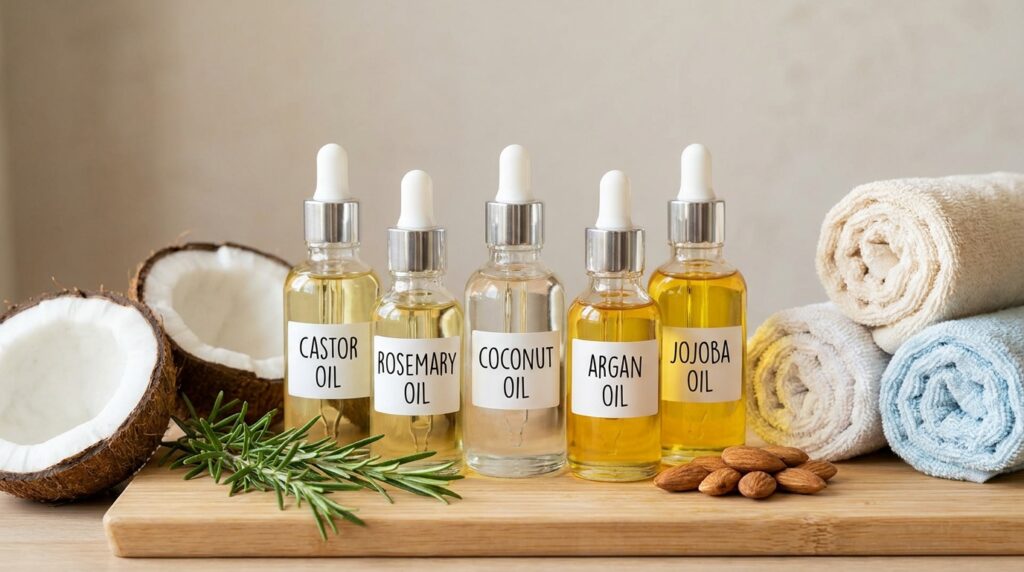
3. Coconut Oil
Coconut oil is a classic for a reason. It is one of the few oils that can actually penetrate the hair shaft rather than just sitting on the surface. This may help reduce protein loss and keep strands looking stronger and shinier.
It works great as a pre-wash treatment. Apply it about 30 minutes before shampooing and rinse thoroughly.
4. Jojoba Oil
Jojoba oil closely resembles the natural sebum your scalp produces, making it a gentle, well-tolerated option for most hair types. It may help keep the scalp balanced and moisturised without feeling too greasy.
It is also lightweight enough to use on its own or as a carrier oil for essential oils like rosemary or peppermint.
5. Argan Oil
Often called “liquid gold,” argan oil is rich in vitamin E and essential fatty acids. It is commonly preferred for smoothing frizz, adding shine, and improving the overall look and feel of dry or damaged hair.
While it is more of a conditioning oil than a direct growth stimulator, a healthy and nourished scalp is always a good foundation for better hair growth.

Tips for Using Hair Oils Effectively
Getting the most out of your oil routine comes down to how you use it. Here are a few things to keep in mind:
- Warm the oil slightly before applying — this can help with absorption.
- Massage gently into your scalp in circular motions for 5–10 minutes
- Leave it on for at least 30 minutes, or overnight for a deeper treatment.
- Wash it out properly to avoid buildup—double-shampooing may help.
- Be consistent — once or twice a week is enough for most people.
- Less is more — you do not need a lot; start with a small amount.
FAQs About Natural Oils for Hair Growth
Q1: Which natural oil is best for hair growth for beginners? Coconut oil is a great starting point. It is easy to find, affordable, and gentle on most hair types. Many beginners also find jojoba oil to be an easy, lightweight option to start with.
Q2: How long does it take to see results from using hair oils? This varies from person to person. Many people report noticing a difference in scalp health and hair texture within a few weeks of consistent use. Visible changes in hair length or density may take a few months of regular application.
Q3: Can I mix different oils together? Absolutely. Many people blend a carrier oil, such as coconut or jojoba, with an essential oil, such as rosemary or peppermint, for added benefits. Just make sure essential oils are always properly diluted before applying to your scalp.
A Little Consistency Goes a Long Way
There is no overnight fix when it comes to hair growth, but building a simple oil routine into your week can make a real difference over time. Whether you start with castor oil, rosemary oil, or just plain coconut oil, what matters most is sticking with it.
Your scalp is the foundation of healthy hair. Give it the care it deserves, and your strands will likely follow.