
 By
By Best Hair Care Routine for Frizzy Hair – Simple Steps That Actually Work
Frizzy hair can feel like a never-ending battle. You wake up, look in the mirror, and there it is — a poofy, unruly mess that just won’t cooperate.
The good news? You don’t need to visit a salon every week or have a bathroom full of expensive products. A consistent, simple hair care routine for frizzy hair can make a real difference over time.
Let’s walk through what actually works.
Why Does Hair Get Frizzy in the First Place?
Before fixing the problem, it helps to understand it. Frizz usually happens when your hair lacks moisture. When the outer layer of your hair (the cuticle) is dry or damaged, it lifts up and absorbs humidity from the air — and that’s what creates frizz.
A few common causes include:
- Overwashing your hair strips natural oils
- Heat styling without protection weakens the hair shaft.
- Rough towel drying roughens up the cuticle.
- Skipping conditioner leaves hair dry and vulnerable.
- Hard water and harsh shampoos can also play a role.
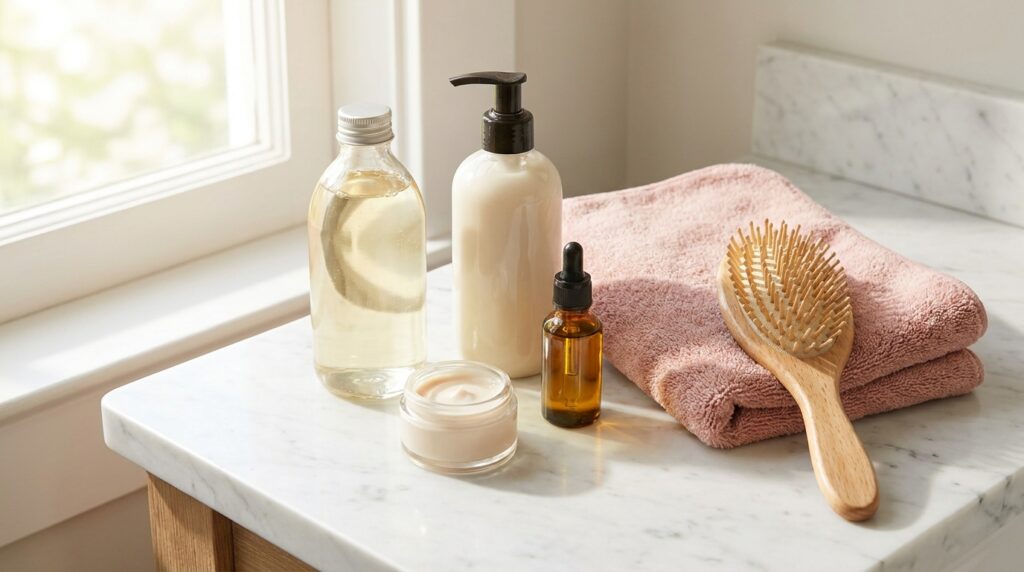
Step-by-Step Hair Care Routine for Frizzy Hair
Step 1 – Choose the Right Shampoo
Start with a sulfate-free, moisturising shampoo. Sulfates can be too harsh for frizzy or dry hair types and may strip away the oils your hair actually needs.
Look for shampoos with ingredients like argan oil, shea butter, or glycerin. These may help lock in moisture and keep your hair looking calmer.
Wash your hair 2–3 times a week max. Daily washing can make frizz worse over time.
Step 2 – Never Skip Conditioner
This one is non-negotiable. Conditioner helps smooth down the cuticle and restore lost moisture after shampooing.
Apply it from mid-shaft to the ends, leave it on for 2–3 minutes, and rinse with cool or lukewarm water. Hot water can open the cuticle and increase frizz.
For extra care, try a deep conditioning mask once a week. Many people with frizzy hair find this makes a noticeable difference.
Step 3 – Be Gentle When Drying
Rubbing your hair with a regular towel is one of the most common causes of frizz. Instead, try:
- A microfiber towel to gently squeeze out water
- An old cotton t-shirt works great, too.
- Air drying whenever possible
If you must blow-dry, use a diffuser attachment and keep it on a low heat setting.
Best Products to Include in Your Routine
You don’t need to spend a lot, but a few key products can really help:
- Leave-in conditioner – adds moisture and makes detangling easier.
- Hair serum or oil (like argan or jojoba oil) – may help seal the cuticle and reduce frizz.
- Anti-frizz cream – apply to damp hair before styling.
- Heat protectant spray – always use before any heat tools.
Apply these to damp hair, not soaking wet, for better absorption.

Daily Habits That Can Improve Frizzy Hair
Small everyday changes can support your routine and keep frizz under control:
- Sleep on a silk or satin pillowcase – reduces friction overnight.
- Avoid touching your hair too much during the day.
- Drink enough water – hydration starts from within.
- Trim your hair every 8–10 weeks to remove split ends.
- Limit heat styling to a few times a week.
FAQs About Frizzy Hair Care
Q1: How often should I wash frizzy hair? Most hair experts commonly suggest washing frizzy hair 2–3 times per week. Washing too often can strip your hair of the natural oils it needs to stay moisturised and smooth.
Q2: Can I use coconut oil on frizzy hair? Yes, many people use coconut oil as a pre-wash treatment or light finishing oil. It may help add moisture and reduce frizz, but use it sparingly if your hair tends to feel greasy quickly.
Q3: Does diet affect frizzy hair? It can. A diet lacking in healthy fats, protein, and vitamins may contribute to dry, brittle, or frizzy hair. Foods rich in omega-3 fatty acids, biotin, and vitamin E are commonly associated with healthier-looking hair.
Conclusion
Dealing with frizzy hair doesn’t have to be stressful. With the right products, a consistent routine, and a few simple habits, you can work toward smoother, healthier hair over time.
Start with the basics — a good moisturising shampoo, a quality conditioner, and gentle drying techniques. Give your hair some time to adjust, and you’ll likely start noticing improvements within a few weeks.
Your hair may not be perfect every day, but a little care goes a long way.