

 By
By Best Foods for Healthy and Glowing Skin
You’ve probably heard the phrase “you are what you eat.” When it comes to your skin, that’s more true than you might think.
No matter how many creams or serums you use, what you eat plays a huge role in how your skin looks and feels. A balanced diet rich in the right nutrients may help your skin stay clear, hydrated, and naturally radiant.
Before diving into specific foods, let’s explore which types of ingredients can make a real difference.
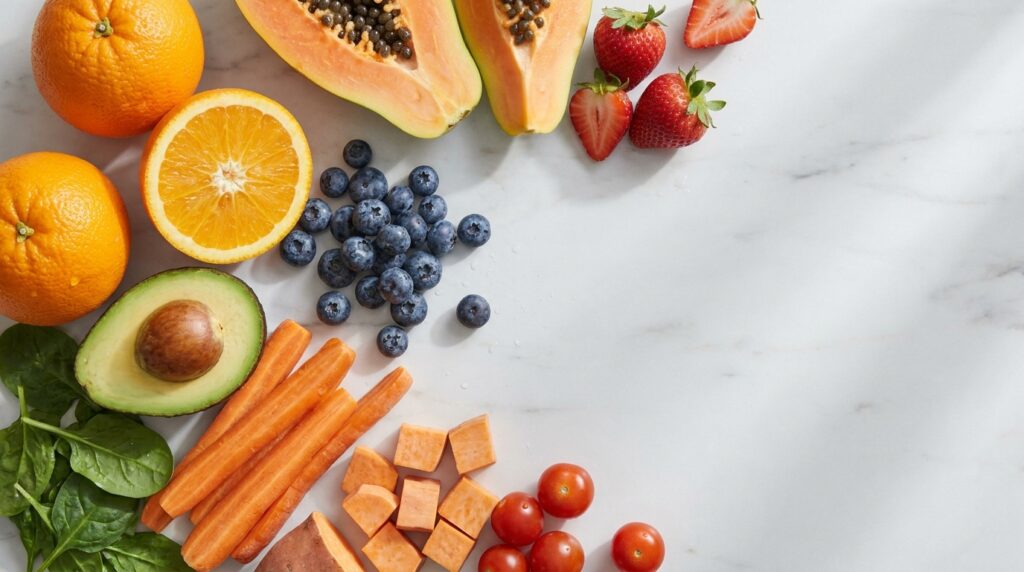
Fruits That May Support a Natural Skin Glow
Fruits are packed with vitamins and antioxidants that can do wonders for your skin. Some of the best ones include:
- Oranges and citrus fruits — High in Vitamin C, which supports collagen production and may help reduce dullness
- Papaya — Contains enzymes and Vitamin A that many people use to support smoother-looking skin.
- Berries (blueberries, strawberries) — Rich in antioxidants that may protect skin from environmental damage
- Avocados — Loaded with healthy fats and Vitamin E, commonly preferred for keeping skin moisturized
These are easy to add to your daily meals — toss them in a smoothie, add them to salads, or snack on them fresh.

Vegetables and Other Skin-Friendly Foods
It’s not just fruits. Vegetables are equally powerful at nourishing your skin from within.
Top Vegetables for Skin Health
- Carrots — A great source of beta-carotene, which the body converts to Vitamin A and may help maintain a healthy skin tone
- Spinach and leafy greens — Packed with iron, folate, and antioxidants that support overall skin vitality
- Sweet potatoes — Another excellent source of beta-carotene and known for their anti-inflammatory properties
- Tomatoes — Contain lycopene, an antioxidant that may help protect skin from damage.
Adding a mix of colorful vegetables to your meals is one of the simplest ways to improve your skin diet.
Hydrating Foods and Healthy Fats
Sometimes, dry or dull skin is simply a sign that your body needs more hydration and healthy fats. Here’s what may help:
Stay Hydrated Through Food
- Cucumbers, watermelon, and celery are high in water content and can contribute to daily hydration.
- Staying well-hydrated supports natural skin plumpness and texture.
Include Healthy Fats
- Walnuts and flaxseeds — Contain Omega-3 fatty acids that may support the skin’s natural moisture barrier.
- Fatty fish like salmon — Commonly preferred in skin-health diets for its Omega-3 and Vitamin D content
- Olive oil — A kitchen staple that many nutritionists associate with smoother, healthier-looking skin
Simple Tips to Improve Your Skin Through Diet
Here are a few easy, practical steps you can start today:
- Drink enough water — Aim for 6–8 glasses daily, along with hydrating foods.
- Cut back on sugar and processed foods — These can contribute to breakouts and dull skin over time.
- Add one skin-friendly food per meal — It doesn’t have to be a big change; small swaps add up.
- Don’t skip healthy fats — Low-fat diets can sometimes lead to drier skin.
- Be consistent — Skin changes take time; give your new habits a few weeks to show results.
FAQs
Q1: How long does it take to see skin improvements from diet changes? Most people begin to notice gradual changes within 4 to 8 weeks of consistent dietary improvements. Results vary from person to person.
Q2: Can drinking water alone improve skin glow? Water is important, but it works best when paired with a nutrient-rich diet. Hydrating foods and healthy fats also play a significant role in how your skin looks and feels.
Q3: Are supplements as effective as eating whole foods for skin health? Whole foods are generally considered more beneficial because they deliver a wider range of nutrients together. Supplements may help fill gaps, but are not a replacement for a balanced diet.
Conclusion
Getting healthy, glowing skin doesn’t always require expensive products. Sometimes, the best solution is on your plate.
By including more skin-friendly fruits, vegetables, healthy fats, and staying hydrated, you may gradually notice a real difference in your skin’s texture and brightness.
Start small, stay consistent, and let your diet do some of the work. Your skin will thank you for it.